
Open P008C Fuel Cooler Pump Control Circuit

What is the P008C Code?

The P008C trouble code is a generic powertrain code that indicates an open circuit in the fuel cooler pump. This code primarily affects diesel vehicles equipped with OBD-II standards, including Ford/Powerstroke, BMW, Dodge/Ram/Cummins, Chevrolet, and GMC models. Although generic, specific diagnostic procedures may vary by manufacturer.

Fuel Cooler Pump Circuit Operation

In a diesel engine, the fuel cooler’s role is to lower the temperature of excess diesel fuel before it returns to the tank. Functioning like a small radiator, it uses the engine’s coolant to dissipate heat. The fuel cooler pump, controlled by the PCM (Powertrain Control Module), circulates the fuel through this circuit. A malfunction (open circuit) disrupts this process, which can lead to fuel overheating and eventually damage the injection system or the engine.

Other related codes may appear, such as P008D and P008E.

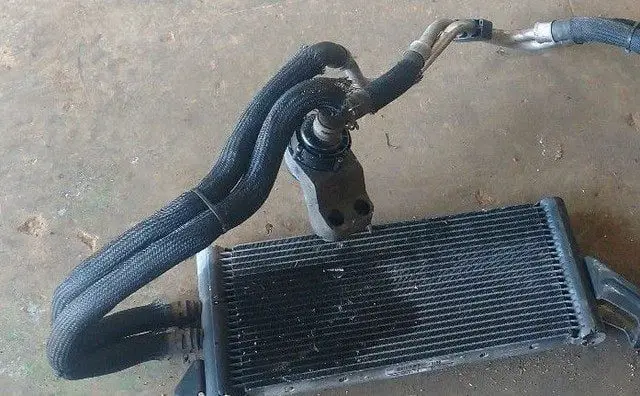
View of the fuel cooler, pump, and lines on a diesel engine
The fuel cooler, its lines, and the pump (center).

Severity Level and Symptoms

The severity of the P008C code is moderate to high. A prolonged fault can cause premature injector wear and a significant drop in performance.

Common Symptoms:

  • Reduced performance and sluggish acceleration
  • Unstable or irregular idle
  • Check engine light illuminated
  • Abnormally high fuel consumption
  • Abnormal noises (grinding, clicking) from the pump

Possible Causes of the Fault

  • Faulty fuel cooler pump
  • Corroded, oxidized, or damaged electrical connector
  • Cut, chafed, or short-circuited wiring
  • Internal PCM module failure

Diagnostic Procedure

1. Visual Inspection

Locate the pump, cooler, and PCM module. Thoroughly inspect all associated connectors and wiring for signs of corrosion, burning, damaged insulation, or exposed wires. Also, check the condition and level of the coolant.

2. Electrical Checks (Advanced)

Using a digital multimeter and manufacturer technical data (wiring diagrams, voltage ranges):

  • Check for power and ground at the pump.
  • Perform a continuity test on the wires (with power off). A healthy circuit should show 0 Ω resistance.
  • Correct voltage with an inactive pump most likely indicates a faulty pump.

Tip: Consult your vehicle’s Technical Service Bulletins (TSBs) to check for any known issues and official correction procedures.

Common Repairs

  • Replacement of the fuel cooler pump
  • Cleaning of terminals and electrical connectors
  • Repair or replacement of damaged wiring harness
  • Replacement or reprogramming (“flash”) of the PCM module

⚠️ Warning: This article is for informational purposes only. Repair procedures vary significantly by model. It is strongly recommended to consult the specific technical documentation for your vehicle or seek assistance from a professional mechanic for an accurate diagnosis.

Have questions about diagnosing the P008C code on your vehicle? Consult a diesel specialist or share your experience in the comments below!

Low Value of the Fuel Cooler Pump Control Circuit P008D

P008D Fault Code: Low Fuel Cooler Pump Control Circuit Value

The generic fault code P008D is an OBD-II code related to the powertrain, specific to diesel vehicles. It indicates that the Engine Control Module (ECM) has detected an abnormally low voltage in the fuel cooler pump control circuit. This system is crucial for maintaining the optimal temperature of diesel fuel and ensuring engine performance.

Operation of the Fuel Cooler Pump Control Circuit

The control circuit manages the pump that circulates fuel through the cooler. The cooler, functioning like a small radiator, uses engine coolant to remove excess heat from the fuel before it returns to the tank. This process is essential to prevent overheating, protect fuel injection system components, and ensure optimal diesel engine performance.

In this photo, you can see the fuel cooler, lines, and the fuel cooler pump (in the center) connected to the lines:

Diesel fuel cooling system

Severity and Symptoms of P008D Code

The severity of this code is moderate to high. An unresolved fault can lead to premature wear of injectors and fuel system components, reduced performance, and increased fuel consumption.

Common symptoms:

  • Reduced performance and engine power loss
  • Unstable idle or erratic acceleration
  • Check engine light illuminated on the dashboard
  • Increased fuel consumption
  • Abnormal noises (grinding, knocking) from the pump

Possible Causes of P008D Fault

Several factors can cause low voltage in the circuit:

  • Faulty or worn fuel cooler pump
  • Corroded, loose, or damaged electrical connector
  • Defective wiring (short circuit, break, damaged insulation)
  • Internal issue with the Engine Control Module (ECM)

How to Diagnose and Resolve P008D Code?

1. Visual Inspection

Locate all system components (pump, cooler, ECM). Conduct a thorough inspection to identify:

  • Exposed, rubbing, burnt, or cut wires
  • Oxidized, loose, or damaged connectors
  • Signs of coolant leakage

2. Advanced Electrical Checks

Using a digital multimeter and specific technical data for your vehicle (year, model, engine), check the circuit voltage and continuity. Continuity tests should be performed with the power off. Abnormal resistance or lack of continuity indicates a wiring or connector issue.

Tip: Consult your manufacturer’s Technical Service Bulletins (TSBs). A known issue with a specific correction procedure may exist, saving you time and money.

3. Common Repairs

  • Replace the faulty fuel cooler pump
  • Clean corroded electrical terminals and connectors
  • Repair or replace damaged wiring
  • Update (reflash) or replace the ECM (as a last resort)

⚠️ Warning: This information is for reference only. Diagnosing and repairing complex systems on modern diesel vehicles often requires professional expertise and precise technical data. Always consult your vehicle’s specific documentation before any intervention.

Need help interpreting your OBD scanner data or finding the correct voltage values for your model? Refer to our comprehensive guide or contact one of our experts for an accurate diagnosis.

High Value of the Fuel Cooler Pump Control Circuit P008E

What is the P008E Code?

The generic diagnostic trouble code P008E belongs to the Powertrain (OBD-II) diagnostic code family. It primarily applies to diesel vehicles and indicates that the Powertrain Control Module (PCM) has detected an abnormally high voltage in the fuel cooler pump control circuit. This system is crucial for maintaining optimal fuel temperature in diesel engines.

Role of the Fuel Cooler and Its Pump

In a diesel engine, the fuel circuit can reach very high temperatures. The fuel cooler, functioning like a small radiator, uses engine coolant to remove excess heat from the fuel before it returns to the tank. The fuel cooler pump is the component activated by the PCM to circulate the fuel through this cooler. A malfunction in this circuit (such as codes P008C, P008D, P008E) can compromise this process, leading to fuel overheating.

Diesel fuel cooler system showing the pump and lines
Typical location of the fuel cooler and its pump.

Severity and Symptoms of the P008E Code

The severity of this code is moderate to high. Uncooled fuel accelerates wear on the injectors, the injection pump, and can even affect engine lubrication, leading to costly repairs.

Common Symptoms:

  • ⛽ Decreased performance and sluggish acceleration
  • ⚠️ Check Engine Light illuminated
  • 📈 Increased fuel consumption
  • 🔊 Abnormal noises (grinding, groaning) from the pump

Possible Causes of the P008E Fault

High voltage in the circuit typically indicates an electrical problem. The main causes are:

  • 🧰 Faulty fuel cooler pump (most common cause)
  • 🔌 Corroded, loose, or damaged electrical connector
  • ⚡ Damaged wiring (short circuit or open circuit)
  • 💻 Rare PCM failure itself

How to Diagnose and Repair the P008E Code?

1. Visual Inspection

Locate the fuel cooler pump (refer to your vehicle’s repair manual). Meticulously inspect the associated connector and wiring for any signs of corrosion, physical damage, burning, or exposed wires. Also check the condition and level of the coolant.

2. Advanced Electrical Checks

Using a digital multimeter and technical data specific to your vehicle (year, model, engine), check the voltage and continuity of the pump circuit. Correct voltage applied to a non-functioning pump confirms its replacement. A lack of continuity (infinite resistance) indicates a wiring or connector problem.

Tip: Always consult the manufacturer’s Technical Service Bulletins (TSBs) to check for any known issues and specific correction procedures.

Common Repairs

  • Replacement of the fuel cooler pump
  • Cleaning or replacement of electrical connectors
  • Repair or replacement of damaged wiring harness
  • Reprogramming or replacement of the PCM (as a last resort)

⚠️ Warning: This article is for informational purposes only. Diagnostic procedures and voltage values vary significantly from one vehicle to another. It is strongly recommended to consult your manufacturer’s official technical manuals or seek a professional mechanic for an accurate diagnosis.

Need help interpreting your vehicle’s voltage values? Consult a professional equipped with a suitable diagnostic tool to avoid any risk of error.

Correlation between P008F engine coolant temperature and fuel temperature

Code P008F: Coolant Temperature / Fuel Temperature Correlation

The generic diagnostic trouble code P008F is a powertrain Diagnostic Trouble Code (DTC) applicable to many OBD-II equipped vehicles, including Mercedes-Benz, Chevrolet, Ford, GMC, and Sprinter. It is stored when the Powertrain Control Module (PCM) detects an anomaly in the correlation between the Engine Coolant Temperature (ECT) sensor signal and the Fuel Temperature sensor signal.

Symptoms of Code P008F

When this code is active, you may observe several symptoms affecting the vehicle’s performance:

  • Decreased engine performance and power.
  • Noticeable reduction in fuel efficiency (increased fuel consumption).
  • Overly rich air-fuel mixture, which can lead to excessive exhaust smoke.

Potential Causes of the Fault

Several failures can cause the P008F code:

  • A faulty Engine Coolant Temperature (ECT) sensor.
  • A defective Fuel Temperature sensor.
  • A wiring issue (short circuit, open circuit, corroded or loose connector).
  • A programming error or internal PCM failure (less common).

How to Diagnose Code P008F?

Diagnosis requires an OBD2 scanner, a digital multimeter (DVOM), and possibly an infrared thermometer. Follow this procedure:

  1. Preliminary Check: Check the coolant level and condition. Ensure the engine is not overheating.
  2. Visual Inspection: Inspect the wiring and connectors of both sensors (ECT and Fuel Temperature) for any obvious signs of damage, corrosion, or poor connection.
  3. Code Reading: Using the scanner, retrieve all fault codes and freeze frame data. Note them down and then clear the codes. Perform a road test to see if the P008F code reappears.
  4. Sensor Testing: Using a multimeter and the manufacturer’s specifications, test the resistance of the ECT and Fuel Temperature sensors (with the engine cold and hot). Compare the measured values with the reference values.
  5. Circuit Testing: Check for the presence of reference voltage (5V) and ground at the sensor connectors (ignition on, engine off). Test for continuity and the absence of short circuits in the wires connecting the sensors to the PCM.
  6. Advanced Diagnosis: Using the infrared thermometer, measure the actual temperature of the coolant and fuel. Compare these values with the signal voltage data sent by the sensors to the PCM via your scanner. A discrepancy indicates a faulty sensor.

Only suspect a PCM failure after all other possible causes have been eliminated.

Severity and Recommended Actions

The severity of code P008F is moderate to high. Although the vehicle may remain drivable, a failure of the temperature sensors can lead to poor engine management, increased fuel consumption, and potentially damage the catalytic converter. It is recommended to perform the diagnosis as soon as possible.

⚠️ Need help diagnosing your vehicle? Consult your manufacturer’s technical service bulletins or seek assistance from a professional mechanic equipped with the appropriate diagnostic tools for accurate and effective troubleshooting.

Fuel Pressure Regulator 1 Control Circuit Open

What is the P0090 Code?

The P0090 trouble code is a generic OBD-II powertrain code. It indicates that the Powertrain Control Module (PCM) has detected an open control circuit in the electronic fuel pressure regulator, designated as “1”. This designation is used on engines equipped with multiple regulators. The term “open” can also mean that the circuit is disconnected or severed.

Fuel Pressure Regulator Operation

The electronic fuel pressure regulator (or controller) is typically controlled by the PCM. It uses a voltage signal and a ground to operate a servo motor. This servo motor opens or closes a valve to continuously adjust the fuel pressure to meet the engine’s demands.

The fuel pressure sensor, often located in the fuel rail, allows the PCM to monitor the pressure in real-time. If the actual pressure does not match the desired pressure calculated by the PCM, the P0090 code is stored and the check engine light illuminates.

Symptoms of the P0090 Code

This fault is considered severe because uncontrolled fuel pressure can damage the engine and the catalytic converter. Symptoms include:

  • Hard or delayed starting
  • Black smoke from the exhaust
  • Reduced performance and fuel efficiency
  • Appearance of other engine trouble codes

Possible Causes of the P0090 Fault

Several components can be the source of this code:

  • Faulty, open, or shorted wiring or connectors in the control circuit
  • Faulty electronic fuel pressure regulator
  • Faulty fuel pressure sensor
  • Problem with the PCM (control module) or a programming error

Diagnosis and Repair Procedures

To diagnose a P0090, you will need an OBD2 scanner, a digital multimeter (DVOM), a suitable fuel pressure gauge, and access to accurate technical data for your vehicle.

⚠️ WARNING: Working on the high-pressure fuel circuit is dangerous. Fuel under pressure coming into contact with a hot surface or a spark can ignite. Always follow safety procedures.

Recommended Diagnostic Steps:

  1. Visual Inspection: Carefully inspect the wiring and connectors around the regulator and the pressure sensor. Look for signs of wear, corrosion, or damage caused by rodents.
  2. Code Scan: Using the scanner, read all trouble codes and record the freeze frame data. Clear the codes and perform a road test to see if the P0090 returns immediately.
  3. Electrical Test: If the code returns, check for the presence of supply voltage and ground at the regulator connector using the multimeter. Consult a wiring diagram to identify the wires.
  4. Pressure Test: Install a fuel pressure gauge (engine off) to measure the actual pressure. Compare this value with the manufacturer’s specified pressure and with the value read by the scanner.
  5. Regulator Test: Variations in the control voltage sent by the PCM should cause the fuel pressure to fluctuate. If this does not happen, the regulator or its circuit is likely faulty.
  6. PCM Test: Once all other causes have been eliminated, a faulty PCM may be the cause.

Tip: Always disconnect the regulator connector before performing continuity or resistance tests with the multimeter to avoid damaging the PCM.

Related Codes

Other codes related to fuel pressure may appear:

  • P0089: Fuel Pressure Regulator 1 Performance
  • P0091: Fuel Pressure Regulator 1 Control Circuit Low
  • P0092: Fuel Pressure Regulator 1 Control Circuit High
  • P0087 / P0088: Fuel Rail/System Pressure Too Low / Too High

Experiencing this problem? Diagnosing the P0090 code can be complex and dangerous. If you do not feel confident, consult a professional mechanic for an accurate diagnosis and safe repair.

P0091 Fuel Pressure Regulator 1 Control Circuit Low

📘 Definition of Code P0091

Code P0091 is a generic OBD-II powertrain code that indicates a problem in the fuel pressure regulator control circuit. It is common on many brands such as Ford, Toyota, Renault, Peugeot, Volkswagen, BMW, Mercedes and other modern vehicles.

This fault means that the engine computer (PCM/ECU) has detected an abnormally low voltage in the electrical circuit controlling the fuel pressure regulator, often associated with engine bank 1.


⚙️ Role of the Fuel Pressure Regulator

The electronic fuel pressure regulator is an actuator controlled by the computer. It adjusts the fuel pressure in the fuel rail in real-time using a servomotor, ensuring an optimal air-fuel mixture.

A pressure sensor, often integrated into the regulator, sends information back to the PCM, which then modulates the control signal to maintain the required pressure.


🚨 Symptoms of Code P0091

Common symptoms include:

  • Hard or failed starting, especially when cold
  • Black smoke from the exhaust (overly rich mixture)
  • Jerking, hiccups, and misfires
  • Loss of power and decreased engine performance
  • Abnormally high fuel consumption
  • Illumination of the Malfunction Indicator Lamp (MIL)

💡 Tip: It is not recommended to drive the vehicle with this code active, as it risks damaging the catalytic converter or particulate filter.


🔍 Possible Causes of P0091

Several components can be the source of this fault:

  • Cut, chafed, melted, or corroded electrical wires
  • Oxidized, loose, or damaged connector on the regulator
  • Faulty fuel pressure regulator (internal failure)
  • Failed fuel pressure sensor (often integrated)
  • Power supply issue (blown fuse, faulty relay)
  • Poor ground in the control circuit
  • Rare failure of the engine computer (PCM)

🔧 Diagnosing Code P0091: Step-by-Step Guide

🛠️ Required Tools: OBD2 scanner, digital multimeter, fuel pressure gauge, vehicle-specific electrical diagram.

1. Methodical Visual Inspection

Start with a thorough inspection of the wiring and connectors around the fuel pressure regulator and fuel rail. Look for any signs of burning, corrosion, exposed wires, or rodent damage.

2. Reading Data and Associated Codes

Using the scanner, read the code and freeze frame data. Note any associated codes (P0087, P0088, P0090, etc.) that may guide the diagnosis. Clear the codes and perform a road test to see if the fault returns.

3. Electrical Testing with a Multimeter

Connect the multimeter to the regulator’s connector (engine off, ignition on). Check for the presence of 12V power supply and the integrity of the ground. Consult the electrical diagram to identify wires and test points. Check the relevant fuses and relays.

4. Measuring Fuel Pressure

Connect a pressure gauge to the fuel circuit. Compare the physically measured pressure with the value read by the scanner via the sensor. A significant discrepancy often indicates a faulty sensor.

⚠️ Safety: Depressurizing the fuel circuit is necessary before any intervention. Strictly follow the manufacturer’s procedures to avoid any risk.

5. Testing the Regulator and Circuit

Disconnect the regulator. Test the resistance of the actuator coil (consult the technical documentation for the specific value). Test the continuity and insulation of the wires between the regulator and the PCM using the ohmmeter.


✅ Repair and Solutions

Depending on the identified cause:

  • Damaged wiring: Repair or replacement of the harness.
  • Faulty connector: Cleaning of terminals or replacement of the connector.
  • Failed regulator/sensor: Replacement of the fuel pressure regulator.
  • PCM problem: Reset, software update, or replacement (as a last resort).

After repair, clear the codes and perform a road test to confirm the problem is resolved. A calibration or relearn procedure via a diagnostic tool may be necessary after replacing certain parts.


📋 Associated OBD-II Codes

Code Description
P0087 Fuel Rail Pressure Too Low
P0088 Fuel Rail Pressure Too High
P0090 Fuel Pressure Regulator Control Circuit
P0190 Fuel Rail Pressure Sensor Circuit

🔎 Need help diagnosing your vehicle? Consult a professional mechanic equipped with advanced diagnostic tools for an accurate diagnosis and reliable repair.

P0092 Fuel Pressure Regulator 1 Control Circuit High

Code P0092: Fuel Pressure Regulator 1 Control Circuit High

Definition and Meaning of Code P0092

The P0092 trouble code is a generic powertrain code applicable to most OBD-II equipped vehicles (Dodge, Chrysler, Ford, Toyota, Honda, etc.). It indicates that the Powertrain Control Module (PCM) has detected an abnormally high voltage in the electronic fuel pressure regulator control circuit (often designated by the number 1 on multi-bank engines).

The PCM controls this regulator by adjusting the voltage to operate a servo motor. This motor opens or closes a valve to achieve the optimal fuel pressure, which is monitored in real-time by a sensor located in the injection rail. A voltage that is too high in the control circuit triggers the P0092 code and illuminates the Malfunction Indicator Lamp (MIL) on the dashboard.

Symptoms and Severity of the Fault

This code is considered severe because excessive fuel pressure can damage the engine, the catalytic converter, and impact safety and performance.

Common symptoms include:

  • Reduced performance and fuel consumption
  • Hard cold starting
  • Black smoke from the exhaust
  • Appearance of related trouble codes (misfires, idle issues)

Possible Causes of Code P0092

The origins of this problem are multiple:

  • Faulty electronic fuel pressure regulator
  • Defective fuel pressure sensor
  • Wiring problem (short circuit, open circuit, corroded connector)
  • Faulty PCM or one requiring a software update

Diagnosis and Repair Procedures

Diagnosis requires an OBD2 scanner, a digital multimeter (DVOM), a suitable fuel pressure gauge, and access to an accurate wiring diagram for your specific vehicle model.

⚠️ Warning: Working on the high-pressure fuel circuit is dangerous. Avoid any sparks or hot surfaces to prevent the risk of fire.

  1. Visual Inspection: Carefully examine the wiring and connectors, especially on top of the engine, for signs of wear, corrosion, or damage caused by rodents.
  2. Code Reading: Using the scanner, retrieve all stored codes and freeze frame data. Note them down before clearing them to perform a drive cycle test.
  3. Electrical Tests: With the ignition on (engine off), use the multimeter to check for battery voltage and a good ground at the regulator connector. Consult the wiring diagram to locate the relevant fuses, relays, and ground points.
  4. Fuel Pressure Test: Connect the pressure gauge and compare the actual pressure with the manufacturer’s specifications and the live data from the scanner. A discrepancy often indicates a faulty sensor.
  5. Regulator and Circuit Testing: Disconnect the connector and test the resistance and continuity of the regulator control circuits with a multimeter, following the manufacturer’s specifications.

Related Codes

  • P0087: Fuel Rail/System Pressure Too Low
  • P0088: Fuel Rail/System Pressure Too High
  • P0090: Fuel Pressure Regulator 1 Control Circuit
  • P0091: Fuel Pressure Regulator 1 Control Circuit Low

🔧 Need help diagnosing your vehicle? If these procedures are beyond your comfort level, it is highly recommended to consult a professional mechanic equipped with advanced diagnostic tools. An accurate diagnosis helps avoid costly and unnecessary repairs.

P0093 Large Fuel System Leak Detected

📌 What Does Code P0093 Mean?

Error code P0093 is a generic OBD-II code that applies to most modern diesel vehicles. It indicates that the engine control module (ECM) has detected a sudden and significant drop in fuel pressure in the high-pressure circuit, between the pump and the injectors.

In response to this anomaly, the ECM activates a safety mode (limp mode) that gradually reduces engine power, potentially leading to a complete shutdown to prevent serious internal damage. The vehicle may sometimes restart, but it could stall at any moment.

⚠️ Symptoms of Code P0093

  • Illumination of the check engine light on the dashboard
  • Engine stalling or shutting off automatically after a few seconds
  • Significant loss of power, especially during acceleration
  • Difficulty starting, or even failure to start
  • Unstable idle

🔍 Possible Causes of the Leak

A leak in the high-pressure system can stem from several components:

  • Faulty fuel injector (stuck open or leaking)
  • Leak in the common rail or high-pressure lines
  • Faulty fuel pressure sensor
  • Failed high-pressure fuel pump or lift pump
  • Fuel heater stuck on
  • Faulty fuel temperature sensor
  • Clogged or obstructed fuel filter
  • Failure of the pressure limiting valve or regulator
  • Damaged connectors or wiring (corrosion, short circuit)
  • Faulty ECM (rare case)

🛠️ Diagnosis and Repair

  1. Visual Inspection: Carefully inspect all fuel lines, from the tank to the injectors (with the engine off), looking for signs of moisture or leaks.
  2. Check Oil Level: An abnormally high level that smells like fuel indicates an injector leaking into the crankcase. Do not restart the engine before an oil change.
  3. Inspect the injection pump and common rail for any visible leaks.
  4. Disconnect the fuel pressure sensor: the presence of fuel in the connector indicates it needs replacement.
  5. Check the condition and replacement date of the fuel filter.
  6. Inspect all connectors and wiring for sensors and injectors for any corrosion or damaged wires.
  7. Consult your manufacturer’s technical service bulletins (TSB) for known issues with your model.
  8. Check your diesel engine warranty: many brands cover injectors and components for up to 7 years or 300,000 km.

🚨 Important Safety Tip

Never work with bare hands on the fuel system of a running diesel engine. Pressures in the common rail circuit can reach over 2,000 bar (30,000 PSI). An injection under the skin is extremely dangerous and requires immediate medical attention.

💡 Need Help?

Diagnosing code P0093 can be complex and often requires specialized diagnostic tools. If you are not equipped or unsure, consult a professional mechanic specialized in diesel engines for an accurate diagnosis and safe repair.

P0094 Small Leak in the Fuel System

Code P0094: Diagnosing and Repairing a Fuel System Leak

The generic diagnostic trouble code P0094 indicates that the Powertrain Control Module (PCM) has detected a substantial drop in fuel pressure. Although this code applies to all vehicles built after 1996 (Ford, GMC, Chevrolet, VW, Dodge, etc.), it primarily concerns diesel engines. Specific diagnostic steps may vary by make and model.

System Operation and Causes of Code P0094

Diesel systems use one or more pressure sensors to monitor the circuit. A supply pump transfers fuel from the tank to a high-pressure injection pump, where pressure can exceed 2,500 psi. Warning: Handling a high-pressure system is dangerous. Diesel fuel is flammable and, under pressure, can penetrate the skin and enter the bloodstream, which can be harmful or even fatal.

Pressure sensors, typically three-wire types, send a variable voltage signal to the PCM. If the measured pressure deviates from the programmed specifications for a defined duration, the PCM records code P0094 and may illuminate the malfunction indicator lamp.

Symptoms and Severity of Fault P0094

This code should be treated with great urgency due to fire risks and performance degradation.

Common Symptoms:

  • Persistent smell of diesel fuel
  • Reduced fuel efficiency (increased consumption)
  • Decreased engine performance (loss of power)
  • Possible presence of other codes related to the fuel system

Possible Causes:

  • Clogged or blocked fuel filter
  • Faulty fuel pressure sensor
  • Failed fuel pressure regulator
  • Leak in the system: tank, lines, injection pump, supply pump, or injectors

Step-by-Step Diagnostic Procedure

⚠️ Safety Tip: These procedures on a high-pressure system must be performed by qualified and equipped personnel.

1. Check Technical Service Bulletins (TSBs) for your vehicle. A known fix may exist and save you valuable time.

2. Visual Inspection: Carefully inspect all fuel lines, connections, and components (pumps, injectors) to identify any obvious leaks. Also, check the condition of the sensor wiring and connectors.

3. Code Reading: Using a diagnostic scanner, retrieve all present fault codes and freeze frame data. Note this information. Clear the codes and perform a road test to see if P0094 returns immediately.

4. Live Data: If the code returns, use the scanner to observe live fuel pressure values (data stream). Compare these values to the manufacturer’s specifications.

5. Mechanical Pressure Test: If the scanner values are inconsistent, use a physical pressure gauge to measure the pressure at different points in the circuit (low and high pressure) and confirm the reading.

6. Sensor Test: Using a multimeter (DVOM), test the resistance of the relevant fuel pressure sensor. Compare the measured value with that specified in the technical documentation. A sensor out of specification must be replaced.

7. Circuit Testing: If the sensor is good, test the electrical circuits (power, ground, signal) between the sensor and the PCM for an open or short circuit.

8. Final Step: If all previous tests are conclusive, an internal failure of the PCM (control module) is possible, although rare.

🔧 Need Help Diagnosing Your Vehicle?

Diagnosing a leak in a high-pressure diesel system is complex and dangerous. If you do not have the necessary equipment or expertise, promptly consult a professional mechanic for an accurate diagnosis and safe repair.

P0095 IAT Sensor 2 Circuit Malfunction

Meaning of Code P0095

Error code P0095 is a generic OBD-II code that indicates a malfunction in the circuit of Intake Air Temperature Sensor #2 (IAT 2). This sensor, typically a thermistor, measures the temperature of the air entering the engine. It sends a variable voltage signal to the PCM (Powertrain Control Module) based on the electrical resistance altered by the air temperature.

IAT Sensor Operation

  • The PCM sends a 5 V reference voltage to the IAT sensor
  • The sensor’s resistance varies with temperature:
    • Cold airHigh resistance → High signal voltage (close to 5 V)
    • Hot airLow resistance → Low signal voltage (close to 0 V)
  • The PCM converts this voltage into temperature to adjust the air-fuel mixture and ignition timing

Code P0095 activates when the PCM detects an out-of-range voltage on the IAT sensor #2 circuit, indicating an electrical issue or sensor failure.


Symptoms of Code P0095

  • 🚨 Illuminated check engine light (MIL)
  • 🐌 Unstable idle or poor engine performance
  • Increased fuel consumption
  • 💨 Acceleration problems (hesitation, power loss)
  • 🌡️ Hard starting in cold weather

Possible Causes of P0095 Fault

  1. Faulty IAT Sensor #2 – Internal resistance out of specification
  2. Electrical circuit issues:
    • Short to ground or open circuit on the signal wire
    • Damaged wires (cut, burnt insulation)
  3. Faulty connections:
    • Oxidized pins, improperly engaged connector
  4. Mispositioned sensor – Misaligned or out of the airflow
  5. PCM failure (rare)

Diagnosis of Code P0095

Step 1: Visual Inspection

  • Check that the IAT sensor #2 is properly secured
  • Inspect the wiring harness and connector: corrosion, exposed wires

Step 2: OBD-II Scanner Test

  • Read the real-time IAT temperature (ignition on, engine off)
  • Compare with coolant temperature (difference ≤ 5°C)
  • If reading is extreme (-40°C or 150°C) → Disconnect the sensor
    • Reading at -50°C → Faulty sensor
    • Reading unchanged → Circuit problem

Step 3: Resistance Measurement

  • Disconnect and measure resistance with a multimeter
  • Typical values: ~3,400 Ω at 20°C, ~700 Ω at 50°C
  • Infinite resistance → Sensor faulty

Step 4: Circuit Check

  • Voltage test: ~5 V expected between signal wire and ground
  • Continuity test: check for no breaks to the PCM

Repair Solutions

  1. Replace the IAT sensor #2 if faulty
  2. Repair the wiring harness with waterproof soldering
  3. Clean or replace the connector in case of corrosion
  4. Reset the P0095 code with a scanner after repair

💡 Expert tip: Need help diagnosing your vehicle? for an accurate diagnosis.


Related Codes

  • P0096 to P0099: IAT circuit range/performance anomalies
  • P0110 to P0114: General IAT sensor faults
  • P0127: Intake air temperature too high

Important Tips

  • ⚠️ Do not ignore this code: A bad IAT signal can damage the catalytic converter
  • 🔍 Always check the circuit before replacing the PCM
  • 📚 Consult a specific repair manual for exact values
  • 🔧 Use quality OEM parts to ensure long service life

📞 Have questions about code P0095? for personalized advice.