MAF mass air flow sensor

MAF mass air flow sensor

mass air flow sensor and related information

Check that engine light faults related to the mass air flow sensor are becoming less common, but do occur. The tricky thing with some of these types of faults is that you can have a mass air flow sensor problem without triggering the check engine light. Before getting into diagnostics, let’s start with a brief overview of the sensor itself.

The main purpose of the mass air flow sensor (MAF) is to measure the volume and density of air entering the engine at any given time. The computer uses this information together with inputs from other sensors to calculate the correct amount of fuel to deliver to the engine. This sensor’s input is also indirectly used to help calculate the desired ignition timing and transmission operation strategies. MAF sensors are primarily designed as either a “hot wire” sensor or a “hot film” sensor. Both sensors operate similarly. Hot wire sensors pass current through a platinum wire and hot film sensors pass current through a foil grid. The current level is regulated to keep the hot wire, or film, at a predetermined temperature. This temperature is either a direct value or a value that is a set number of degrees above the ambient (outside) air temperature.

So how does this tell us how much air is entering the engine? Well, when air passes through the mass air flow sensor, it cools the hot wire, increasing the amount of current needed to keep that wire at the specified temperature. The amount of cooling of the wire is directly proportional to the temperature, density, and humidity of the air passing through the sensor and, as such, the increased current required to heat the wire allows the computer to easily calculate the volume of air entering the engine.

mass air flow sensor

Mass air flow sensors typically send a voltage or frequency signal to the powertrain control module (PCM). Hot wire sensors usually have an operating range of 0 to 5 volts, with idle voltage around 0.5 to 0.8 volts and full throttle application normally between 4 and 5 volts. Hot film sensors typically produce a frequency output of 30 to 50 Hz, with 30 Hz at idle and 150 Hz at full throttle. There are other subtle differences between sensors, but these do not affect the function or purpose.

So, what types of symptoms can we get from MAF sensors, and how should we test for these faults?

Well, as we mentioned earlier, MAF sensors can produce drivability symptoms without generating a check engine light code, so some specific checks are in order. To facilitate diagnosis, a scan tool should be used to monitor the sensor readings. In some cases, it is acceptable to take sensor value readings by probing the appropriate terminals on the MAF sensor again.

If specific MAF check engine codes are present, proceed with the appropriate tests. If no codes are present, or if you have lean codes that you suspect are caused by a faulty mass air flow sensor, proceed as follows. Obtain the sensor specifications from a reliable source; you can email us from the help link and we can assist you with most information. Connect a scan tool with the ability to monitor sensor valves (PIDs) and reinstall the mass air flow sensor. Record your MAF sensor reading at idle, then again at different RPM ranges. Compare the values to the specifications. Then, start at idle and increase the throttle opening while watching the MAF reading. The increase should be steadily proportional to the RPM change. Perform the same checks while lightly tapping the sensor or heating the sensor with a hairdryer. Any fluctuation or reading out of specifications indicates a mass air flow sensor or related wiring issue. Repair and retest. I would also recommend monitoring MAF values while driving the vehicle and checking the readings when the problem is present. Have an assistant drive while you check these readings. If the mass air flow reading is within specifications while a concern comes and goes, it is probably not the issue. Be sure to check all connections and air intake seals, as well as the air filter before faulting the sensor, as these types of issues can affect the readings.

On a final note; it is not always necessary to replace a mass air flow sensor whose reading is out of specifications, although most dealers will tell you otherwise! It is possible that the sensor is simply contaminated due to age or the use of oil-saturated air filters. You can try exposing the sensor’s hot wire (once the sensor is removed from the vehicle) and cleaning it with electronic parts cleaner and low-pressure air. Use appropriate precautions. Once the sensor is clean, reassemble, install, and check the operation; you may be pleasantly surprised! I hope this information has been helpful. Thank you for visiting and have a good day!
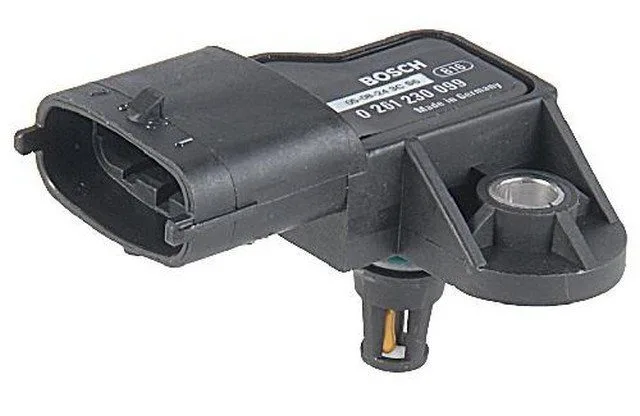
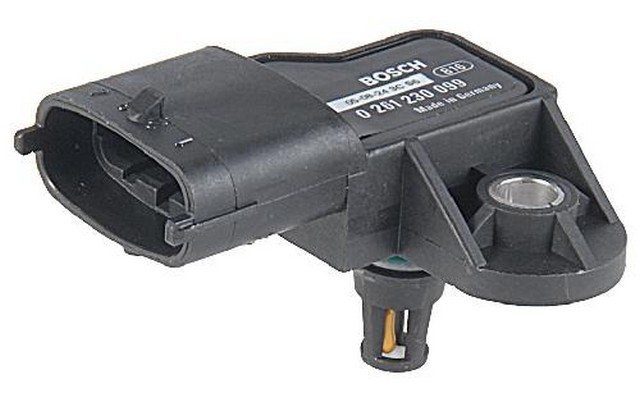
MAP Sensor (Manifold Absolute Pressure)

The manifold absolute pressure sensor or MAP sensor is a sensor that is attached to the intake manifold on a car’s engine. The MAP sensor responds to changes in the intake manifold pressure (vacuum) and provides a reading of the “engine load”.

Its operation is based on 5 volts DC supplied to the sensor by the PCM (powertrain control module). Inside the MAP sensor, there is a resistor that moves according to the intake manifold pressure. The resistor varies the voltage between about 1 V and 4.5 V (depending on the engine load) and this voltage signal is sent back to the PCM to indicate the intake pressure (vacuum). This signal is essential for the PCM to determine the fuel flow rate and is also used repeatedly to determine if the EGR valve is functioning properly.

O2 Oxygen Sensor

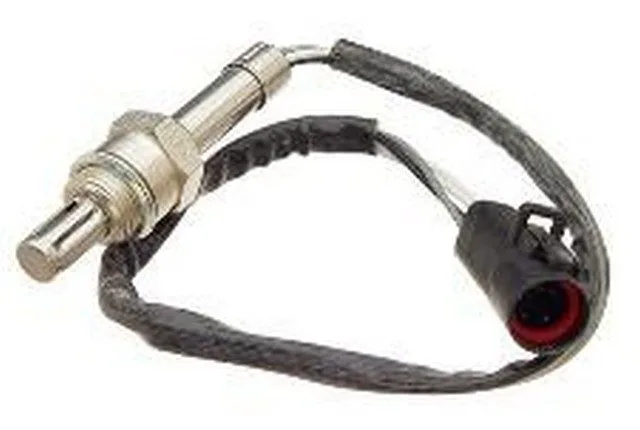
Oxygen Sensor Description and Related Information

So you want to know a little more about how an oxygen sensor works? Well, as you may already know, many sensors are needed for a modern engine to run, but none are arguably as important as the oxygen sensors. These sensors read the amount of unburned oxygen in the exhaust gases. The computer then uses this reading to balance the fuel mixture. As the oxygen content in the exhaust increases (known as a lean condition), the sensor voltage reading decreases. This signals the computer to increase the amount of fuel delivered by the injectors. In turn, the oxygen content in the exhaust gases decreases (known as a rich condition).

The oxygen sensor voltage increases due to this enrichment, and the computer responds by reducing the fuel flow. As the amount of fuel decreases, we return to a lean mixture and the sensor voltage drops. This process repeats as long as the engine is running. This continuous feedback loop is the heart of the fuel control system. Typical lean voltage readings are between 0 and 0.3 volts, and rich readings range from 0.6 to 1 volt. An ideal fuel mixture (14.7:1) will produce a voltage of about 0.5 volts.

So why not just maintain a constantly measured amount of fuel that varies with throttle position? Well, many factors affect the amount of fuel required to maintain a 14.7:1 ratio. Some of these factors include fuel quality, atmospheric pressure, humidity, and more. Hence the need for O2 sensors! The switching rates of sensors vary, but most modern sensors average at least half a dozen switches per second. Older sensors switched as slowly as once per second, so you can imagine the improvement in emissions produced by the new style sensors!

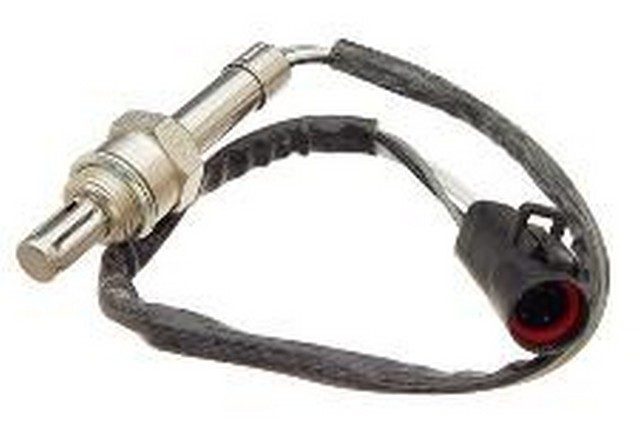
oxygen sensor

Old-style oxygen sensors used before 1982 were of the 1 or 2-wire unheated type. These sensors would not start recording a correct reading until the exhaust had heated the sensor to its operating range. This resulted in the computer operating in “open loop” (using predefined fuel values that actually make the engine run rich) for longer periods. All newer style sensors are “Heated Oxygen Sensors” (HO2S) that incorporate a heating element used to bring the sensor to operating temperature sooner, typically in less than a minute but as quickly as 10 seconds is possible! The heating elements also prevent the sensors from cooling when the engine is idling. These heated sensors are normally of 3 and 4-wire design.

There are a few different style sensors, which vary in chemical composition and design, but their purpose and function remain the same. The engineering behind these is beyond the scope of this page, but there are a few points to consider. Oxygen sensors compare the oxygen content of the outside air to the oxygen content of the exhaust gases. The outside air is brought into the sensor either through a vent in the sensor housing or through the wiring connector itself. Some types of sensors generate a voltage when the oxygen content of the exhaust changes and some have variable resistance. The newest style, heated wideband O2 sensors, have a voltage range between 2 and 5 volts. Despite all these differences and the actual readings produced by the sensors, the computer processes the information so that we have the expected readings of 0 to 1 volt. There are, of course, a few exceptions. Some heated Titania type O2 sensors can produce a voltage up to 5 volts. This reading is not altered by the computer. Another design of the same style sensor is configured to read values opposite to what you expect. High voltages indicate a lean mixture and low voltages a rich mixture. These 2 types of oxygen sensors are not common and have been used mainly on a few Nissan, Jeep, and Eagle applications. There always has to be an exception! Engineers, yeah I know!

You will also notice that on most post-1996 applications, there is a second set of oxygen sensors beyond the catalytic converters. These operate in the same way as the front O2 sensors, but their readings are used differently, and their purpose is to measure the efficiency of the converters, not to monitor the engine’s fuel ratios. Please refer to our article on oxygen sensor codes for diagnostic help and a more detailed description of O2 monitors. This article provides diagnostic assistance and valuable testing procedures as well as the likely causes of rich or lean oxygen sensor codes. I hope you found this information helpful!

TPS Sensor – Throttle Position Sensor

Throttle Position Sensor Description and Related Information

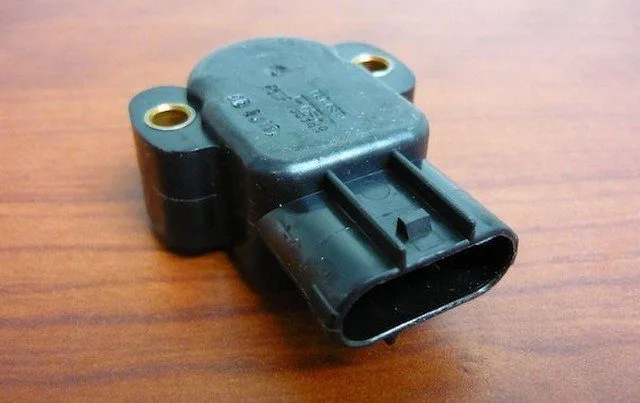
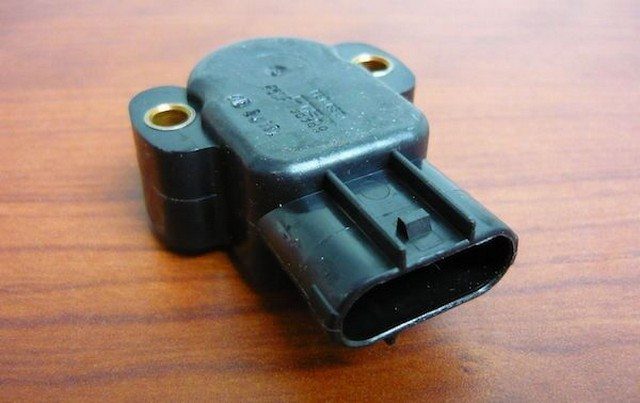
Almost all post-96 vehicles use a throttle position sensor (TPS) to inform the engine control module of the accelerator pedal and throttle plate position. TPS sensors are normally mounted on the throttle body with the throttle plate shaft running through the sensor. When the accelerator pedal is pressed, the throttle plate opens, rotating the sensor’s internal variable resistance. As the throttle opens, the voltage returned to the computer by the throttle position sensor varies (typically increasing), signaling the throttle opening rate as well as the throttle position. The computer uses this information to adjust fuel compensation, which is the duration the injectors remain open, providing more fuel.

Most throttle position sensors have at least 3 wires. These are for a 5-volt reference, a ground line, and the actual TPS voltage line. When testing the throttle position sensor system, always ensure you have the 5-volt reference and ground, then monitor the signal line for the actual throttle position sensor voltage output.

You can monitor this by probing the circuit again at the TPS. The voltage should increase steadily as the throttle is opened. This should be checked with the ignition on and the engine off. Use an appropriate wiring diagram and always verify the correct base voltage before scanning the accelerator pedal. Any voltage drop or irregular voltage indicates a problem. You should also check by tapping and heating the sensor if you suspect a possible intermittent issue. Refer to our article on automotive circuit testing for more help with these tests, and always exercise caution.

throttle position sensor

Possible symptoms of a faulty TP sensor include hesitation or stumbling during acceleration or surging, a dead spot in the throttle, rough idle, or a check engine light with associated codes. Some older style throttle position sensors are adjustable, but most newer style sensors are fixed position. Base TPS voltage readings are essential for proper fuel compensation operation, so always use your scan tool or multimeter to verify proper adjustment. A poorly secured sensor will cause erratic symptoms, including rough idle and hesitation, so check this as well. Have other questions? Use the Get Help link and we’ll assist you! Thank you for visiting and be sure to check out some of our highly informative articles regarding engine light repair!

If you find you need a replacement TP sensor, please visit one of our suggested parts suppliers. We search for the best companies for value and service and only recommend the best. You won’t find better prices anywhere and you can buy with confidence from reputable merchants! Thank you for visiting and have a great day!

Vehicle Speed Sensor VSS

🚗 Vehicle Speed Sensor (VSS): Complete Guide


📌 VSS Function

The Vehicle Speed Sensor (VSS) measures the speed of the wheels or transmission and transmits this data to various systems:

  • Power Steering: Adjusts pressure to facilitate maneuvering at low speeds.
  • ABS: Detects wheel lock-up.
  • Transmission: Optimizes gear shifts.
  • Cruise Control: Maintains a constant speed.
  • Air Suspension: Adjusts ride height at high speeds.
  • Speedometer: Displays real-time speed.

⚠️ Symptoms of a Faulty VSS

  • 🚨 Inactive or erratic speedometer.
  • 🔄 Transmission issues: Jerky or delayed gear shifts.
  • 🛑 ABS/ESP failure: ABS light on, loss of stability.
  • 🚫 Cruise control inoperative.
  • 🏎️ Stiff power steering at low speeds.

🔍 Common Causes

  1. Damaged wiring: Cut wires, corrosion, oxidized connectors.
  2. Faulty VSS: Contaminated magnet, internal wear.
  3. Damaged trigger wheel (in the differential or transmission).
  4. Water intrusion in connectors.
  5. Multiplexing issues: Data not shared between modules.

🔧 VSS Diagnosis

1. Using a diagnostic tool

  • 📊 Check live data (vehicle speed, related codes: P0500, P0501).
  • 🔄 Compare values with other sensors (e.g., ABS wheel sensors).

2. Manual tests

  • Measure the resistance of the VSS (refer to manufacturer specifications).
  • 🔍 Visual inspection:
  • Check connectors (corrosion, oxidation).
  • Inspect the trigger wheel (debris, broken teeth).
  • Look for metal particles on the sensor magnet.

3. Circuit verification

  • 🔌 Test the circuit power and ground with a multimeter.
  • 🔄 Ensure you test the correct sensor (some vehicles have multiple VSS).

🛠️ Recommended Repairs

  • Replace the VSS if resistance is out of specification.
  • Repair wiring: Soldering, replacing connectors.
  • Clean the trigger wheel and sensor (magnetic decontamination).
  • Update modules (PCM, ABS) if necessary.

🚨 Key Points to Remember

  • Do not replace the VSS without first checking the wiring and connectors.
  • Consult Technical Service Bulletins (TSB) for recurring issues on your model.
  • Use original parts to ensure signal compatibility.

💡 Pro Tip:
If in doubt, use an oscilloscope to analyze the VSS signal and detect interruptions or waveform anomalies.

📞 Need help? Share your vehicle’s make and model for specific advice! 🚗🔧

Idle Control Valve / Stepper Motor IAC

Idle Control Valve / Stepper Motor


1. What is the idle control valve / stepper motor and what is its function in the car?

The idle speed control (ISC) valve, also called the idle air control (IAC) valve, is used in fuel-injected engines to control idle speed. The stepper motor, a type of idle valve, consists of a pintle that blocks or allows air to bypass the throttle plate. The powertrain control module (PCM) regulates the operation of the stepper motor.

2. What are the symptoms of a faulty IAC / stepper motor?

Unsurprisingly, a faulty IAC often results in engine idle problems. An engine idling too fast or too slow may indicate a defective IAC. An engine that stalls can also indicate IAC issues.

3. How can I check if my IAC / stepper motor is faulty?

Most of the time, if there is a problem with the IAC or its control circuit, the PCM will set a diagnostic trouble code (DTC) and illuminate the “Check Engine” light (CEL). If the light is on, you can connect a diagnostic tool to the designated port under the dashboard and read the listed error codes. If the code indicates a problem with the IAC or its circuits, the vehicle-specific repair manual should be consulted before proceeding with further tests.

4. How do I change the IAC / stepper motor in my car?

The method for replacing the IAC varies from vehicle to vehicle, but it is fairly straightforward in most cases. Specific repair information should be consulted before you replace your IAC. A typical IAC replacement proceeds as follows:

  • Disconnect the negative battery terminal

  • Disconnect the IAC electrical connector

  • Remove the IAC valve mounting screws

  • Remove the IAC assembly

  • Reinstall in the reverse order of disassembly

Lambda probe (oxygen sensor)

The Lambda Sensor (Oxygen Sensor)

1. What is a Lambda Sensor and What is its Purpose?

The lambda sensor, or oxygen sensor, measures the oxygen content in the exhaust gases. This information is sent to the Powertrain Control Module (PCM) to optimize engine parameters:

  • Upstream Sensor: Regulates the air/fuel mixture for efficient combustion.
  • Downstream Sensor: Monitors the efficiency of the catalytic converter.

2. What are the Symptoms of a Faulty Lambda Sensor?

A faulty lambda sensor can cause:

  • Increased fuel consumption.
  • Higher pollutant emissions.
  • Illumination of the “Check Engine” light (CEL).
  • Reduced engine power and responsiveness.
  • Irregular engine operation and unstable idle.

3. How to Check if the Lambda Sensor is Faulty?

  • If the CEL is on, use a diagnostic tool to read the error codes.
  • Functional sensors behave as follows:
    • Upstream Sensor: Produces a fast sine wave (0.1V to 0.9V at idle).
    • Downstream Sensor: Displays a stable voltage (around 0.45V) if the catalytic converter is in good condition.
  • An oscilloscope or scanner can confirm sensor responsiveness.
    Always refer to your vehicle’s specific manual for detailed testing procedures.

4. How to Replace a Lambda Sensor?

Here are the general steps to replace a lambda sensor:

  1. Disconnect the negative battery cable.
  2. Unplug the sensor’s electrical connector.
  3. Remove the sensor using a suitable wrench or special socket.
  4. Install the new sensor in reverse order.

Before proceeding, consult the instructions specific to your vehicle model.

Throttle Position Sensor / Throttle Potentiometer

Throttle Position Sensor / Throttle Potentiometer


1. What is a throttle position sensor and what is its function in the car?

Latest fuel injection engine models use a throttle position sensor (TPS) to inform the powertrain control module (PCM) about the throttle opening rate and its position. The PCM then uses this information to control many output data such as fuel control.

2. What are the symptoms of a faulty throttle position sensor?

A faulty TPS can create many problems, the most common being hesitation or misfires during acceleration. Normally, the Check Engine Light (CEL) is also illuminated. Other symptoms may include (non-exhaustive list): changes in power and response, increased emissions, irregular engine operation, and poor idle quality.

3. How can I check if my throttle position sensor is broken?

Generally, if there is a problem with the TPS or its circuits, a diagnostic trouble code (DTC) will be recorded and the Check Engine Light (CEL) will illuminate. If the light is on, you can plug a diagnostic tool into the designated port under the dashboard and read the error codes listed. If the code indicates a problem with the TPS or its circuits, the vehicle-specific repair manual should be consulted before proceeding with further tests.

4. How do I change the throttle position sensor?

The method for replacing a TPS varies from vehicle to vehicle, but it is quite simple in most cases. Specific repair information should be consulted before you replace your TPS. A typical TPS replacement proceeds as follows:

  • Disconnect the negative terminal of the battery.

  • Disconnect the electrical connector from the TPS.

  • Remove the TPS mounting screws.

  • Remove the TPS.

  • Reinstall in the reverse order of removal.

  • Adjust the TPS if necessary.

Honda B-CAN and F-CAN

Body Controller Area Network (B-CAN) and Fast Controller Area Network (F-CAN)

The Body Controller Area Network (B-CAN) and the Fast Controller Area Network share information between multiple Electronic Control Units (ECUs). B-CAN communication operates at a slower speed (33.33 kbps) for convenience-related items and other functions. F-CAN information moves at a faster speed (500 kbps) for “real-time” functions such as fuel and emissions data. To allow both systems to share information, the gauge control module translates information from B-CAN to F-CAN and from F-CAN to B-CAN. This is called the gateway function.

DTC 11-11: Right front wheel speed sensor circuit malfunction
DTC 11-12: Right front wheel speed sensor power source malfunction
DTC 12-11: Right front wheel speed sensor electrical noise or intermittent interruption
DTC 12-12: Right front wheel speed sensor short to other sensor circuit
DTC 12-120: Right front wheel speed sensor circuit malfunction
DTC 12-13: Right front wheel speed sensor installation error
DTC 12-14: Right front wheel speed sensor installation error
DTC 12-15: Right front wheel speed sensor installation error
DTC 13-11: Left front wheel speed sensor circuit malfunction
DTC 13-12: Left front wheel speed sensor power source malfunction
DTC 14-11: Left front wheel speed sensor electrical noise or intermittent interruption
DTC 14-12: Left front wheel speed sensor short to other sensor circuit
DTC 14-120: Left front wheel speed sensor circuit malfunction
DTC 14-13: Left front wheel speed sensor installation error
DTC 14-14: Left front wheel speed sensor installation error
DTC 14-15: Left front wheel speed sensor installation error
DTC 15-11: Right rear wheel speed sensor circuit malfunction
DTC 15-12: Right rear wheel speed sensor power source malfunction
DTC 16-11: Right rear wheel speed sensor electrical noise or intermittent interruption
DTC 16-12: Right rear wheel speed sensor short to other sensor circuit
DTC 16-120: Right rear wheel speed sensor circuit malfunction
DTC 16-13: Right rear wheel speed sensor installation error
DTC 16-14: Right rear wheel speed sensor installation error
DTC 16-15: Right rear wheel speed sensor installation error
DTC 17-11: Left rear wheel speed sensor circuit malfunction
DTC 17-12: Left rear wheel speed sensor power source malfunction
DTC 18-11: Left rear wheel speed sensor electrical noise or intermittent interruption
DTC 18-12: Left rear wheel speed sensor short to other sensor circuit
DTC 18-120: Left rear wheel speed sensor circuit malfunction
DTC 18-13: Left rear wheel speed sensor installation error
DTC 18-14: Left rear wheel speed sensor installation error
DTC 18-15: Left rear wheel speed sensor installation error
DTC 21-11: Right front magnetic encoder malfunction (missing pulse)
DTC 22-11: Left front magnetic encoder malfunction (missing pulse)
DTC 23-11: Right rear magnetic encoder malfunction (missing pulse)
DTC 24-11: Left rear magnetic encoder malfunction (missing pulse)
DTC 25-11: Yaw rate sensor internal circuit malfunction
DTC 25-12: Yaw rate sensor stuck
DTC 25-13: Yaw rate sensor output signal malfunction
DTC 26-11: Lateral acceleration sensor internal circuit malfunction
DTC 26-12: Lateral acceleration sensor stuck
DTC 26-13: Lateral acceleration sensor output signal malfunction
DTC 27-11: Steering angle sensor internal circuit malfunction
DTC 27-12: Steering angle sensor stuck
DTC 27-13: Steering angle sensor output signal malfunction
DTC 27-14: Steering angle sensor counter malfunction
DTC 31-11: ABS solenoid valve malfunction
DTC 32-11: ABS solenoid valve malfunction
DTC 33-11: ABS solenoid valve malfunction
DTC 34-11: ABS solenoid valve malfunction
DTC 35-11: ABS solenoid valve malfunction
DTC 36-11: ABS solenoid valve malfunction
DTC 37-11: ABS solenoid valve malfunction
DTC 38-11: ABS solenoid valve malfunction
DTC 41-11: Right front wheel lock
DTC 42-11: Left front wheel lock
DTC 43-11: Right rear wheel lock
DTC 44-11: Left rear wheel lock
DTC 51-11: Motor malfunction
DTC 51-12: Motor drive circuit malfunction
DTC 52-11: Motor stuck OFF
DTC 53-11: Motor relay stuck ON
DTC 54-11: Safety relay stuck ON
DTC 54-12: Safety relay stuck OFF
DTC 56-11: Safety relay power source malfunction
DTC 61-11: VSA modulator-control unit power source (IG) circuit low voltage
DTC 62-11: Modulator-control unit power source (IG) circuit high voltage
DTC 64-11: Sensor power source circuit low voltage
DTC 64-12: Sensor power source circuit high voltage
DTC 65-11: Brake fluid level switch circuit malfunction
DTC 66-11: Pressure sensor circuit malfunction
DTC 66-13: Pressure sensor malfunction
DTC 68-11: Brake pedal position switch stuck
DTC 68-12: Brake pedal position switch stuck ON
DTC 71-11: Different diameter tire malfunction (right front or left rear)
DTC 71-12: Different diameter tire malfunction (left front or right rear)
DTC 71-13: Different diameter tire malfunction (right front and right rear)
DTC 71-14: Different diameter tire malfunction (left front and left rear)
DTC 71-15: Different diameter tire malfunction (right front and left front)
DTC 71-16: Different diameter tire malfunction (right rear and left rear)
DTC 81-11: Modulator-control unit internal circuit malfunction
DTC 81-12: Modulator-control unit internal circuit malfunction
DTC 81-13: Modulator-control unit internal circuit malfunction
DTC 81-14: Modulator-control unit internal circuit malfunction
DTC 83-11: PCM (engine) malfunction
DTC 83-12: PCM (A/T) malfunction
DTC 84-12: Steering angle sensor neutral position memorization incomplete
DTC 86-11: F-CAN bus failure
DTC 86-12: F-CAN communication with PCM (engine) malfunction
DTC 86-13: F-CAN communication with PCM (A/T) malfunction
DTC 86-14: F-CAN communication with gauge control module malfunction
DTC 86-15: F-CAN communication with yaw acceleration sensor malfunction
DTC 104-11: Yaw acceleration sensor internal circuit malfunction
DTC 104-12: Yaw acceleration sensor power source malfunction
DTC 104-13: Yaw acceleration sensor internal circuit malfunction
DTC 108-11: Steering angle sensor stuck
DTC 121-11: VSA solenoid valve malfunction
DTC 122-11: VSA solenoid valve malfunction
DTC 123-11: VSA solenoid valve malfunction
DTC 124-11: VSA solenoid valve malfunction
DTC 158-01: ECU software update failure

What is ECM?

The electronic control module (ECM) or engine control module (ECM), also known as the powertrain control module (PCM), is a computer that manages the engine’s ignition, fuel injection, and emission systems. In some vehicles, it may also control the operation of transmission and anti-lock braking systems.