
What does it mean?
This generic powertrain diagnostic trouble code (DTC) typically applies to many OBD-II vehicles. This may include, but is not limited to, vehicles from Jeep, Chrysler, BMW, Toyota, Volkswagen, Dodge, Ram, Ford, Chevrolet, Mazda, etc.
When a P069B code is set, it means the Powertrain Control Module (PCM) has detected a high voltage situation in the glow plug control circuit for cylinder #9. Consult a reliable vehicle service resource to determine the location of said cylinder in the code description for your specific year, make, model, and engine configuration.
Diesel engines use high compression instead of spark to initiate piston movement. Since no spark is involved, the cylinder temperature must be increased to maximize compression. Glow plugs are used in each cylinder to achieve this increase.
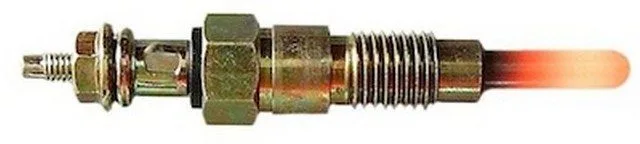
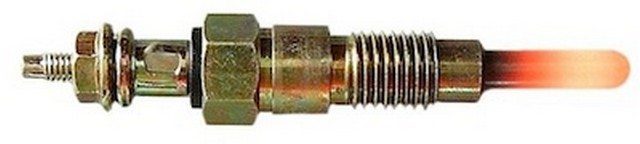
Often confused with spark plugs, a glow plug for each individual cylinder is screwed into the cylinder head. Battery voltage is applied to the glow plug element via a glow plug timer (sometimes called a glow plug controller or glow plug module) and/or the PCM. When voltage is properly applied to the glow plug, it will literally become glowing red and help increase the cylinder temperature. Once the cylinder temperature reaches the desired level, the voltage is limited by the control unit and the glow plug returns to its normal state.
If the PCM detects a voltage level for the glow plug control circuit of cylinder #9 that is higher than expected, a P069B code will be stored and a Malfunction Indicator Lamp (MIL) may be illuminated.
Example photo of a glow plug:
P069B Glow Plug
How severe is this DTC?
Any code related to the glow plug will likely be accompanied by driving issues. A stored P069B code should be addressed urgently.
What are some of the symptoms of the code?
Symptoms of a P069B fault code may include:
Excessive black smoke from the exhaust
Engine running problems
Delayed engine starting
Reduced fuel efficiency
Engine misfire codes may be stored
What are some common causes of the code?
Causes
of this code may include:
Faulty glow plug(s)
Open or shorted glow plug control circuit
Loose or faulty glow plug connector
Faulty glow plug timer
What are the troubleshooting steps for P069B?
A diagnostic scanner, a reliable source of vehicle information, and a digital volt/ohmmeter (DVOM) will be needed to reach an accurate diagnosis for a P069B code. Use the vehicle information source to look up applicable Technical Service Bulletins (TSBs). If you find a TSB that matches the vehicle’s make and model, the symptoms presented, and the stored code, it will help you make a diagnosis.
You may also need to obtain diagnostic flowcharts, wiring diagrams, connector face views, connector pinout diagrams, component locations, and component testing procedures/specifications from the vehicle information source. All this information will be necessary to correctly diagnose the stored P069B code.
After performing a careful visual inspection of all glow plug and glow plug control wiring and connectors, connect the diagnostic scanner to the vehicle’s diagnostic port. Now, retrieve all stored codes and freeze frame data and record them for later (in case you need them). Next, I would test drive the vehicle to see if the P069B code resets. Drive until one of two things happens: either the PCM enters readiness mode, or the code resets. If the code resets, proceed with the diagnosis. If not, you are dealing with an intermittent condition that may need to worsen before an accurate diagnosis can be made.
Here’s a tip the service manual won’t give you. A sure way to test glow plugs is to remove them and apply battery voltage. If the glow plug becomes bright red, it’s good. If it doesn’t heat up and glow, and you take the time to test it with your DVOM, you will likely find it does not meet the manufacturer’s resistance specifications. Be careful not to burn yourself or start a fire when performing this test.
If the glow plugs appear to be working correctly, use the scanner to activate the glow plug timer and test for battery voltage (and ground) at the glow plug connector (using the DVOM). If no voltage is present, test the power supply to the glow plug timer or glow plug controller. Test all associated fuses and relays according to the manufacturer’s recommendations. Typically, I have found it preferable to test the system fuses and fuse links with the circuit loaded. A fuse in an unloaded circuit may appear functional (when it’s not) and lead you down the wrong diagnostic path.
If all fuses and relays appear functional, use the DVOM to test the output voltage at the glow plug timer or PCM (wherever they originate from). If voltage is detected at the glow plug timer or PCM, suspect an open or shorted circuit. You can search for the cause of the discrepancy or simply replace the circuit.
It is sometimes thought that a P069B cannot be caused by a faulty glow plug because it is a control circuit code. Don’t be mistaken; a bad glow plug can cause a variation in the control circuit that results in such a code.
Attempting to diagnose the wrong cylinder is more common than you think. Save yourself a big headache and make sure you are addressing the correct cylinder before starting your diagnosis.