
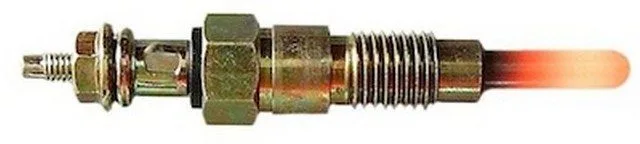
The generic OBD-II code P066A indicates that the Powertrain Control Module (PCM) has detected an abnormally low voltage in the glow plug control circuit for cylinder number 1. This code applies to many vehicles equipped with diesel engines (VW, Porsche, Ford, Toyota, GM, Chevrolet, Jeep, Chrysler, Dodge, Ram, etc.).
Role of Glow Plugs
Unlike gasoline engines, diesel engines use high compression to ignite the fuel. Glow plugs, screwed into each cylinder, rapidly increase the combustion chamber temperature during startup (especially when cold). Their activation is controlled by a timer (or controller/module) and/or the PCM. Correct voltage causes them to glow.
Severity and Symptoms
P066A is an urgent code to address, as it typically causes:
-
Hard or delayed starting (especially in cold weather)
-
Poor engine performance (misfires, power loss)
-
Excessive black smoke from the exhaust
-
Decreased fuel efficiency
-
Possible misfire codes
-
Illumination of the Malfunction Indicator Lamp (MIL)
Probable Causes
-
Faulty glow plug (cylinder #1) – A common cause even for a circuit code.
-
Electrical problem: Open or short circuit (damaged wires, corrosion) in the control wiring for cylinder #1.
-
Faulty connector: Poor contact, oxidation, or damage on the glow plug #1 connector.
-
Control module failure: Defective glow plug timer/controller or PCM.
Diagnostic Procedure (Key Steps)
Accurate diagnosis requires:
-
OBD-II Scanner: Retrieve codes and freeze frame data. Check for vehicle-specific Technical Service Bulletins (TSBs).
-
Technical documentation: Wiring diagrams, locations (cylinder #1!), glow plug resistance specifications.
-
Digital Multimeter (DVOM): Voltage and continuity measurements.
-
Visual inspection: Carefully check wiring, connectors, and fuses associated with the glow plug circuit.
Verification Steps:
-
Confirm cylinder #1: Essential. Consult the vehicle documentation for its exact location.
-
Glow plug test (practical method):
-
Disconnect and remove the suspect glow plug (cyl. 1).
-
Apply battery voltage directly (+ and ground). A healthy glow plug should glow red quickly and evenly. Caution: Risk of burns and fire.
-
Check its resistance with the DVOM (compare to manufacturer specifications).
-
-
Control circuit test:
-
Reconnect the glow plug (if good).
-
Use the scanner to activate the glow plug control via the PCM/controller.
-
Measure the voltage at the glow plug connector with the DVOM. Normal battery voltage should be present.
-
If voltage is absent or low: Check the voltage at the output of the glow plug controller or PCM.
-
Thoroughly test all related fuses and relays (under load if possible).
-
-
Circuit verification:
-
If the controller/PCM sends the voltage correctly but it doesn’t reach the glow plug, look for a break (open circuit) or a short circuit in the wiring or connector.
-
Check the quality of the circuit ground.
-
Important Point: Do not overlook the glow plug itself as a possible cause, even for a circuit code. A faulty glow plug can disrupt the control circuit.