
What Does It Mean?
This is a generic diagnostic trouble code (DTC) and applies to many OBD-II vehicles (1996-newer). This may include, but is not limited to, vehicles from Land Rover, Honda, Jeep, Subaru, VW, Ford, Chrysler, etc. Although generic, the specific repair steps may vary depending on the year, make, model, and powertrain configuration.
A stored P065A code means that the powertrain control module (PCM), or one of the other related controllers, has detected a low output condition in the generator system.
In some cases, the alternator is referred to as a generator, but most often this type of code is used in a hybrid or electric vehicle that generates electrical power from a generator. The generator may be driven by the engine or one of the drive wheels.
The PCM monitors the generator’s output voltage and current at different RPM levels and load degrees and calculates voltage requirements accordingly. In addition to monitoring the generator’s output (performance), the PCM is also responsible for providing a signal that activates the generator warning light in case of low power.
If a problem is detected in monitoring the generator’s performance, a P065A code will be stored, and a malfunction indicator lamp (MIL) may illuminate.
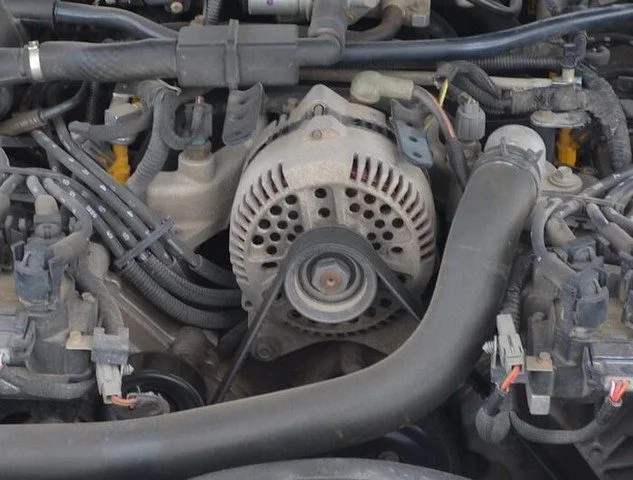
Example of an alternator (generator):
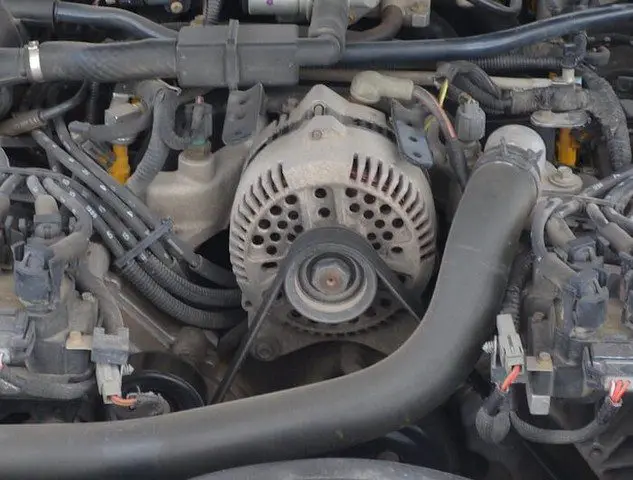
P065A Example of an alternator (generator)
How Severe Is This DTC?
A P065A should be classified as severe because it can lead to low battery charge and/or a no-start condition.
What Are Some of the Symptoms of the Code?
Symptoms of a P065A trouble code may include:
Delayed or no start
Electrical accessories may not work
Engine driveability issues
What Are Some Common Causes of the Code?
Causes
of this code may include:
Faulty generator
Bad fuse, relay, or fusible link
Open or shorted circuit between the PCM and the generator
PCM programming error
Faulty controller or PCM
What Are the P065A Troubleshooting Steps?
The battery must be fully charged, and the generator must be operating at an acceptable level before attempting to diagnose a P065A.
Consult your vehicle’s information source for technical service bulletins (TSBs) that match the stored code, vehicle (year, make, model, and engine), and the symptoms presented. If you find the appropriate TSB, it may provide useful diagnostic information.
A diagnostic scanner and a digital volt/ohmmeter will be needed to accurately diagnose a P065A code. A reliable source of vehicle information will also be required.
Start by connecting the scanner to the vehicle’s diagnostic port and retrieving all stored codes and freeze frame data. You’ll want to note this information, just in case the code proves to be intermittent.
After recording all relevant information, clear the codes and test the vehicle (if possible) until the code resets or the PCM enters readiness mode.
If the PCM enters readiness mode, the code is intermittent and will be even more difficult to diagnose. The condition that caused the P065A to be stored may need to worsen before an accurate diagnosis can be made. On the other hand, if the code does not reset and no driveability symptoms appear, the vehicle may be operating normally.
If the P065A resets immediately, proceed with a visual inspection of the wiring and connectors related to the system. Harnesses that are broken or disconnected should be repaired or replaced as needed.
If the wiring and connectors appear functional, use your vehicle information source to obtain the appropriate wiring diagrams, connector face views, connector pinout diagrams, and diagnostic flowcharts.
Once you have the correct information, test all fuses and relays in the system to ensure the generator is receiving voltage.
If the generator’s supply voltage is not present, trace the appropriate circuit back to the fuse or relay it originates from. Repair or replace faulty fuses, relays, or fusible links as needed. In some cases, the generator’s supply voltage is routed through the PCM. You can use wiring diagrams and other vehicle-specific information to help diagnose generator voltage supply malfunctions.
If the generator’s supply voltage is present, use your DVOM to test the generator’s output performance at the appropriate pin of the generator connector. If the proper generator output voltage level is not found, suspect that the generator is faulty.
If the generator is charging to specifications, check the voltage level at the appropriate pin of the PCM connector. If the voltage is the same at the PCM connector as at the generator, suspect that the PCM is faulty or there is a programming error.
If the voltage level at the PCM connector differs (by more than 10%) from what is detected at the generator connector, suspect a short circuit or open circuit between the two.
Generator fuses should be tested with the circuit loaded to avoid misdiagnosis