
What Does It Mean?
This is a generic diagnostic trouble code (DTC) and applies to many OBD-II vehicles (1996-newer). This may include, but is not limited to, Dodge, Ram, Chrysler, Jeep, Chevy, GMC, Cadillac vehicles, etc. Although generic, the exact repair steps may vary depending on the year, make, model, and powertrain configuration.
When a P0633 code is stored, it means that the Engine Control Module (ECM) or Powertrain Control Module (PCM) has detected an immobilizer key that it does not recognize.
The immobilizer key is used to prevent vehicle theft and eliminate the need to place a physical metal key into door lock cylinders or the ignition cylinder. A transponder is embedded in the immobilizer key fob. When the key fob is within a certain range of the vehicle, the transponder emits a signal to the ECM/PCM and other controllers. Typically, when the transponder signal is received, the doors unlock and the push-to-start button is activated. When the immobilizer key is away from the vehicle, the doors lock and the push-to-start function is automatically disabled. The immobilizer key transponder is powered by a small battery.
Each immobilizer key emits a unique transponder signal. For the onboard controllers to recognize the transponder signal, they must be properly programmed. The ECM/PCM and the Security Control Module are responsible for engine starting, and the Body Control Module (BCM) is responsible for door and trunk lock/unlock functions.
Obviously, when an ECM/PCM or an immobilizer key is replaced, it will need to be programmed.
If the ECM/PCM fails to find or recognize an immobilizer key, and vehicle entry or starting is attempted, a P0633 code will be stored and a Malfunction Indicator Lamp (MIL) may be illuminated. The immobilizer key’s transponder signature is compared between the ECM/PCM and the other controllers whenever the security system is activated and the self-test function is initiated.
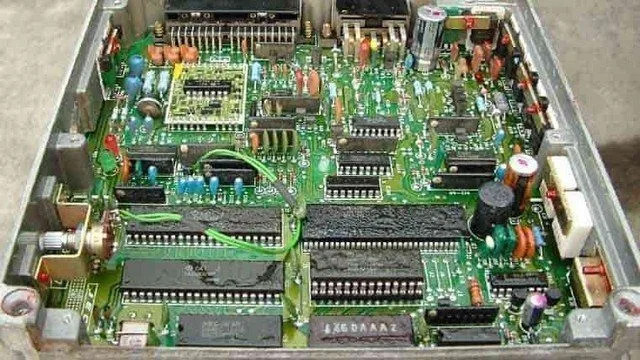
Photo of a PCM with the cover removed:

P0633 Powertrain Control Module PCM
How Severe is this DTC?
A stored P0633 code should be classified as severe. If the controllers do not recognize the immobilizer key, important functions (engine starting and door unlocking) could be disabled.
What are some of the symptoms of the code?
Symptoms of a P0633 trouble code may include:
No start condition
Lock/unlock functions may be disabled
The vehicle security system may be activated
Other diagnostic trouble codes will likely be stored
What are some of the common causes of the code?
Causes
of this code may include:
Weak immobilizer key battery
Malfunctioning immobilizer key
Replaced immobilizer key without being programmed
ECM/PCM programming error
ECM/PCM swapped between vehicles and/or replaced without being properly programmed
ECM/PCM failure
What are the P0633 troubleshooting steps?
Due to the sensitive nature of certain parameters that must be programmed into the associated controllers (VIN and mileage), access to reprogramming equipment should be limited to qualified personnel. If controller replacement is necessary, performing a successful repair will be impossible without the means to reprogram the controller in question.
Although the stored P0633 code could be attributed to a controller failure or some type of controller programming error, it is most likely due to an issue with the immobilizer key or transponder battery.
To arrive at an accurate diagnosis of a P0633 code, you will need a diagnostic scanner and a reliable source of vehicle information.
Use the vehicle information source to look up applicable Technical Service Bulletins (TSBs). If you find a TSB that matches the vehicle’s make and model, the symptoms presented, and the stored code, it will help guide you toward a correct diagnosis.
Note: There are several known TSBs, one for Dodge/Chrysler/Jeep vehicles #08-030-06 and one for GM vehicles #PIT4660B.
By connecting the diagnostic scanner to the vehicle’s diagnostic port, you can find out if the ECM/PCM (and other controllers) actually recognizes the immobilizer key. This information is usually presented as a yes or no, without a specific transponder description. If the ECM/PCM does not recognize any immobilizer key, suspect that the battery in the key fob is dead or that an incorrect immobilizer key is being used.
If an inadvertent “yes” for immobilizer key signal appears on the scanner screen, suspect that the ECM/PCM was replaced without programming it to the vehicle. If not, you may suspect an ECM/PCM failure or a programming error.
In some cases, reprogramming, replacement parts, replacement fobs, and immobilizer keys can be purchased. If this is possible, you will need to provide the parts vendor with the vehicle’s mileage and VIN, as well as a secondary (factory-programmed) immobilizer key.
Replacement of any vehicle security system component or controller typically requires system reprogramming.