
What Does It Mean?
This is a generic diagnostic trouble code (DTC) and applies to many OBD-II vehicles (1996-newer). This may include, but is not limited to, vehicles from Ford, Hyundai, Toyota, Lotus, Dodge, Ram, Honda, Cummins, etc. Although generic, the exact repair steps may vary depending on the year, make, model, and powertrain configuration.
When a P0630 code is stored, it means that the Engine Control Module (ECM) or Powertrain Control Module (PCM) does not recognize the 17-character Vehicle Identification Number (VIN).
Every vehicle produced in North America is assigned a VIN. This series of numbers and letters indicates the country of manufacture, year, make, and model of the vehicle, as well as any special equipment and the engine size/type. The last six digits at the end of the VIN provide the sequence in which each vehicle was produced. No vehicle is assigned exactly the same number.
Since the creation of OBD-II diagnostic systems, the VIN has been programmed into each ECM/PCM (after its installation in the vehicle). Other controllers may also be programmed to recognize the VIN, but a federal mandate requires that the ECM/PCM be programmed as such.
The main reason why the government and the automotive industry insist that the ECM/PCM be programmed to recognize the VIN is to deter vehicle and controller theft and to prevent odometer tampering. System controllers cannot be swapped between vehicles without being programmed to match the vehicle. The vehicle’s mileage is also programmed into the ECM/PCM. If controllers could be swapped between vehicles, odometer readings would be much less accurate, if not completely unreliable. When an ECM/PCM is replaced, it must be programmed with the vehicle’s mileage and VIN (among other things).
If the ECM/PCM fails to find or recognize the VIN, a P0630 code will be stored, and a Malfunction Indicator Lamp (MIL) may illuminate. The ECM/PCM searches for the VIN when the key is turned on and the self-test is performed. In most cases, the ECM/PCM will not operate without VIN recognition.
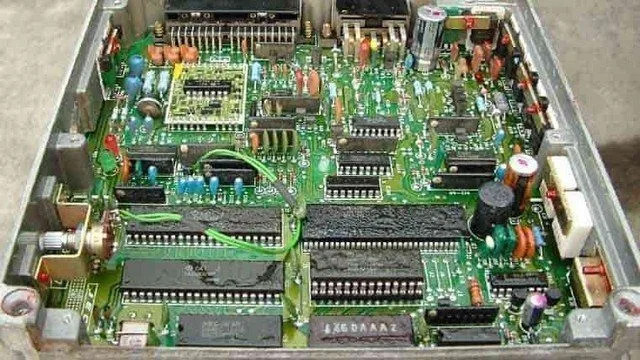
Photo of a PCM with the cover removed:

P0630 Powertrain Control Module PCM
How Severe Is This DTC?
Since the ECM/PCM will likely not operate without VIN recognition, a stored P0630 code should be classified as severe.
What Are Some of the Symptoms of the Code?
Symptoms of a P0630 trouble code may include:
No start condition
The vehicle security system may be activated
Other diagnostic trouble codes will likely be stored
What Are Some of the Common Causes of the Code?
Causes
of this code may include:
ECM/PCM programming error
ECM/PCM swapped between vehicles or replaced without being properly programmed
ECM/PCM failure
What Are the P0630 Troubleshooting Steps?
Unlike most other stored codes, P0630 is usually related to an ECM/PCM failure or some type of programming error. Due to the sensitive nature of certain parameters that must be programmed into the ECM/PCM (VIN and mileage), access to reprogramming equipment should be limited to qualified personnel. Without the means to reprogram the controller in question, a successful repair will be very unlikely.
You will need a diagnostic scanner and a reliable source of vehicle information to arrive at a reasonable diagnosis for a P0630 code. Use the vehicle information source to look up applicable Technical Service Bulletins (TSBs). If you find a TSB that matches the vehicle’s make and model, the symptoms presented, and the stored code, it will help guide you in the right direction.
I would connect the diagnostic scanner to the vehicle’s diagnostic port and read the VIN as perceived by the ECM/PCM. Compare the diagnostic scanner’s VIN with the actual VIN (driver’s side lower corner of the windshield). If the engraved VIN label does not match the VIN displayed on the scanner, suspect that the ECM/PCM has been replaced with one from another vehicle.
IF the VIN is not displayed on the scanner, suspect that the ECM/PCM was replaced without programming it to match the vehicle. If not, you may suspect an ECM/PCM failure or a programming error.
In some cases, aftermarket replacement ECMs/PCMs (which have been reprogrammed to match the vehicle in question) can be purchased. If this is possible, you will need to provide the parts supplier with the vehicle’s mileage and VIN, as well as any other relevant data.
Unfortunately, there is no foolproof method for testing the ECM/PCM. Nevertheless, it is relatively safe to assume that, unless the controller was replaced without proper programming, some type of controller failure has occurred.
Any OBD-II controller replacement will likely require reprogramming