
What does it mean?
This is a generic diagnostic trouble code (DTC) and applies to many OBD-II vehicles (1996-newer). This may include, but is not limited to, vehicles from Ford, Hyundai, Mercedes Benz, Sprinter, Land Rover, Kia, etc. Although generic, the exact repair steps may vary depending on the year, make, model, and powertrain configuration.
A stored P0625 code means that the Powertrain Control Module (PCM) has detected a voltage signal lower than expected from the generator field coil circuit. The F simply reiterates that the field coil control circuit is faulty.
The field coil is probably most recognizable by its windings, which are visible through the ventilation holes of most alternators. The field coil surrounds the generator armature and remains stationary in the alternator housing. The armature rotates inside the field coil, which is powered by battery voltage. Every time the engine starts, the field coil is energized.
The PCM monitors the continuity and voltage level of the generator field circuit whenever the engine is running. The generator field coil is an integral part of the generator’s operation and maintaining battery charge levels.
If a problem is detected in the monitoring of the generator field circuit, a P0625 code will be stored and a Malfunction Indicator Lamp (MIL) may be illuminated. Depending on the perceived severity of the malfunction, several failure cycles may be required for the MIL to illuminate.
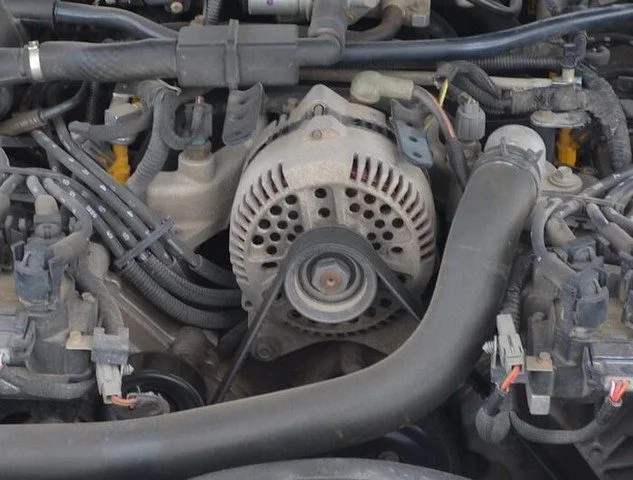
A typical alternator:
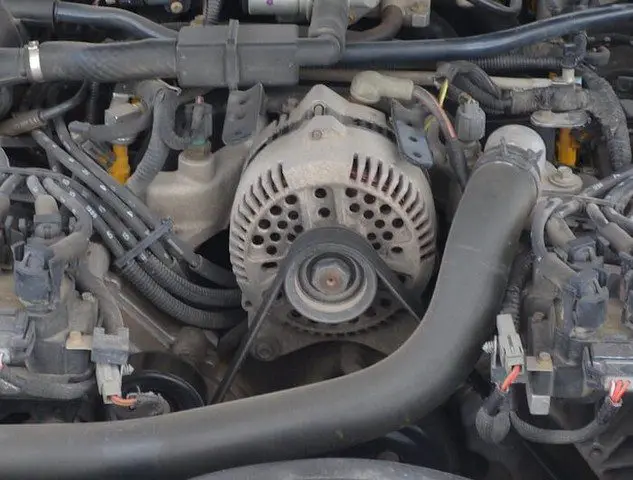
P0625 Alternator
How severe is this DTC?
A stored P0625 code could lead to various driving problems, including a no-start condition and/or a dead battery. It should be classified as severe.
What are some of the symptoms of the code?
Symptoms of a P0625 trouble code may include:
- Charging system lamp illumination
- Engine performance issues
- Inadvertent engine stalling
- Delayed engine starting
- Other stored codes
What are some common causes of the code?
Causes of this code may include:
- Open or shorted generator field control circuit
- Blown fuse or burned fusible link
- Faulty alternator/generator
- Faulty PCM
- PCM programming error
What are the troubleshooting steps for P0625?
A diagnostic scanner, a battery/alternator tester, a digital volt/ohmmeter (DVOM), and a reliable source of vehicle information will be needed to diagnose a P0625 code.
Consult your vehicle information source for Technical Service Bulletins (TSBs) that match the stored code, the vehicle (year, make, model, and engine), and the symptoms presented. If you find the relevant TSB, it may provide useful diagnostic information.
Start by connecting the scanner to the vehicle’s diagnostic port and retrieving all stored codes and freeze frame data. You’ll want to note this information, just in case the code proves to be intermittent. After recording all relevant information, clear the codes and test-drive the vehicle until the code resets or the PCM enters readiness mode. If the PCM enters readiness mode, the code is intermittent and will be more difficult to diagnose. The condition that caused the P0625 to be stored may even need to worsen before a diagnosis can be made. If the code resets, continue with your diagnosis.
Use the battery/alternator tester to check the battery charge and ensure it is sufficiently charged. If not, charge the battery as recommended and test the alternator/generator. Follow the manufacturer’s recommended specifications for minimum and maximum voltage output requirements for the battery and alternator. If the alternator/generator is not charging, proceed to the next step of your diagnosis.
Use your vehicle information source to obtain connector face views, connector pinout diagrams, component locators, wiring diagrams, and diagnostic flowcharts related to the code and the specific vehicle.
Check for battery voltage at the alternator/generator field control circuit using the appropriate wiring diagram and your DVOM. If not present, check the system fuses and relays and replace faulty components as needed. If voltage is found at the generator field coil control terminal, suspect a faulty alternator/generator.
The field coil is an integral part of the alternator and generally cannot be replaced separately.