
What does it mean?
This generic powertrain diagnostic trouble code (DTC) generally applies to many OBD-II vehicles. This may include, but is not limited to, vehicles from Citroën, Chevy, Ford, Peugeot, GMC, Dodge, Ram, Ducati, etc.
The Powertrain Control Module (PCM) detected a malfunction in a specific vehicle speed sensor (VSS) output voltage signal when a P0609 code is stored.
In this case, a VSS output signal was expected to come from the PCM itself or one of the many (other) onboard controllers. This particular VSS output circuit has been designated “B”. Consult a reliable vehicle information source for the specific function of this circuit regarding the vehicle in question.
Vehicles equipped with OBD-II diagnostic systems can use up to seventy onboard controllers. These controllers communicate via the Controller Area Network (CAN).
The VSS is an electromagnetic sensor used to complete a circuit that provides one or more controllers with an accurate signal reflecting the vehicle’s speed. The VSS is typically positioned near the transmission output shaft (or the transfer case for four-wheel drive) or in the rear differential. A toothed steel reluctor (permanently attached to the output shaft or ring gear) passes in close proximity to the electromagnetic sensor and completes the circuit. The gaps between the teeth cause circuit interruptions. The PCM and other controllers receive these circuit completions and interruptions as a voltage pattern in the form of a wave. The frequency of this waveform pattern is interpreted as the vehicle’s speed.
The VSS signal is usually input into a main controller, such as the PCM or the Transmission Control Module (TCM). Once the main controller receives the VSS input, it is shared with other controllers via the CAN. If one of these secondary controllers fails to receive the VSS signal, or receives an inconsistent VSS signal, a P0609 code will be logged and a Malfunction Indicator Lamp (MIL) may be illuminated.
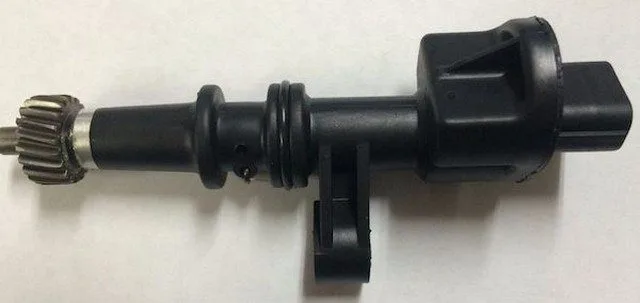
Example photo of a VSS (Vehicle Speed Sensor):
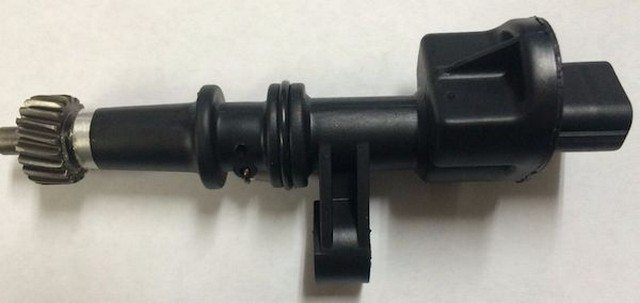
Vehicle Speed Sensor VSS
How severe is this DTC?
Codes associated with the VSS can affect transmission shift strategy and engine operation. A logged P0609 code should be classified as severe and diagnosed/repaired as soon as possible.
What are some of the symptoms of the code?
Symptoms of a P0609 fault code may include:
Erratic or incorrect speedometer/odometer
Abnormal transmission shifting (automatic)
Output shaft speed sensor codes
Input speed sensor codes
ABS or Traction Control System (TCS) codes
What are some of the common causes of the code?
Causes
of this code may include:
Faulty PCM, TCM, or other controller
Open or shorted circuits in the CAN
Corroded, broken, or loose electrical connectors
Controller programming error
What are the P0609 troubleshooting steps?
If other VSS-related codes are stored, they will need to be diagnosed and repaired before attempting to diagnose P0609.
A diagnostic scanner, a digital volt/ohmmeter, and a reliable vehicle information source will be required to diagnose this code.
Use the vehicle information source to search for Technical Service Bulletins (TSBs) that match the vehicle in question, as well as the logged code and presented symptoms. If you find an applicable TSB, the likelihood of it providing useful diagnostic information is very high.
Use the vehicle information source for diagnostic flowcharts, wiring diagrams, connector pinout diagrams, connector face views, and component testing procedures/specifications. All of this information will be necessary for a successful diagnosis.
After a visual inspection of the controller connectors and visible CAN wiring harnesses, connect the scanner to the vehicle’s diagnostic port and retrieve all stored codes. If freeze frame data is available, record it as well. Take note of all this information. It may prove useful later in your diagnosis. Now, clear the codes and test drive the vehicle until the PCM enters readiness mode or the code resets.
If the PCM enters readiness mode without any codes being stored, you are dealing with an intermittent code, and the contributing problem may need to worsen before an accurate diagnosis can be reached.
If the code resets, continue your diagnosis.
Warning: Before using the DVOM to test circuit resistance and continuity, disconnect all associated controllers. Failure to do so may damage the controller.
With the key on and engine off, use the DVOM to test the individual VSS output circuits at the appropriate controller. Compare your results with the VSS signal data. If no acceptable output signal is detected, suspect a controller failure.
If an acceptable VSS output signal is found at the controller, use the DVOM to test the individual circuits between each of the associated controllers. Repair or replace circuits or system components as needed and retest the VSS Signal.
A P0609 code (without any other stored codes) will not be caused by a faulty VSS
In most cases, a controller failure is unlikely. In the case of P0609, a controller issue or programming error is more likely to be the culprit