
What Does It Mean?
This diagnostic code (DTC) is a generic powertrain code, meaning it applies to all vehicles from 1996 onwards (Porsche, BMW, Ford, Cadillac, Volvo, Mini, Chevy, Chrysler, Toyota, etc.). Although generic, specific repair steps may vary by make/model.
When a stored P0503 code is displayed, it means the Powertrain Control Module (PCM) has detected an intermittent, erratic, or excessive voltage input signal from the Vehicle Speed Sensor (VSS) A. The designation A typically refers to the primary VSS in a system that uses multiple vehicle speed sensors.
OBD II vehicle speed sensors are generally electromagnetic sensors that use a toothed reluctor ring or gear mechanically attached to an axle, transmission/transfer case output shaft, differential gear, or driveshaft. As the shaft rotates, it spins the metal reluctor ring. The reluctor ring completes a circuit with the stationary electromagnetic sensor as it passes very close to the sensor’s electromagnetic tip. The notches between the teeth of the reluctor ring create interruptions in the sensor circuit. The combination of circuit completions and interruptions is recognized by the PCM (and possibly other controllers) as voltage waveform patterns.
The vehicle speed is monitored by the PCM using input data from one or more vehicle speed sensors. The PCM compares VSS inputs with inputs from the Anti-lock Brake Control Module (ABCM) or Electronic Brake Control Module (EBCM). The primary VSS input (A) will likely be initiated by the VSS in the transmission, but secondary VSS inputs may be monitored using one or more wheel speed sensors.
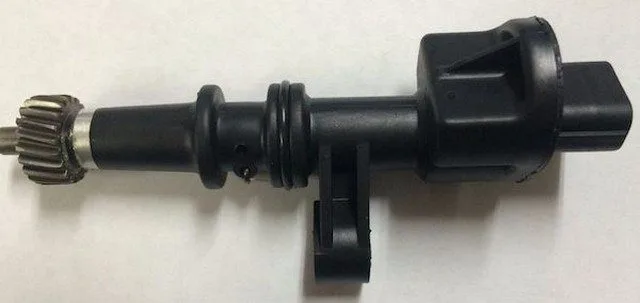
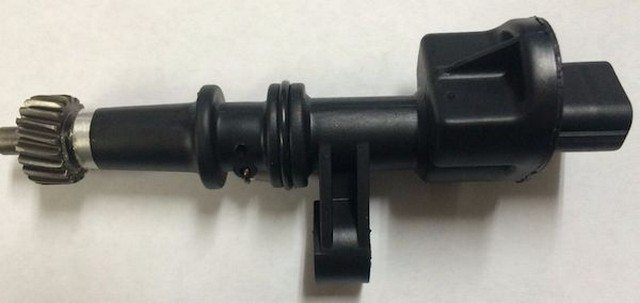
A typical VSS or vehicle speed sensor:
If the PCM detects an intermittent, erratic, or high input voltage signal from the primary VSS, a P0503 code will be stored and a malfunction indicator light may illuminate. An intermittent, erratic, or high voltage input condition can result from an electrical or mechanical issue.
Fault codes related to the vehicle speed sensor:
- P0500 Vehicle Speed Sensor “A” Malfunction
- P0501 Vehicle Speed Sensor “A” Range/Performance
- P0502 Vehicle Speed Sensor “A” Low Input
Code Severity and Symptoms
Since conditions that can lead to a stored P0503 code may create driving and ABS problems, it should be classified as severe and addressed with some degree of urgency.
Symptoms of a P0503 code may include:
- Erratic speedometer/odometer operation
- Irregular transmission shifting patterns
- Other transmission and ABS codes may be stored
- Illumination of the check engine light, traction control light, or anti-lock brake light
- Unexpected activation/deactivation of the traction control system (if equipped)
- The ABS system may be rendered inoperative in some cases
Causes
Possible causes of this code include:
- Excessive buildup of metallic debris on speed sensors
- A faulty wheel speed sensor or vehicle speed sensor
- Cut or damaged wiring harnesses or connectors (especially near speed sensors)
- Damaged or worn teeth on a reluctor ring
- Faulty PCM, ABCM, or EBCM
Diagnostic and Repair Procedures
I would need a diagnostic scanner, a digital volt/ohmmeter (DVOM), possibly an oscilloscope, and a reliable vehicle information source to diagnose a P0503 code. A scanner with built-in DVOM and oscilloscope would be ideal for this diagnosis.
I like to start my diagnosis with a visual inspection of the system wiring, speed sensors, and connectors. I would repair open or shorted circuits as needed and clean excessive metallic debris from affected sensors. If sensor removal is possible, I would also check the integrity of the entire reluctor ring at that time.
Next, I would connect the scanner to the vehicle’s diagnostic port and retrieve all stored fault codes and freeze frame data. Note this information as it may prove useful as your diagnosis progresses. Now clear the codes and test drive the vehicle to see if symptoms persist and/or if the code resets.
A trick many professional technicians use is to search the vehicle information source for applicable Technical Service Bulletins (TSBs). If you find a TSB that matches the symptoms and stored codes of the vehicle in question, the diagnostic information it contains will likely help correctly diagnose P0503.
Observe wheel speed and/or vehicle speed (using scanner data stream) during vehicle test drive. By narrowing the data stream to display only relevant fields, you can increase the speed and accuracy of desired data delivery. Inconsistent, erratic, or high readings from VSS or wheel speed sensors can lead you to wiring, electrical connector, or sensor issues by narrowing the general area of system malfunction.
Use the DVOM to perform a resistance test on the sensor in question after identifying the problem area. Consult your vehicle information source for manufacturer recommendations regarding VSS testing and replace sensors that do not meet specifications. The oscilloscope can be used to retrieve live data from each individual VSS by probing the sensor signal wire and sensor ground wire. The powertrain will need to be running, so jacking or lifting the vehicle will be necessary to perform this type of test safely.
Vehicle speed sensors are frequently damaged during routine transmission maintenance, and wheel speed sensors (and sensor wiring harnesses) are often broken during brake repairs. If a P0503 code is displayed (immediately after a repair), suspect a damaged sensor harness or sensor.
Additional diagnostic notes:
When performing circuit resistance and continuity tests with a DVOM, always disconnect electrical connectors from associated controllers – failure to do so could result in a damaged controller
Be cautious when removing sensors from transmission housings (for testing) as hot transmission fluid can be harmful