
What does it mean?
This generic powertrain diagnostic trouble code (DTC) typically applies to many OBD-II vehicles. This may include, but is not limited to, Dodge, Jeep, Chrysler Ram, Ford, Chevy, Chevrolet vehicles, etc.
When a P0585 code is stored, it means the Powertrain Control Module has detected a discrepancy between correlated voltage inputs from the cruise control multifunction switch.
The A/B input (or A and B) refers to a specific but separate set of input circuits. Consult a reliable vehicle information source to determine exactly which circuits are indicated with this code.
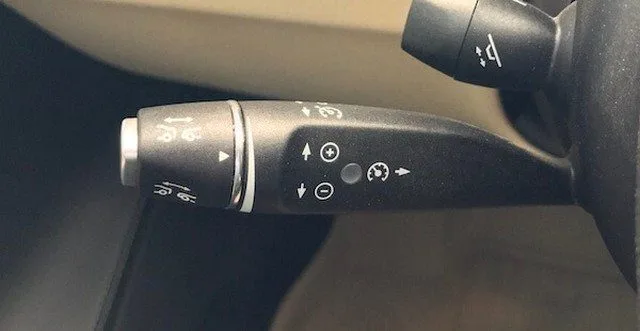
The cruise control (or speed control) is managed by the PCM, using inputs from the multifunction switch. The multifunction switch is so named because it controls functions within multiple systems. For example, it can provide input signals for the cruise control system, turn signals, and the windshield wiper system. Typically, it acts only as a stalk for the turn signals but may also house the actual turn signal switch.
The driver provides manual inputs using the multifunction switch. These input signals are sent to the PCM, which applies the appropriate voltage signal to a cruise control servo motor. These inputs include a command to maintain the vehicle’s current speed, resume a previously maintained vehicle speed, accelerate to increase the vehicle’s speed, or disengage acceleration to slow and reduce the vehicle’s speed. Of course, pressing the brake pedal should disengage the cruise control. Cruise control systems typically only become active when the vehicle speed exceeds 35 mph.
The PCM adjusts the cruise control servo motor voltage to achieve the appropriate throttle position to maintain the desired vehicle speed.
If the PCM detects an input voltage signal that does not conform to programmed specifications, or if the vehicle speed cannot be maintained using cruise control, a P0585 code will be stored and a Malfunction Indicator Lamp (MIL) may be illuminated. Several drive cycles with a failure may be required for the MIL illumination.
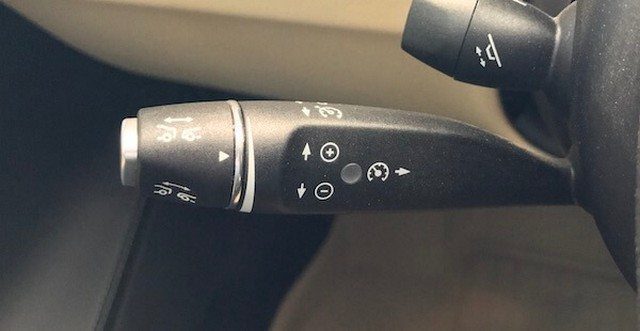
Cruise control stalk:
Cruise control stalk
How serious is this DTC?
Since P0585 pertains only to the cruise control system, it should not be classified as serious.
What are some of the symptoms of the code?
Symptoms of a P0585 trouble code may include:
Inoperative cruise control
Erratic speedometer/odometer operation
Flashing or unresponsive cruise control light
Other stored codes
What are some of the common causes of the code?
Causes
of this code may include:
Faulty multifunction switch
Bad cruise control servo motor
Open or shorted circuits in the cruise control
Faulty cruise control module, PCM, or programming error
What are the P0585 troubleshooting steps?
If the vehicle in question is equipped with an electronic throttle control system and related codes are stored, diagnose and repair them before attempting to diagnose P0585.
If throttle position sensor (TPS) codes are stored, they should also be diagnosed and repaired before diagnosing this code.
A diagnostic scanner, a digital volt/ohmmeter (DVOM), and a vehicle information source will be needed to diagnose a P0585 code.
After a visual inspection of the cruise control system wiring and connectors, connect the scanner to the vehicle’s diagnostic port and retrieve all stored codes and freeze frame data. Record this information as it may prove useful as your diagnosis progresses. Clear the codes and test drive the vehicle normally until the PCM enters readiness mode or the P0585 resets. If the former occurs, you have an intermittent condition and it may need to be worsened before a successful diagnosis can be reached. If the code resets, continue your diagnosis.
Using your vehicle information source, obtain component testing procedures and specifications, diagnostic flowcharts, connector face views, wiring schematics, and connector pinout diagrams. These will be necessary to diagnose most codes.
Search for applicable Technical Service Bulletins (TSBs). If you find an entry that reflects the vehicle in question, as well as the stored code(s) and symptoms presented, it will likely help you diagnose P0585.
Check the voltage (typically comparable to battery voltage) and ground circuits at the multifunction switch using the DVOM. If no voltage is detected, use the DVOM’s positive test lead to probe the system fuses while grounding the negative test lead to the chassis.
Fuses should be tested with the circuit loaded to avoid a false result. If there is no ground, you can create a new one for testing purposes, then locate the proper ground junction to ensure it is secure.
If voltage and ground are present, use the DVOM to test the multifunction switch following the manufacturer’s testing recommendations. Disconnect the switch before testing with the DVOM. If the switch does not meet the manufacturer’s specifications, consider it faulty.
If the multifunction switch appears to be functioning correctly, use the DVOM to test the cruise control servo motor. Again, follow the manufacturer’s recommendations and consider the motor faulty if it does not comply.
Before using the DVOM to test the resistance of an individual circuit, disconnect all associated controllers to prevent damage. Some vehicles use a dedicated cruise control module in addition to the PCM. Others use cruise control integrated into the Body Control Module (BCM) or Generic Electronic Module (GEM).
If both the multifunction switch and the servo motor test correctly, disconnect the connector for each and use the DVOM to check continuity and resistance on the individual circuits. Circuits that do not meet the manufacturer’s specifications will need to be repaired or replaced.
Do not swap parts. Never automatically condemn the multifunction switch because of this code. Exhaust the diagnostic process before blindly changing parts.