
What Does It Mean?
This is a generic powertrain diagnostic trouble code (DTC) and applies to OBD-II vehicles equipped with a brake booster pressure sensor. This may include, but is not limited to, vehicles from Fiat, Alfa Romeo, Nissan, Ford, Dodge, Pontiac, Chevrolet, Acura, Subaru, Hyundai, etc. Although generic, the exact repair steps may vary depending on the year, make, model, and powertrain configuration.
Fault code P0559 is one of several possible codes associated with the brake booster pressure sensor circuit.
This code indicates that the Powertrain Control Module (PCM) has detected a malfunction affecting the operation of the brake booster pressure sensor circuit. Common codes related to brake booster pressure sensor circuit malfunctions include P0555, P0556, P0557, P0558, and P0559. The specific situation determines which code is triggered by the PCM, and the brake warning light may illuminate or flash during braking.
The purpose of the brake booster pressure sensor circuit is to monitor the amount of pressure (vacuum) applied to the brake booster. The circuit is controlled by the PCM to adapt to various braking conditions and adjust pressure to assist with brake pedal operation. This process is essential for power brakes to function correctly, allowing the vehicle to slow down or stop safely with minimal foot pressure applied to the brake pedal.
Code P0559 is set by the PCM when the brake booster pressure sensor circuit experiences an intermittent output voltage signal issue.
How Severe Is This DTC?
The severity of this code varies depending on the specific malfunction and will escalate if not addressed promptly. At some point, vehicle safety could become compromised, requiring immediate attention.
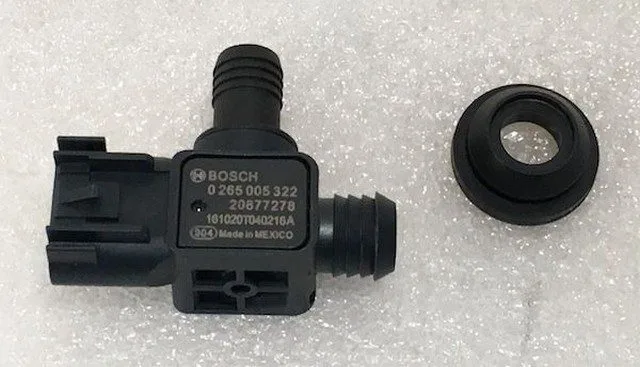
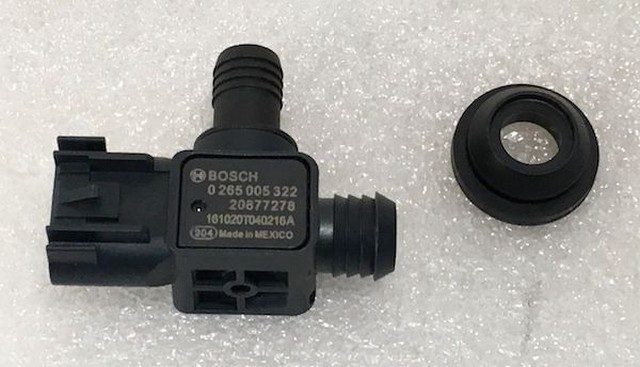
Photo of a Brake Booster Pressure (Vacuum) Sensor:
What Are Some Symptoms of the Code?
Symptoms of a P0559 fault code may include:
Brake warning light flashing during braking
Brake warning light staying on
Illuminated service engine soon light
Increased effort required to press the brake pedal
What Are Some Common Causes of the Code?
Causes
of this P0559 code may include:
Faulty brake booster pressure sensor
Worn or damaged vacuum lines
Corroded or damaged connector
Damaged or faulty wiring
Defective brake booster
Faulty PCM
What Are the P0559 Troubleshooting Steps?
The first step in the troubleshooting process for any malfunction is to check technical service bulletins for known issues with the specific vehicle.
Locate all components associated with the brake booster pressure sensor circuit. This includes the brake booster pressure sensor, brake booster, vacuum lines, wiring, connectors, and the PCM in a simplex system. Once these components are located, perform a thorough visual inspection to check for any obvious defects such as chafing, rubbing, exposed wires, or burn marks. Connectors should also be inspected for corrosion buildup or damaged pins. Vacuum lines should be checked for security, weather cracking, leaks, and overall condition.
Advanced Steps
Advanced steps are highly vehicle-specific and require appropriate advanced equipment to perform accurately. These procedures necessitate a digital multimeter and vehicle-specific technical references. Voltage requirements will vary significantly based on the specific year, make, and model of the vehicle.
Circuit Checks
Voltage requirements depend on the specific vehicle, brake booster pressure sensor circuit configuration, and integrated components. Technical data must be referenced to determine the correct voltage range for the brake booster pressure sensor and the appropriate troubleshooting sequence. Correct input voltage to a sensor with no output voltage typically indicates an internal failure.
If this process identifies a missing power source or ground, continuity tests may be necessary to verify the condition of wiring and connectors. Continuity tests should always be performed with the circuit power off, and normal readings should show 0 ohms resistance unless otherwise specified by technical data. Resistance or lack of continuity indicates faulty wiring or connectors that are shorted or open and need repair or replacement.
Common Repairs
Replacing a faulty brake booster pressure sensor
Cleaning corrosion from connectors
Repairing or replacing wiring
Replacing the brake booster
Flashing or replacing the PCM
I hope the information in this article has been helpful in guiding you in the right direction to resolve the issue with your brake booster pressure sensor fault code. This article is strictly informational, and specific technical data and service bulletins for your vehicle should always take precedence.