
What does it mean?
This generic powertrain diagnostic trouble code (DTC) generally applies to many OBD-II vehicles. This may include, but is not limited to, vehicles from Ford, Dodge, Ram, Volvo, etc.
If a P051F code is stored in your OBD-II vehicle, it means the Powertrain Control Module (PCM) has detected a signal from the crankcase pressure sensor indicating that an overpressure condition exists.
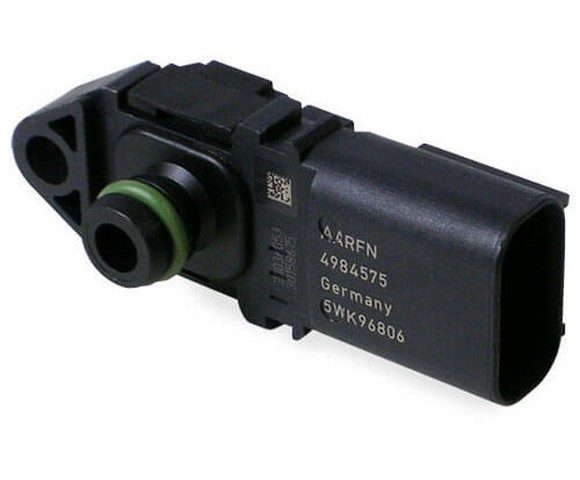
The density (pressure) of the air in the engine crankcase is monitored by the PCM using a voltage input signal from the crankcase pressure sensor. The crankcase pressure sensor’s input voltage is received (by the PCM) as actual pressure units. Kilopascal (kPa) units or inches of mercury (Hg) are used to measure crankcase pressure. The crankcase pressure sensor is typically located in or near one of the valve covers.
Because the lower end of the internal combustion engine must be sealed to prevent oil leaks, some pressure is created there. This pressure is caused by drastic temperature changes, vapors created by the engine oil, and the rapid centrifugal movement of the crankshaft, connecting rods, etc.
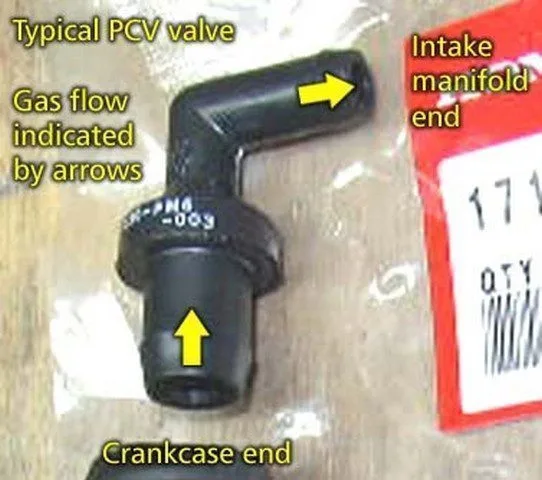
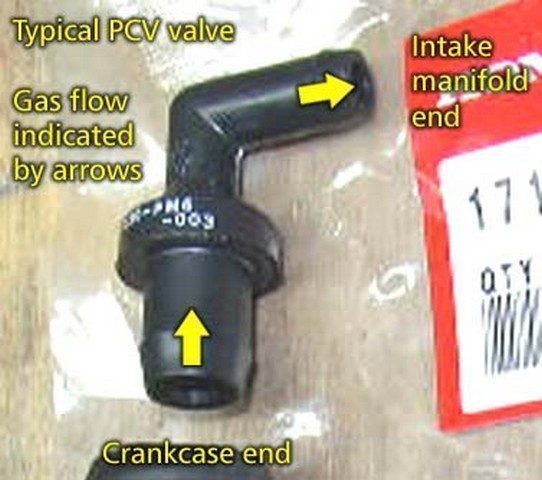
The Positive Crankcase Ventilation (PCV) system uses a carefully controlled intake vacuum to draw pressure from the crankcase through a specially designed valve (PCV valve) that only allows one direction of flow. In the vast majority of automotive applications, the PCV valve itself is responsible for filtering out oil and unwanted debris and preventing it from entering the intake manifold. In this particular application, a PCV filter has been added as a precaution to protect the engine’s air supply system from excess oil and debris.
If the PCM detects a pressure level from the crankcase pressure sensor that exceeds the maximum parameters, a P051F code will be stored and a Malfunction Indicator Lamp (MIL) may be illuminated.
Photo of a PCV valve, a component of the system:
How severe is this DTC?
Excessive crankcase pressure can lead to engine oil leaks. A P051F code should be classified as severe and addressed accordingly.
What are some of the symptoms of the code?
Symptoms of a P051F engine code may include:
Engine oil leaks
Smoke (vapor) from the area under the hood
Hissing (suction) noise from the engine area
Driving issues caused by a vacuum leak
What are some common causes of the code?
Causes
of this code may include:
Clogged (faulty) PCV filter
Faulty PCV valve
Faulty crankcase pressure sensor
Open or shorted engine crankcase pressure sensor wiring
PCM malfunction or PCM programming error
Example photo of a crankcase pressure sensor:
What are the troubleshooting steps for P051F?
Based on my experience, a manual vacuum gauge, a diagnostic scanner, a digital volt/ohmmeter (DVOM), and a reliable source of vehicle information will be needed when diagnosing a P051F code.
A manual vacuum pressure test should be performed before diagnosing any excessive crankcase pressure / PCV related codes. If the engine fails to produce sufficient vacuum, it must be repaired before proceeding with your diagnosis. To perform a manual vacuum pressure test, disconnect the vacuum hose from the PCV and attach your gauge to it. Your vehicle information resource should provide specifications regarding minimum engine vacuum.
Check all PCV hoses for signs of cracking or breakage and perform necessary repairs. Cracked or collapsed PCV vacuum hoses can contribute to the conditions that caused the P051F to be stored. If there is sufficient vacuum on the inlet side of the PCV filter but not on the outlet side, suspect the filter is clogged.
If the engine is in good operating condition and there is no vacuum leak, continue with a visual inspection of all crankcase pressure sensor wiring and connectors. Perform necessary repairs.
Next, I would connect the scanner to the vehicle’s diagnostic port and retrieve all stored codes and freeze frame data. Writing this information down can help you as your diagnosis progresses. After that, clear the codes and test drive the vehicle to see if the code resets.
Use your vehicle information resource to obtain connector face views, wiring diagrams, connector pinout charts, component testing procedures, and specifications. All of this information will be needed to proceed with your diagnosis.
Test the crankcase pressure sensor using the DVOM
With the key on and engine off (KOEO), set the DVOM to the ohms setting and follow the manufacturer’s procedures/specifications to test the engine crankcase pressure sensor with the connector unplugged
If the sensor in question does not meet the manufacturer’s specifications, it should be considered faulty
If the sensor meets the manufacturer’s specifications, proceed to the next step
Use the DVOM to test the reference voltage (usually 5 volts) and a ground at the crankcase pressure sensor connector
With KOEO and the crankcase pressure sensor unplugged, probe the reference voltage pin of the sensor connector with the DVOM’s positive test lead
Connect the negative test lead to the ground pin of the connector to test the entire circuit
If no reference voltage is detected at the sensor connector, locate the PCM and test the corresponding circuit at the PCM connector. Use the DVOM’s positive test lead
The negative test lead should be connected to a known good ground for this test
If there is no reference voltage at the PCM connector, suspect a PCM failure or programming error
If there is no ground at the sensor connector, use your vehicle information source to locate the ground source and ensure it is securely attached to the engine block or battery
If there is reference voltage and ground at the crankcase pressure sensor connector, proceed to the next step
Test the crankcase pressure sensor signal circuit voltage using the DVOM
With the key on engine running (KOER) and the engine crankcase pressure sensor reconnected, use the DVOM’s positive lead to probe the sensor’s signal voltage just behind the connector
The negative test lead should again be connected to a battery ground
Use the vacuum gauge to obtain the correct crankcase pressure and compare the sensor’s signal voltage to the pressure-voltage chart in your vehicle information resource
If the crankcase pressure sensor’s signal voltage is incorrect, consider the sensor faulty
If the crankcase pressure sensor’s signal voltage (at the sensor connector) reflects the correct voltage level, proceed to the next step
Test the crankcase pressure sensor signal circuit at the PCM connector
With KOER, use the DVOM positive test lead to probe the crankcase pressure sensor signal circuit at the PCM connector
The negative test lead should be connected to a battery ground
If a correct crankcase pressure sensor signal is found at the sensor connector but not at the corresponding circuit of the PCM connector, suspect an open circuit between the two
If the crankcase pressure sensor and all circuits meet specifications, suspect a PCM failure or PCM programming error.
Technical Service Bulletins (TSBs) that parallel the vehicle in question (as well as the symptoms and stored codes) can assist in your diagnosis