
What does it mean?
This generic powertrain diagnostic trouble code (DTC) generally applies to many OBD-II vehicles. This may include, but is not limited to, vehicles from Hyundai, Subaru, Suzuki, Mazda, VW, Honda, Kia, Cadillac, Nissan, Audi, etc.
A stored P050A code means that the Powertrain Control Module (PCM) has detected a problem with the Idle Air Control (IAC) system. The term cold start refers to an engine driving strategy that is implemented only when the engine is at (or below) ambient temperature.
Controlled by the PCM, the IAC valve is responsible for regulating the airflow through the throttle body and into the engine’s intake manifold when the engine is idling.
With the throttle plate closed, very little air is allowed to enter the engine through the throttle bore. The engine does not idle smoothly with this tiny amount of air. A constant vacuum supply would be inefficient for promoting a steady idle because variations in atmospheric pressure and engine temperature require different degrees of intake air. An automatically adjustable method for varying the idle air is required. The IAC valve meets this requirement.
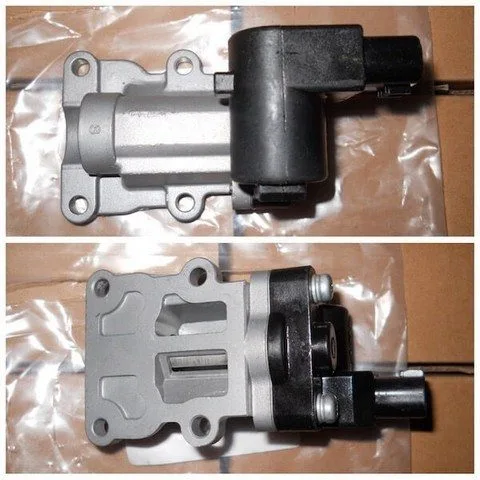
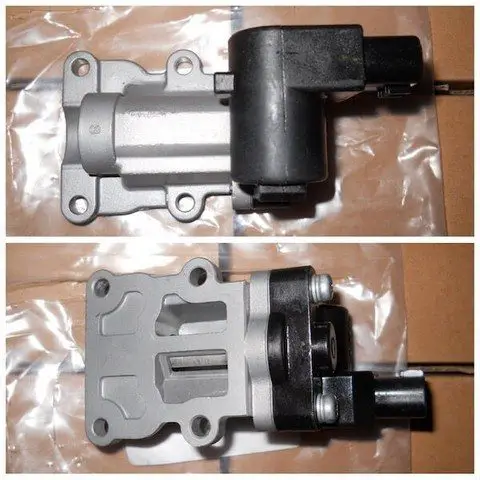
The IAC is an electronically controlled valve mounted on the throttle body. It consists of a single housing with an electric motor and a pair of small air chambers. The two open chambers have a cone-shaped valve and a seat between them. The IAC is mounted near the throttle bore so that one chamber is aligned with an intake opening outside the throttle plate. This chamber is called the inlet chamber. The second chamber (outlet chamber) is positioned to be aligned with an intake opening inside the throttle plate. When the valve is pushed flush into the seat, no air can pass between the two chambers. When the valve is lifted from the seat by the electric motor, ambient air can be drawn through the inlet and outlet chambers and into the intake manifold.
Idle Air Control (IAC) Valve:
The PCM uses input data from the crankshaft position sensor and the camshaft position sensor to calculate engine speed. The engine idle speed is programmed for a specific RPM level, and the PCM uses the IAC motor to achieve it. If the actual engine speed is higher than the desired speed, a voltage signal is sent by the PCM to the IAC motor. The motor extends the valve into the seat, and the airflow to the engine is restricted; the RPM level decreases accordingly. Similarly, if the actual engine speed is lower than the desired speed, the PCM sends the opposite voltage signal. The motor retracts the valve from the seat, and more air is allowed into the intake; the RPM level is increased. Since the desired RPM level is precisely and aggressively targeted by the PCM, the valve is moved in very small increments, continuously.
If the PCM cannot effectively control the engine speed level during a cold start, a P050A code will be stored, and a Malfunction Indicator Lamp (MIL) may be illuminated. Several failures will likely be required for the MIL illumination.
How severe is this DTC?
A P050A code should be considered severe because engine driveability may suffer from the conditions that caused it to be stored.
What are some of the symptoms of the code?
Symptoms of a P050A engine code may include:
High or low engine RPM level
The engine may stall at idle
It may be necessary to press the accelerator pedal for the engine to start
Unusual tapping or clicking noise from the IAC motor

What are some of the common causes of the code?
Causes
of this code may include:
Faulty or dirty IAC valve
Vacuum leak
Open or shorted circuits or connectors
Faulty Engine Coolant Temperature (ECT) sensor
What are the P050A troubleshooting steps?
If any ECT-related codes are stored, diagnose and repair them before attempting to diagnose P050A.
Some vehicle applications will present an audible tap or pop when conditions are right for this code to be stored. If you are working on a product from a Ford motor company vehicle with a stored P050A code and this noise is heard, suspect that the IAC is faulty.
A reliable vehicle information source, a diagnostic scanner, and a Digital Volt/Ohmmeter (DVOM) will all be needed to diagnose a P050A code.
Component testing procedures and specifications, wiring diagrams, connector face views, connector pinout diagrams, and diagnostic flowcharts can be found in your vehicle information source. These items will be necessary for successful diagnosis.
A visual inspection of the IAC valve and all associated wiring and connectors may allow for a quick diagnosis. Look for steam damage on the wiring harness on top of the engine.
If the IAC valve and seat are fouled with carbon, the valve will not seat properly. The valve can be cleaned on some vehicles, but follow the manufacturer’s recommendations carefully.
Use the DVOM (ohms) to test the IAC motor. Disconnect the motor from the harness and use the test leads to measure resistance. If the IAC motor does not meet specifications, it is bad.
If the IAC motor meets specifications, reconnect the IAC motor connector. Probe the input voltage circuit and the ground of the IAC connector using the DVOM test leads. If the voltage is within specifications and a ground is present, suspect that the IAC valve/motor is faulty.
Search for applicable Technical Service Bulletins (TSBs). If you find a TSB that matches the vehicle type, codes, and symptoms you are experiencing, it will assist you in your diagnosis.