
What does it mean?
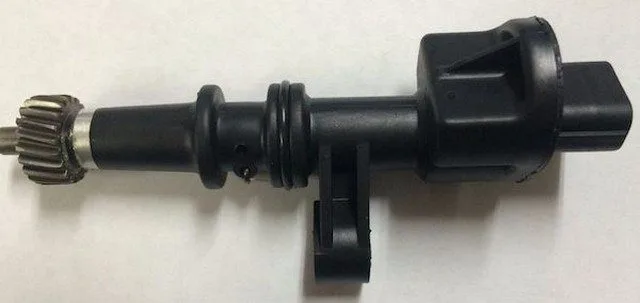
Essentially, this P0500 code means that the vehicle speed as read by the Vehicle Speed Sensor (VSS) is not as expected. The VSS input is used by the vehicle’s main computer called the Powertrain Control Module / Engine Control Module (PCM/ECM) along with other inputs for the proper functioning of the vehicle’s systems.
Typically, the VSS is an electromagnetic sensor that uses a rotating reluctor ring to complete an input circuit to the PCM. The VSS is mounted in the transmission case in a position such that it allows the reluctor ring to pass nearby. The reluctor ring is attached to the transmission output shaft so that it rotates with it. As the reluctor ring passes by the electromagnetic tip of the VSS, notches and grooves serve to complete and interrupt the circuit rapidly. These circuit manipulations are recognized by the PCM as transmission output speed or vehicle speed.
Fault codes associated with the Vehicle Speed Sensor:
- P0501 Vehicle Speed Sensor “A” Range/Performance
- P0502 Vehicle Speed Sensor “A” Input Low
- P0503 Vehicle Speed Sensor “A” Intermittent/Erratic/High
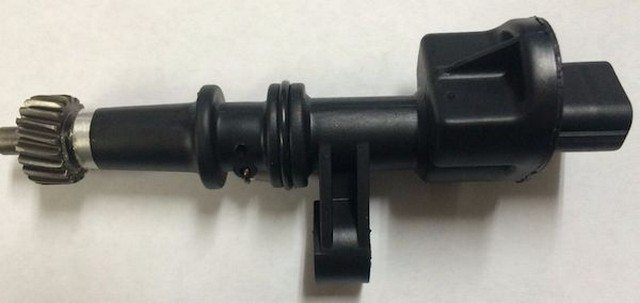
A typical VSS or Vehicle Speed Sensor:
Symptoms of a DTC P0500 may include:
- loss of anti-lock brakes
- the “anti-lock” or “brake” warning lights on the dashboard may be illuminated
- the speedometer or odometer may not work correctly (or at all)
- Your vehicle’s RPM limiter may be reduced
- shifting of an automatic transmission may become erratic
- other symptoms may also be present
A P0500 code can mean that one or more of the following events have occurred:
- The Vehicle Speed Sensor (VSS) is not reading (functioning) correctly
- A broken/frayed wire leads to the Vehicle Speed Sensor
- The vehicle’s PCM is not properly configured for the vehicle’s actual tire size
Possible Solutions
A good first step for a vehicle owner or DIYer is to search for Technical Service Bulletins (TSBs) for your specific vehicle make/model/engine/year. If there is a known TSB (as is the case for some Toyota vehicles), following the instructions from a bulletin can help you save time and money in diagnosing and repairing your problem.
Next, visually inspect all the wiring and connectors leading to the speed sensor. Carefully look for rubbing, bare wires, broken wires, melted, or otherwise damaged areas. Repair as needed. The sensor location depends on your vehicle. The sensor could be on the rear axle, the transmission, or perhaps the wheel hub assembly (brake).
If the wiring and connectors are in good condition, check the voltage at the speed sensor. Again, the exact procedure will depend on your vehicle’s make and model.
If everything seems correct, replace the sensor.