
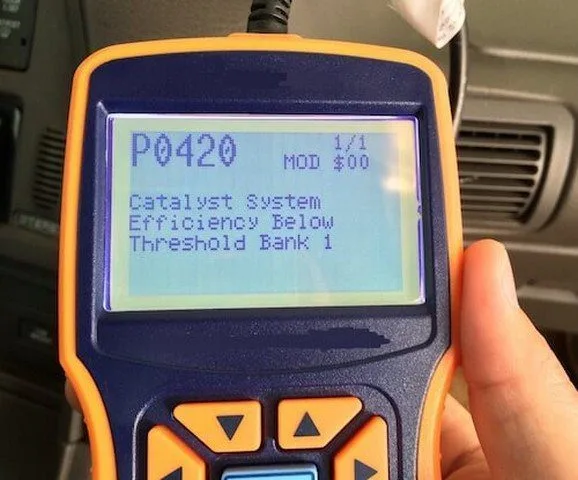
What does it mean?
This diagnostic code (DTC) is a generic powertrain code. It is considered generic because it applies to all makes and models of vehicles (1996 and newer), although specific repair steps may vary slightly by model. Therefore, this engine code article applies to Nissan, Toyota, Chevrolet, Ford, Honda, GMC, Subaru, VW, etc.
P0420 is one of the most common trouble codes we see. Other popular codes include P0171, P0300, P0455, P0442, etc. So be sure to bookmark this site for future reference!
The catalytic converter is part of the exhaust system that looks somewhat like a muffler, although its job is very different from a muffler’s. The job of a catalytic converter is to reduce exhaust gas emissions.
The catalytic converter has an oxygen sensor at the front and rear. When the vehicle is hot and running in closed-loop mode, the upstream oxygen sensor waveform reading should fluctuate. The downstream O2 sensor reading should be fairly stable. Typically, the P0420 code triggers the Check Engine light if the readings from both sensors are similar. Oxygen sensors are also called O2 sensors.
This indicates (among other things) a converter that is not operating as efficiently as it should (according to specifications). Catalytic converters are normally not a “wear” item, meaning they are not designed to wear out and need replacement. If they have failed, it is likely due to something else that caused their failure. This is what a P0420 means in simplified terms.
Symptoms
The main symptom for the driver is the illumination of the MIL (Malfunction Indicator Light). You will probably not notice any driving issues, although there may be symptoms. For example, if the substance inside the catalytic converter is broken or failing, it can restrict the exhaust, which will result in a feeling of reduced vehicle power.
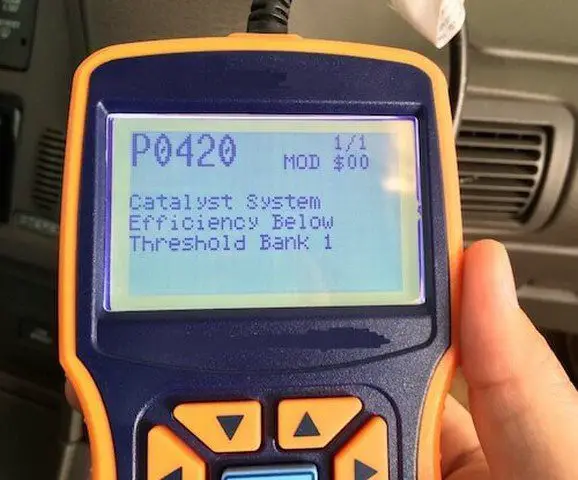
P0420 DTC Code
Causes
A P0420 code can mean that one or more of the following events have occurred:
- Lead fuel was used where unleaded was required (unlikely)
- A damaged or faulty oxygen/O2 sensor
- Damaged or poorly connected downstream oxygen sensor (HO2S) wiring
- The engine coolant temperature sensor is not working properly
- Damaged or leaking exhaust manifold/catalytic converter/muffler/exhaust pipe
- Faulty or underperforming catalytic converter (likely)
- Retarded ignition timing
- The oxygen sensors in front of and behind the converter report values that are too similar
- Leaking fuel injector or high fuel pressure
- Cylinder misfire
- Oil contamination
Possible Solutions
Some suggested steps for troubleshooting and fixing a P0420 error code include:
- Check for exhaust leaks at the manifold, pipes, and catalytic converter. Repair as needed.
- Use an oscilloscope to diagnose the oxygen sensor operation (Tip: the oxygen sensor located in front of the catalytic converter normally has a fluctuating waveform. The waveform of the sensor behind the converter should be more stable).
- Inspect the heated downstream oxygen sensor, replace if necessary
- Replace the catalytic converter
Diagnostic Tip
Generally, you can look at the exhaust temperature just before and just after the converter using an infrared gun. The output should be about 100 degrees Fahrenheit hotter when the engine is fully warmed up.
Overall, the biggest mistake vehicle owners make when they have a P0420 code is simply replacing an oxygen sensor (O2 sensor). It is important to perform proper diagnostics so as not to waste money unnecessarily replacing parts.
If you need to replace the catalytic converter, we highly recommend replacing it with an original manufacturer brand unit (i.e., get it from a dealer). The second choice would be a high-quality replacement part like a 50-state legal cat. There are many stories in our forums where people replaced the cat with a cheaper aftermarket one only for the code to return shortly after.
One thing to note is that many automakers offer a longer warranty on emissions-related parts. So, if you have a newer car but it’s out of its bumper-to-bumper warranty, there may still be a warranty on this type of issue. Many manufacturers offer a five-year, unlimited mileage warranty on these items. It’s worth checking.