
This formidable engine control unit strikes fear into the hearts of drivers worldwide. But don’t panic when a P0344 code is the result. Although it sounds alarming, this trouble code is often caused by minor issues.
Let’s explore the meaning and common culprits behind the P0344 code and how to get your engine running again without breaking the bank.
What Does Code P0344 Mean?
OBD-II Trouble Code P0344 Description
Intermittent Camshaft Position Sensor “A” Circuit (Bank 1)
The P0344 diagnostic trouble code alludes to a detected lack of stability in the camshaft position sensor’s return signal. Simply put, the vehicle’s ECM/PCM has determined that the return signal from its corresponding camshaft position sensor is erratic or intermittent.
This, in turn, compromises the ECM/PCM’s ability to use this sensor’s anticipated feedback to formulate further engine strategy.
To better understand the complexities of the P0344 diagnostic trouble code, it’s best to first familiarize yourself with the role of the camshaft position sensor in modern engine operation.
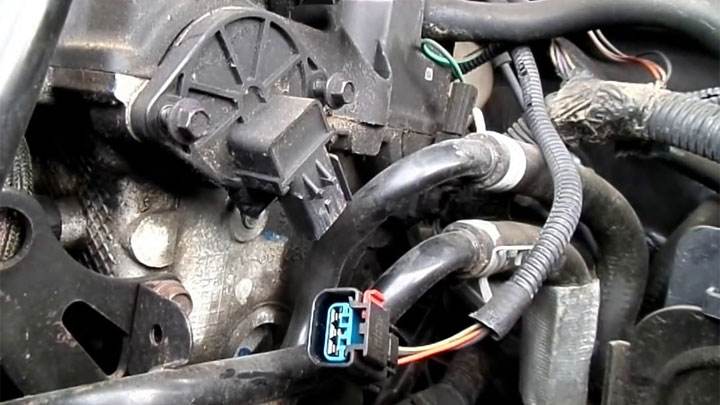
Today’s electronically monitored engines rely heavily on data from a number of sensors to formulate engine operating strategy, and few of these sensors are as critical as those related to engine timing, with the camshaft position sensor being the most precise of these sensors.
Without valid feedback from an engine’s camshaft position sensor, a vehicle’s ECM/PCM is unable to accurately determine proper fuel injection timing, as no high-end timing measurements are retained or recorded. Furthermore, other engine functions, such as variable valve timing, are also canceled.
In the case of DTC P0344, a vehicle’s operating software momentarily loses connection with the engine’s camshaft position sensor, thereby failing to execute several timing-sensitive functions as it otherwise would.
As a result, a number of serious drivability-related symptoms often appear, including timing/starting difficulties.
Symptoms of Code P0344
The P0344 diagnostic trouble code is often accompanied by a number of secondary symptoms, some of which tend to be quite alarming in nature. Recognizing such symptoms will be advantageous when it comes to diagnosing and repairing an issue.
Here are some of the most common symptoms associated with DTC P0344.
- Check Engine Light illuminated
- Intermittent rough idle
- Hesitation under load
- Unexplained stalling
Causes of Code P0344
The P0344 diagnostic trouble code can be triggered by any one of several underlying issues, some of which often prove more difficult to identify than others. As in all cases, understanding the potential causes of such a problem can make all the difference when attempting to perform a timely repair.
Here are some of the most common causes of DTC P0344:
- Open/shorted cam sensor power circuit
- Open/shorted cam sensor ground circuit
- Open/shorted cam sensor return circuit
- Faulty camshaft position sensor
- Damaged camshaft tone ring
Is Code P0344 Serious?

Generally speaking, the P0344 diagnostic trouble code is considered by most to be rather serious in nature. This is largely due to the many drivability-related symptoms that often accompany faults of this nature.
Any issue that could potentially leave you and your vehicle stranded is not a problem to be taken lightly or overlooked.
Intermittent hesitation and stalling are both potential symptoms of an active P0344 diagnostic trouble code. Continuing to drive with your vehicle in such a condition can pose a serious risk to persons and property, should your vehicle stall unexpectedly in traffic (especially at highway speeds).
In all cases, the cause of a vehicle’s P0344 diagnostic trouble code should be thoroughly diagnosed and repaired at the first available opportunity. This is the only reliable way to ensure that your car operates safely and effectively.
If you do not feel comfortable performing the repairs yourself, schedule an appointment with a trusted automotive repair shop or dealership at your earliest convenience.
How to Fix Code P0344
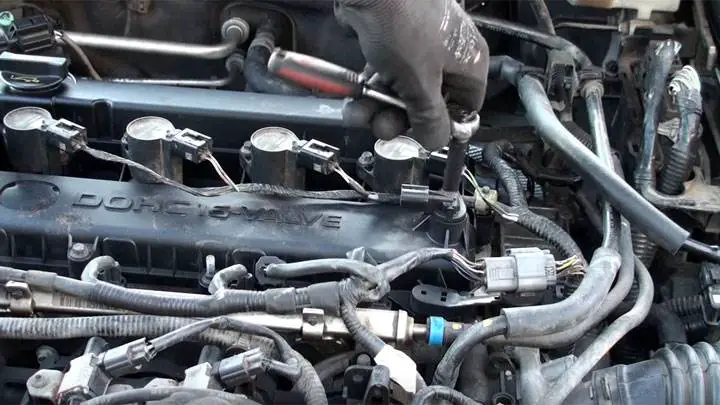
The following steps can be used to assist you in diagnosing and repairing the root cause of your vehicle’s P0344 trouble code. As always, a factory-specific manual (such as Haynes, Chilton, or an online source) should be consulted for your particular vehicle model before attempting such repairs.
#1 – Check for Additional DTCs
Before beginning the diagnostic process, it is important to check for any potential additional DTCs. Any detected DTCs should be thoroughly diagnosed before proceeding.
#2 – Inspect the Camshaft Position Sensor
One should begin by carefully inspecting their engine’s camshaft position sensor for any signs of excessive stress or damage. Any obvious damage to the camshaft position sensor itself will require replacement.
Likewise, any damage to the sensor’s wiring harness should be repaired or replaced immediately.
#3 – Analyze Freeze Frame Data
Next, display all freeze frame data associated with the storage of the P0344 DTC. Determine the number of times the camshaft sensor’s return signal was interrupted, as well as how frequently such failures occur.
Likewise, you should attempt to determine any common denominators, in terms of recorded data, that might help isolate the cause of this fault.
#4 – Determine Sensor Type
At this point, further diagnosis will require you to identify the type of camshaft sensor with which your vehicle is equipped.
If your vehicle’s camshaft position sensor is equipped with 2 wires, it is a magnetic sensor. If this sensor has 3 wires, it is a Hall effect sensor.
#5 – Testing Magnetic Sensors
If your vehicle’s camshaft position sensor is of a magnetic sensor configuration, resistance should be checked across both terminals of this sensor itself with it disconnected. This resistance reading should be compared to the figures specified by your vehicle’s manufacturer.
Additionally, these two terminals should also be probed while an assistant attempts to crank the engine in question, with your meter set to A/C volts. Again, this reading should be compared to manufacturer specifications, although 0.5 V AC is generally satisfactory.
#6 – Test the Hall Effect Sensor
If your vehicle’s camshaft position sensor is of the Hall effect type, a multimeter should be used to test the corresponding wiring harness to ensure that a power source (5V) and a satisfactory ground are present.
If both values are present at the sensor itself, live data derived from your OBD2 scan tool should be consulted to verify that appropriate feedback is being provided to the PCM.