
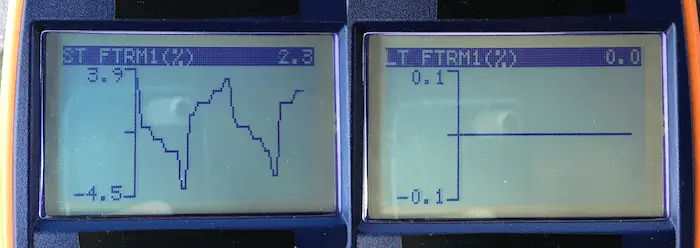
What is the P029A Code?
The generic diagnostic trouble code P029A, “Cylinder 1 Fuel Trim – Maximum Limit Reached,” indicates that the engine computer (PCM) has detected an extremely lean air-fuel mixture specifically in cylinder #1. To compensate, the PCM had to increase the fuel flow to its maximum capacity without being able to restore a balanced ratio.
Symptoms of the P029A Code
The signs that often accompany this code are:
- ➤ Noticeable drop in performance and loss of power
- ➤ Engine hard to start
- ➤ Unstable or rough idle
- ➤ Possible presence of other codes (misfires, lean mixture)
- ➤ Potentially increased fuel consumption
Possible Causes of the Fault
A P029A code on cylinder 1 is generally caused by:
- ➤ Faulty Injector: Cylinder 1 injector clogged, obstructed, or malfunctioning.
- ➤ Vacuum Leaks: An unmetered air leak at the intake manifold, often due to a faulty gasket, detached hose, or failing EGR valve.
- ➤ Insufficient Fuel Pressure: A weak fuel pump or a clogged fuel filter.
- ➤ Faulty Sensors: A MAF (Mass Air Flow) sensor or MAP (Manifold Absolute Pressure) sensor providing an incorrect reading to the PCM.
- ➤ Oxygen Sensor (Lambda Sensor): Incorrect data sent by the downstream oxygen sensor for the affected cylinder.
How to Diagnose and Repair the P029A Code?
WARNING: This code is considered severe. Driving with a mixture that is too lean can cause overheating and seriously damage the engine. It is recommended to proceed with diagnosis quickly.
1. Visual Inspection and Pre-Diagnosis
- Carefully inspect the engine compartment to identify any obvious air leaks: listen for whistling sounds, check the condition of hoses, the intake connection, and the PCV system.
- Check the cylinder 1 injector to see if it is wet with fuel or shows signs of an external leak.
- Using an OBD2 scanner, read all fault codes and observe the live data, especially the Fuel Trim values (short-term and long-term). Confirm that cylinder 1 is indeed the one affected.
2. Fuel Pressure Check
Connect a pressure gauge to the fuel rail and compare the reading with the manufacturer’s specifications.
- ✅ If the pressure is good: Proceed to the next step.
- ❌ If the pressure is low: Test the fuel pump relay and power supply voltage. Check and replace the fuel filter if necessary. If everything is good, the fuel pump is likely faulty.
3. Injector and Circuit Test
Use a multimeter (DVOM) to test the cylinder 1 injector:
- Electrical Test: Check the injector’s resistance (ohmmeter) and ensure it is receiving a command pulse from the PCM (using a Noid light or an oscilloscope).
- Acoustic Test: Using a mechanical stethoscope, listen for the characteristic “click” of the injector during operation. Its absence indicates a dead injector or a circuit problem.
4. Air Leak Search and Sensor Testing
If the previous steps yielded no results:
- Perform a smoke test on the intake system to locate any invisible micro air leaks.
- Inspect and clean the MAF sensor with an appropriate product.
- Using the scanner, check the MAP sensor and oxygen sensor data at idle and at steady RPM to detect any inconsistency.
Conclusion and Call to Action
The P029A code often points to a mechanical or electrical problem localized on cylinder 1. Although the diagnosis can be performed by a skilled DIYer with the right tools, the complexity of modern systems often makes professional intervention necessary for an accurate diagnosis and reliable repair.
💡 Tip: Do not ignore this code. If you do not feel comfortable performing the diagnosis yourself, consult a professional mechanic to avoid any risk of engine damage.