
What does it mean?
This diagnostic code (DTC) is a generic powertrain code, meaning it applies to vehicles equipped with OBD-II. Although generic, specific repair steps may vary by brand/model.
The fault code P0274 is a generic code (common to all manufacturers) indicating above-average current consumption by the fuel injector serving cylinder number five.
The engine cylinder #5 injector is malfunctioning or not working at all due to a circuit issue. It should be noted that while this code is common to all vehicles, the prognosis may vary by manufacturer.
For example, they may have encountered issues with a batch of fuel injectors or another faulty circuit component limited to their specific vehicles.
This type of problem is best addressed as soon as possible to avoid damaging other internal components. A faulty fuel injector will affect the spark plug, cause knocking, also impact the oxygen sensor and catalytic converter, along with several other components.
Go online and access the technical service bulletins (TSB) for your specific vehicle. Look for TSBs related to P0274 and their suggested repair procedure.
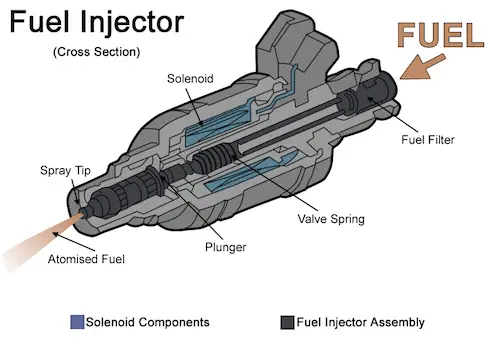
Cross-section diagram of a typical automotive fuel injector

Symptoms
Symptoms displayed for a P0274 code may include:
Malfunction indicator light illuminates and P0274 code sets
Engine idles roughly
Fuel economy will suffer
There will be a lack of power indicated by poor acceleration
Causes
Potential causes of this DTC include:
Faulty electrical wiring from PCM to injector
Defective electrical connector on fuel injector
Fuel injector with internal short causing high current draw
Clogged or dirty fuel injector
Diagnostic and Repair Procedure
From my experience over the years, the issue is usually a corroded or loose fuel injector connector, or a faulty fuel injector.
A loose connector causes excessive resistance thus increasing the voltage required for operation. The powertrain control module (PCM) wiring harness is not easily accessible, and left undisturbed, it is rarely faulty.
The fuel injector, on the other hand, is susceptible to a variety of problems. The number one issue is fuel with anhydrous ethanol content. This fuel additive reduces oil-based fuel consumption.
The water vapor produced with E10 anhydrous ethanol has a negative effect on fuel injectors. They depend on fuel for lubrication. Water vapor reduces the friction-reducing properties of gasoline and causes premature injector wear.
Small engine manufacturers do not approve the use of ethanol-based fuels as they significantly reduce a small engine’s lifespan.
Inspect the electrical connector on the fuel injector. Look for bent or pushed-back pins. Apply dielectric grease and push the electrical connector onto the fuel injector. Ensure it is snug and the metal spring retaining clip is in place
Start the engine. Place a long screwdriver handle against your ear and the tip on the fuel injector. A clicking sound indicates a working injector. No sound means the opposite
Disconnect the fuel injector. Using an ohmmeter, check the resistance between the two male terminal blades. A good injector will have 0.5 to 2.0 ohms. More or fewer ohms indicates an injector with an internal short circuit.
If the resistance is correct and the injector can be heard operating, the next step is to try cleaning the injector. If cleaning fails to restore normal injector operating parameters, the only alternative is to replace the injector.
Purchase a direct injection cleaning kit consisting of a can of cleaner and an injection hose. Pull the fuel pump fuse and start the engine. Let it run until it stalls.
Remove the Schrader valve from the fuel pressure test port on the fuel rail. Install the hose onto the test port.
Pinch the fuel return line directly behind the fuel pressure regulator using needle-nose pliers.
Open the cleaner bottle to increase pressure in the fuel rail.
Start the engine and let it run on the fuel injection cleaner bottle until it stalls.
Turn off the key and remove the cleaning hose from the test port. Install the Schrader valve, remove the pliers from the return line, and install the fuel pump fuse.
Use a common code scanner to clear the fault codes. Start the engine. If the code returns, replace the injector.