
P0264 Cylinder 2 Injector Circuit Low
What Does It Mean?
The OBD fault code P0264 is a generic powertrain code common to all vehicles. Although the code reference is the same, the repair procedure may vary somewhat by manufacturer.
This code implies that the Powertrain Control Module (PCM) has experienced a low voltage situation involving the fuel injector for cylinder number 2 in the firing order.
In short, this fuel injector is malfunctioning for one of many reasons. It is important to diagnose and repair this type of problem as soon as possible.
When a fuel injector malfunctions, it causes ripples throughout the line, meaning the engine’s operating parameters change due to mixed signals to the PCM.
If the fuel injector’s spray pattern is reduced, a lean mixture results. The ripple begins. The oxygen sensor signals a lean mixture to the PCM. In response, it enriches the fuel mixture to all cylinders. Fuel economy drops.
The cylinder with the faulty injector causes a lean mixture which in turn causes a higher cylinder head temperature leading to detonation. The knock sensor detects the detonation, signals the PCM which responds by retarding the timing. Now the engine runs poorly and lacks power.
This isn’t the end of the ripple effect, but it reflects the general idea.
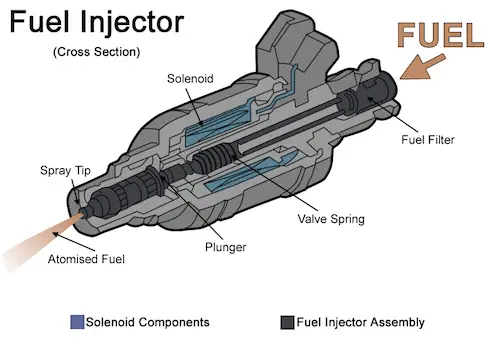
Cross-section diagram of a typical automotive fuel injector

Symptoms displayed for a P0264 code may include:
- The check engine light comes on and the P0264 code is set
- The engine will run rougher than normal
- A lack of power
- A large drop in fuel economy will result
Possible causes of this DTC include:
- Dirty fuel injector supplying cylinder 2
- Faulty fuel injector
- Clogged fuel injector
- Open or short in the fuel injector harness
- Loose or corroded fuel injector connector
Diagnostic / Repair
Generally, this type of problem is either a loose or corroded electrical connector on the injector, a clogged (dirty or blocked) injector, or a bad injector requiring replacement.
In over 45 years, I have found that loose or corroded connectors were the cause of the electrical fault most of the time. I have only found a few cases where the low voltage wiring became shorted or open (when it hasn’t been disturbed).
The majority of electrical problems were related to the alternator, starter solenoid wiring, oxygen sensor wiring due to the immediate proximity of the exhaust, and the battery. The majority of electrical work involved correcting items installed by the customer, such as high-power stereo chains and other poorly installed parts or equipment.
Fuel injectors are powered by the fuel pump relay. The PCM activates the relay when the key is turned on. This means that as long as the key is on, the injectors have power.
The PCM activates the injector by supplying the ground at the necessary time and for the appropriate duration.
Check the connector on the fuel injector. This is a plastic connector attached to the injector with a metal clip around the connector. Pull on the connector to see if it comes off easily. Remove the wire tie and remove the connector from the injector.
Inspect the harness connector for corrosion or pushed-back pins. Make sure the two blades are not bent in the injector itself. Correct any faults and apply dielectric grease and install the electrical connector.
Start the engine and listen to the injector to make sure it is operating. Use a long screwdriver for the injector and the handle for your ear and you can hear it clearly. If it does not make a very audible “clicking” noise, it either has no power or it has failed.
If it did not click, remove the connector from the injector and check for power with a voltmeter. No power means the fuel pump relay wiring is faulty or has a loose connection. If it is powered, probe both terminals on the harness connector and if the PCM injector driver is working, the voltmeter will show rapid pulses. If pulses are observed, replace the injector.
If the injector was operating, it is either clogged or dirty. Try cleaning it first. The injector flush kit is inexpensive and will benefit the remaining injectors, potentially preventing a recurrence. If flushing does not solve the problem, the injector must be replaced.
Buy an “in-line” fuel injector flush kit online or at an auto parts store. It will consist of a can of high-pressure fuel injector cleaner and a hose with one end for the fuel injector cleaner can threads.
Pull the fuse to the fuel pump.
Start the vehicle and let it run until it dies from lack of fuel.
Remove and plug the fuel return line attached to the fuel pressure regulator. This is to prevent the cleaner from going back into the fuel tank.
Remove the Schrader valve in the test port of the fuel rail. Install the fuel line from the flush kit onto this test port. Screw the can of high-pressure fuel injector cleaner onto the fuel line from the flush kit.
Start the engine and let it run until it runs out of fuel. It will run solely on the can of cleaner.
When the engine stops, turn off the key, remove the line from the flush kit, and replace the Schrader valve. Install the fuel pump fuse.