
What Does It Mean?
This generic powertrain diagnostic trouble code (DTC) generally applies to OBD-II equipped vehicles that have a cold start injector. Vehicle makes may include, but are not limited to, Ford, Dodge, GMC, Chevy, VW, Volvo, Jaguar, etc.
When a P0213 is stored in your OBD-II vehicle, it means the Powertrain Control Module (PCM) has detected a fault in the main cold start injector (1).
These types of injectors are primarily used in vehicles equipped with diesel engines, but I have personally seen cases where they were also used in gasoline engine applications.
Typically, cold start injectors are placed in a central position so that all engine cylinders can benefit from a “shot” of fuel delivered during cold start conditions. Some vehicles use multiple (I’ve never seen more than two) cold start injectors placed at strategic locations in the engine intake. Others use a single injector that is usually placed near the throttle plate opening or the intake air inlet pipe.
By monitoring engine temperature and intake air temperature, the PCM is able to determine when the cold start injector should be activated. In most vehicles, the cold start injector circuit is evaluated by the PCM to ensure it is operating as expected. If the PCM detects an abnormal level of resistance on the circuit (accompanied by a corresponding voltage drop), a P0213 code will be stored and a Malfunction Indicator Lamp (MIL) may be illuminated. Some vehicles may require multiple ignition cycles with a fault for an MIL to be illuminated.
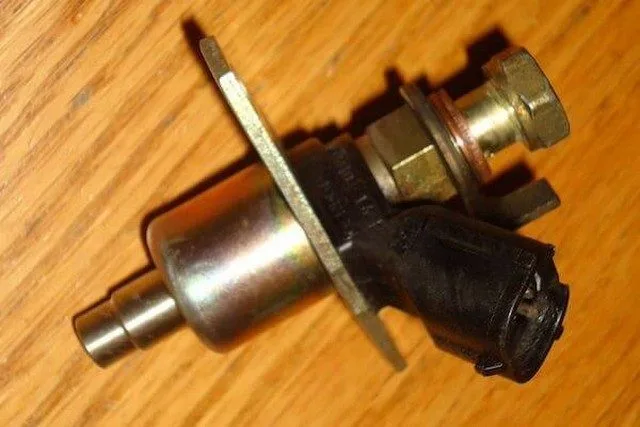
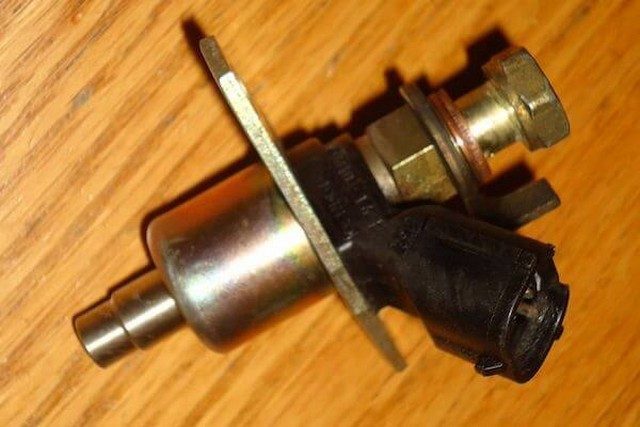
Here is an example of an injector:
Code Severity and Symptoms
A failure of the cold start injector can make starting the engine in unfavorable weather conditions more difficult than usual. A P0213 code should be treated with a certain degree of urgency.
Symptoms of a P0213 trouble code may include:
Delayed engine starting (especially when cold)
No symptoms may be present in warm weather
Engine coolant temperature or intake air temperature codes may also be displayed
Lean exhaust codes
Misfire codes may also be stored
Causes of this DTC Code
Causes
Possible causes of this code may include:
Faulty cold start injector
Faulty engine coolant temperature sensor or circuit
Faulty intake air temperature sensor or circuit
Shorted or open wiring in the cold start injector circuit
Diagnostic and Repair Procedures
A diagnostic scanner, a digital volt/ohmmeter (DVOM), and a reliable source of vehicle information are some of the tools I need to diagnose a P0213 code.
If engine coolant temperature codes or intake air temperature codes are present, diagnose and repair them before diagnosing a P0213 code.
Visual Inspection
A visual inspection of the wiring and connectors related to the system should be performed as a starting point for your diagnosis. Rodent-damaged wiring is not uncommon, especially in cold climates.
Next, I would connect the scanner to the vehicle’s diagnostic connector and retrieve all stored codes and freeze frame data. I like to note this information as it has proven useful as the diagnostic process unfolds. Clear the codes, allow the vehicle to reach a “cold start” condition according to the manufacturer’s specifications, and test the vehicle to see if the P0213 code resets.
If the P0213 does not reset immediately, continue to operate the vehicle normally until the PCM enters a ready state or the code resets. If the ready state is entered, the problem has been corrected. If the code resets, a problem persists.
Step-by-Step Diagnosis
If the code is immediately reset, you can start by testing the cold start injector using the DVOM and following the recommendations found in your vehicle information source. Of course, you will need to replace any cold start injector that does not meet the manufacturer’s specifications.
If the cold start injector in question checks out, test the voltage at the injector connector (using the DVOM). Typically, there should be a constant supply of battery voltage that is joined by a ground pulse from the PCM at the appropriate time. A “noid” light is probably the best tool for simultaneously testing the injector pulse/voltage signal at the injector connector.
If no voltage is discovered at the cold start injector connector, suspect a blown fuse, a faulty relay, or a burned fuse link. Check the system fuses with the circuit loaded to avoid an incorrect diagnosis.
If no ground pulse is detected at the cold start injector connector, suspect a faulty PCM, a PCM programming error, or a malfunction in the circuit between the PCM and the injector connector. Use the DVOM to check for the ground pulse at the appropriate pin in the PCM connector to locate the exact condition and continue from there.
If no ground pulse is detected at the PCM connector, the PCM is likely faulty or has encountered a programming error.
If there is a ground pulse signal at the PCM connector, you have a malfunction in the circuit between the PCM and the cold start injector. After disconnecting all associated controllers (to prevent damage), use the DVOM to check the resistance and continuity of the individual circuits. Repair or replace any circuit that does not meet the manufacturer’s specifications.
Additional Diagnostic Notes
The PCM must recognize that conditions are appropriate for a cold start injection before it can perform diagnostic tests
Be cautious when testing high-pressure fuel systems