
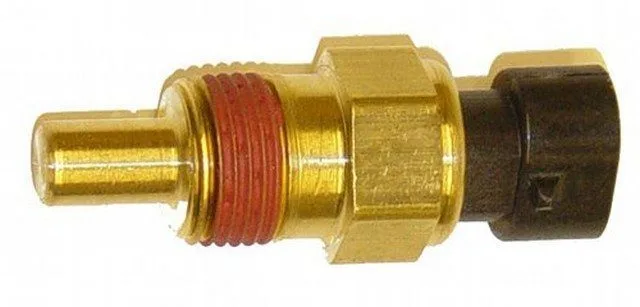
What is the P0115 Code?
The generic diagnostic trouble code (DTC) P0115 indicates a malfunction in the Engine Coolant Temperature (ECT) sensor circuit. This code applies to all vehicles equipped with the OBD-II standard (from 1996 onwards). Troubleshooting procedures may vary slightly depending on the make and model.
ECT Sensor Operation
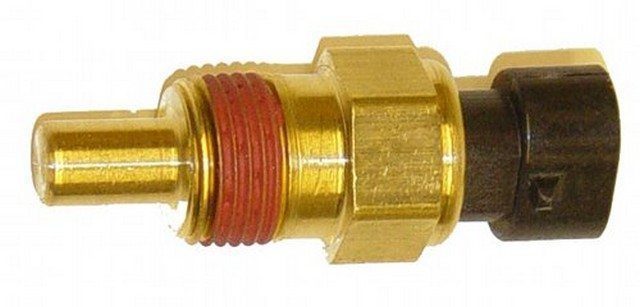
The ECT (Engine Coolant Temperature) sensor is a thermistor whose resistance changes with temperature. It is typically a two-wire sensor: one wire receives a 5-volt reference voltage from the Powertrain Control Module (PCM), and the other sends a return signal to the PCM.
Note: This sensor is separate from the temperature sender that powers the dashboard gauge, although their operating principle is similar.
When the engine is cold, the sensor’s resistance is high. When it is hot, the resistance is low. The PCM continuously monitors this value. If the signal voltage falls outside the expected ranges (too high or too low), the P0115 code is stored and the Malfunction Indicator Lamp (MIL) illuminates.
Symptoms of the P0115 Code
A P0115 code may present with several symptoms:
- Illumination of the Malfunction Indicator Lamp (MIL)
- Difficult vehicle starting
- Excessive black smoke from the exhaust (overly rich mixture)
- Unstable idle, stalling
- Poor cooling fan operation (continuous running or failure to operate)
- Possible increase in NOx emissions (detectable with a gas analyzer)
Possible Causes of the Fault
The most common causes of a P0115 code are:
- Faulty ECT sensor
- Damaged wiring or corroded/faulty connector
- Short circuit or open circuit in the reference (5V) wire or signal (ground) wire
- Internal PCM problem (less common)
How to Diagnose and Repair the P0115 Code?
Here is a step-by-step troubleshooting procedure to identify and resolve the cause of the P0115 code.
Step 1: Visual Inspection
Visually inspect the sensor, its connector, and the wiring. Look for signs of damage, corrosion, or loose wires. Repair or replace as necessary.
Step 2: Verification with a Diagnostic Tool
Using an OBD-II scanner, read the displayed coolant temperature.
- If the reading is abnormally high (e.g., ~140°C / 280°F): Disconnect the sensor connector. If the reading drops sharply (e.g., to -45°C / -50°F), the sensor is likely internally shorted and should be replaced. If the reading remains high, there is a short to ground in the signal wiring.
- If the reading is abnormally low (e.g., -45°C / -50°F): Check for the presence of the 5V reference voltage at the sensor connector (engine off, ignition on). If it is absent, check the circuit back to the PCM. If it is present, the sensor or the signal circuit may be open.
Step 3: Electrical Tests
To confirm the sensor’s condition, measure its resistance with a multimeter and compare it to the manufacturer’s reference values for the current engine temperature. Infinite resistance (open circuit) or zero resistance (short circuit) indicates a faulty sensor.
Step 4: PCM Verification
If all circuits and the sensor are in good condition, an internal PCM fault is possible, although rare.
Conclusion and Call to Action
The P0115 code is often resolved by replacing the ECT sensor, a typically inexpensive part. However, accurate diagnosis helps avoid unnecessary part replacements.
Experiencing this issue? If you do not have the necessary tools or skills, it is recommended to entrust the diagnosis to a professional mechanic for a reliable repair.
Related codes: P0115, P0116, P0117, P0118, P0119, P0125, P0128