
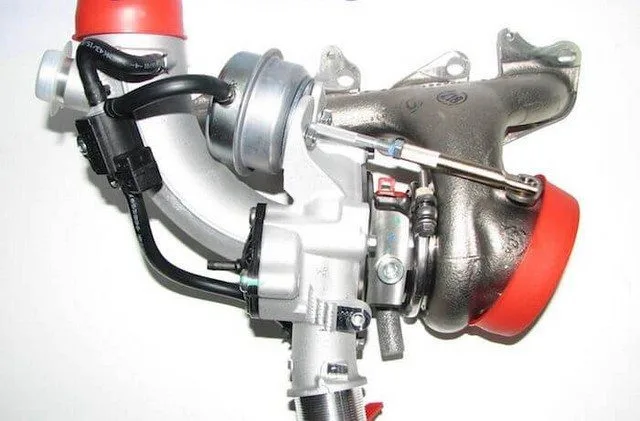
What is the P00AF Code?
The P00AF fault code is a generic OBD-II powertrain code that indicates a performance issue within the “A” boost control module. It relates to the boost pressure management system of turbochargers or superchargers. This code is likely to appear on many brands such as Chevrolet, GMC Duramax, Dodge, Ram Cummins, Isuzu, Ford, Vauxhall, or Volkswagen. Precise diagnostic procedures vary depending on the model, year, and engine configuration.
Operation of the Boost System
Forced induction systems (turbocharger, supercharger) use energy from exhaust gases or the engine to compress the air entering the cylinders, thereby increasing power. To precisely regulate boost pressure, the engine control module (ECM) controls an actuator, often a solenoid or wastegate valve. The latter mechanically adjusts the turbocharger vanes. If the ECM detects that the “A” control module is operating outside its intended parameters, it logs the P00AF code and illuminates the malfunction indicator lamp (check engine). The vehicle may then enter a reduced performance mode (limp mode) to protect the engine.
Severity of the P00AF Code
The severity of this code is moderate to high. A fault in the boost control system can lead to a non-stoichiometric air-fuel mixture (too rich or too lean), eventually causing excessive fuel consumption, significant power loss, and potentially internal engine damage. It is recommended to perform diagnostics promptly.
Symptoms of the P00AF Code
- Significant engine power loss
- Abnormal or weak throttle response
- Irregular engine operation
- Difficulty maintaining speed or climbing hills
- Activation of safety mode (reduced performance or limp mode)
- Check engine light illuminated
Possible Causes of the Fault
- Faulty solenoid or wastegate valve (stuck, broken, or seized lever)
- Failed Boost Control Module
- Wiring problem (short circuit, open circuit, frayed or burnt wires)
- Corrosion or poor contact at electrical connectors
- Soot clogging of the turbocharger vanes
- Leak in the exhaust or intake circuit
- Rare internal ECM failure
How to Diagnose and Resolve the P00AF Code?
⛑️ Safety Precautions
Warning: Boost system components become extremely hot. Only work on a cold engine to avoid any risk of burns.
Step 1: Visual Inspection
Locate the boost control solenoid (usually mounted on the turbocharger). Check its physical condition and electrical connector. Look for any obvious signs of damage, corrosion, or water intrusion.
Step 2: Mechanical Check
If possible, manually verify that the actuator (wastegate) lever moves freely without being seized, broken, or bent. On some models, the lever may be adjustable. Be very careful not to damage these expensive parts.
Step 3: Wiring Inspection
Carefully inspect the wiring harness going to the solenoid. It is often exposed to high heat. Look for melted, frayed wires, or signs of burning.
Step 4: Professional Diagnosis
The steps above are basic checks. A thorough diagnosis with a professional automotive scanner is essential to measure solenoid values, test circuits, and confirm the exact source of the problem before replacing any part.
🔧 Need Help?
The P00AF code can be complex to diagnose. If you are unsure of your diagnosis, consult a professional mechanic to avoid damaging your vehicle. Use the data from your specific repair manual for more details.