
What is the P006A Code?
The generic fault code P006A applies to vehicles equipped with an OBD-II (On-Board Diagnostics) standard. It indicates that the Powertrain Control Module (PCM) has detected an inconsistency or correlation difference between the signals from the Manifold Absolute Pressure (MAP) sensor and those from the Mass Air Flow (MAF) or Volume Air Flow (VAF) sensor for engine bank 1.
Operation of MAP and MAF/VAF Sensors
The correct air-fuel ratio is crucial for engine performance, efficiency, and emission control. The PCM relies on data from several sensors to calculate it:
The MAP (Manifold Absolute Pressure) Sensor
It measures the pressure (or vacuum) in the intake manifold, providing the PCM with a signal in kilopascals (kPa) or inches of mercury (inHg). This data helps estimate the engine load.
The MAF (Mass Air Flow) or VAF (Volume Air Flow) Sensor
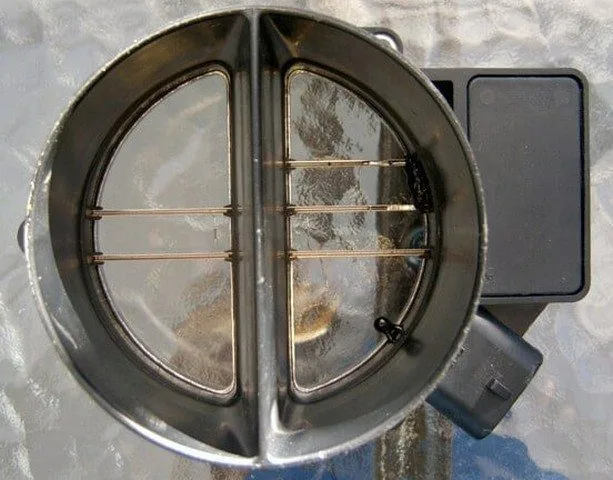
It directly measures the amount of air drawn into the engine. The PCM uses this information to precisely adjust fuel injection. “Unmeasured air,” for example from an air leak, disrupts this calculation and can trigger this fault code.
Symptoms of the P006A Code
- Engine hesitation, stumbling, or stalling during acceleration
- Unstable or irregular idle
- Noticeable decrease in engine performance
- Reduced energy efficiency (increased fuel consumption)
- Excessive emissions (smoke from the exhaust)
- Malfunction Indicator Lamp (MIL) illuminated on the dashboard
Possible Causes of the P006A Code
- Faulty MAP sensor: Incorrect pressure data.
- Faulty or dirty MAF or VAF sensor: Dirt or a malfunction distorts the air flow measurement.
- Wiring problems: Damaged wires, oxidized, loose, or corroded connectors.
- Air (vacuum) leaks: A cracked intake duct, damaged manifold gasket, or detached hose allows unmeasured air to enter.
- Engine mechanical problem: Insufficient engine vacuum due to a more serious issue.
- Faulty PCM: A failure of the control module itself (rare).
Diagnosis and Troubleshooting of the P006A Code
Diagnosis requires an OBD2 scanner, a digital multimeter (DVOM), and possibly a vacuum gauge.
- Checking for air leaks: Visually inspect the entire air intake circuit, from the air filter to the manifold, looking for cracks, bent hoses, or loose connections.
- Engine vacuum test: Using a vacuum gauge, measure the vacuum at idle. A low or unstable value indicates a leak or mechanical problem.
- Inspection of connectors and wiring: Check the condition and cleanliness of the MAP and MAF sensor connectors. Verify the absence of cut wires or short circuits with a multimeter.
- Reading live data: With a scanner, observe the live values from the MAP and MAF sensors at idle and during slight accelerations. Compare them to the manufacturer’s specified ranges.
- Electrical testing of sensors: Using the multimeter and manufacturer’s data, test the sensor supply voltage (usually 5V or 12V), ground, and return signal.
- Cleaning or replacement: A dirty MAF sensor can often be cleaned with a specialized product. If electrical tests are bad, replace the faulty sensor (MAP or MAF).
- PCM update: In rare cases, a PCM software update may resolve the issue (check your manufacturer’s technical service bulletins).
Conclusion
The P006A code indicates a discrepancy between two sensors essential for proper engine operation. Although often caused by an air leak or a dirty sensor, a methodical diagnosis is essential to identify the root cause and perform the appropriate repair. Ignoring this code can lead to increased fuel consumption, power loss, and long-term damage to the catalytic converter.
Need help diagnosing this code on your vehicle? Consult a professional garage equipped with the diagnostic tools suitable for your car brand.