
P004E: Intermittent/Erratic Turbocharger/Supercharger Boost Control “A” Control Circuit
The generic diagnostic trouble code P004E indicates an intermittent or erratic problem detected by the Powertrain Control Module (PCM) in the boost control “A” circuit of a turbocharger or supercharger. This fault, applicable to most OBD-II equipped vehicles (Ford, Chevrolet, Toyota, VW, etc.), affects boost pressure management and requires precise diagnosis.
Understanding the Boost System
Turbochargers and superchargers are air pumps that increase engine power by forcing intake air. While superchargers are mechanically driven by the crankshaft, turbos use exhaust gases.
Two main systems exist:
- Variable Geometry Turbos (VGT): Adjustable vanes, controlled by a solenoid or electric motor (commanded by the PCM), vary exhaust gas flow to adjust boost pressure independently of engine speed.
- Traditional Turbos/Superchargers: Pressure is regulated by a wastegate or bypass valve, often actuated by engine vacuum or a solenoid.
The PCM continuously monitors this system via sensors (pressure, vane position). Code P004E signals an intermittent irregularity in this control circuit.
Symptoms and Severity of Code P004E
The severity of this code is moderate to severe. An untreated fault can lead to a loss of performance or, conversely, overboost which can cause engine knock and severe engine damage.
Common symptoms include:
- Lack of power and reduced engine performance
- Unstable engine idle
- Illumination of the Malfunction Indicator Lamp (Check Engine Light)
- Abnormal noises (whistling, whooshing) in case of a leak
Possible Causes of Fault P004E
The intermittent nature of the code often points to an electrical or connection problem. The main causes are:
- Wiring Problems: Oxidized connectors, loose, damaged wires, or intermittent short circuits.
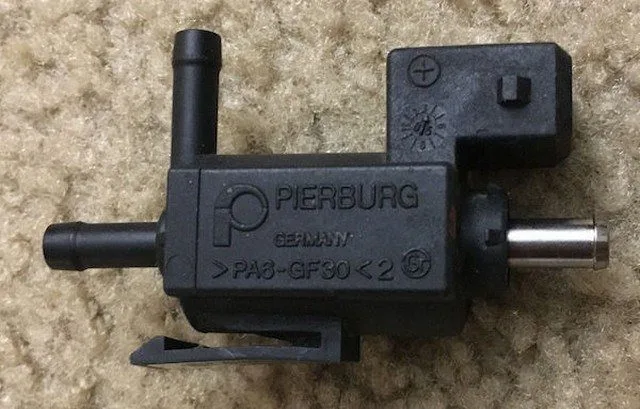
- Faulty Control Solenoid: The solenoid that activates the wastegate or VGT vanes is defective.
- Defective Sensor: The boost pressure sensor (MAP) or vane position sensor (VGT) is sending an erratic signal.
- Vacuum Leaks: On pneumatically controlled systems, a vacuum leak prevents precise control.
- Faulty Turbocharger/Supercharger: The boost unit itself is damaged or seized.
- PCM Failure (rare): The Powertrain Control Module itself is at fault.
How to Diagnose and Repair Code P004E?
⚠️ Warning: This procedure is generic. Always consult manufacturer-specific data for your vehicle for an accurate diagnosis.
- Visual Inspection: Carefully inspect the turbo circuit, its wiring, and connectors. Look for any signs of corrosion, damage, burning, or looseness. Check the condition of vacuum hoses for possible leaks.
- Consulting TSBs: Search for Technical Service Bulletins (TSBs) issued by the manufacturer for known problems on your model.
- Testing the Solenoid with a Diagnostic Tool: Using a bidirectional scan tool, activate and deactivate the control solenoid (with the engine idling at ~1200 RPM). Observe if the engine RPM changes and if the pressure/position sensor value (PID) on the scan tool changes correctly.
- If the RPM changes but the PID does not → suspect the sensor or its circuit.
- If nothing changes → suspect the solenoid, its wiring, or the turbo.
- Electrical Tests:
- Test the power supply and ground at the solenoid connector (it must be commanded during the test).
- Measure the solenoid’s resistance (ohmmeter) and compare it to the manufacturer’s specific values.
- For the sensor (often 3 wires: +5V, ground, signal), verify the presence of these three signals.
- Mechanical Inspection: Remove the intake duct to visually inspect the turbine and compressor. Ensure they spin freely, without excessive axial play or impact from a foreign object.
Related Codes
- P0045: Turbocharger/Supercharger Boost Control “A” Circuit Open
- P0046: Turbocharger/Supercharger Boost Control “A” Circuit Range/Performance
- P0047: Turbocharger/Supercharger Boost Control “A” Circuit Low
- P0048: Turbocharger/Supercharger Boost Control “A” Circuit High
Need help diagnosing your vehicle? Consult a professional equipped with advanced diagnostic tools for an accurate diagnosis and reliable repair. Do not ignore this code; your engine’s health depends on it!