
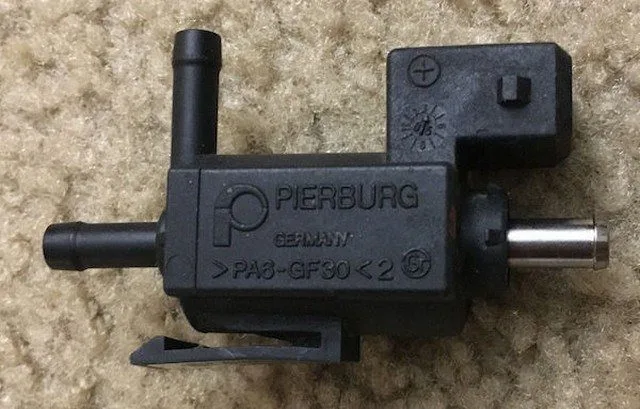
Code P0048: Turbocharger/Supercharger Boost Control “A” Circuit High
The generic diagnostic trouble code P0048 indicates an electrical issue in the “A” circuit controlling the boost, whether generated by a turbocharger or a supercharger. This code is common to many OBD-II equipped vehicles (Toyota, Ford, GMC, Jeep, etc.), but specific diagnostic procedures may vary.
Role of the Boost System
Turbochargers and superchargers are air pumps that increase engine power by forcing more air into the engine. They can be controlled in two main ways:
- Variable Geometry Turbochargers (VGT): Use movable vanes regulated by a solenoid or actuator, controlled by the PCM (Powertrain Control Module).
- Traditional Systems: Use a wastegate or bypass valve, often controlled by a solenoid and engine vacuum.
Code P0048 is triggered when the PCM detects that the electrical signal sent to the “A” control solenoid is abnormally high compared to the expected values.
Symptoms and Severity of Code P0048
The severity of this code is moderate to severe. Uncontrolled overboost can cause engine knocking and severe engine damage. It is imperative to address this issue promptly.
Symptoms include:
- Malfunction Indicator Lamp (MIL) illuminated
- Unstable engine idle
- Loss of power
- Engine knocking sounds
Possible Causes of Code P0048
Several failures can cause this code:
- Electrical Problems: Shorted wiring, corroded or loose connectors.
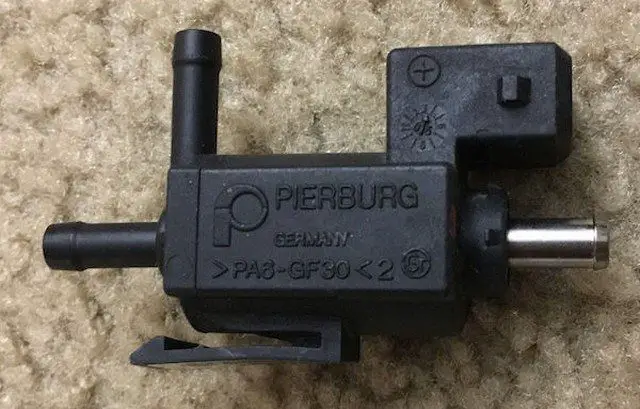
- Faulty Control Solenoid: Internal failure causing resistance out of specification.
- Faulty Sensor: Boost pressure sensor (MAP) or vane position sensor (VGT) providing incorrect information to the PCM.
- Vacuum Leaks: (On pneumatically controlled systems) Leaks in hoses or the wastegate diaphragm.
- PCM Failure: Rare, but possible.
Related Codes
P0045, P0046, P0047, P0049, P004A.
Diagnostic Procedures
1. Visual Inspection: Carefully inspect the wiring, connectors, and hoses for damage, corrosion, or leaks. Consult the manufacturer’s Technical Service Bulletins (TSB).
2. Diagnostic Tool Test: Using a bidirectional scan tool, activate and deactivate the control solenoid. Observe the parameter data (PIDs) and engine RPM. A lack of change indicates a problem.
3. Electrical Tests:
- Check for power and ground at the solenoid connector.
- Measure the solenoid’s resistance and compare it to the manufacturer’s specifications.
- Test the solenoid and associated sensor wiring for short circuits or open circuits.
4. Mechanical Inspection: Check the physical condition of the turbocharger/supercharger and ensure there is no carbon buildup or damage to the vanes (VGT).
Repair and Prevention
The repair depends on the identified root cause: replacing the solenoid, repairing the wiring, replacing the MAP sensor, or fixing vacuum leaks. For complex diagnostics, consult vehicle-specific wiring diagrams and strictly follow the manufacturer’s diagnostic flowchart.
🚗 Need Help? If the diagnosis is beyond your skill level, consult a professional mechanic equipped with an advanced diagnostic tool to avoid any risk of engine damage.