
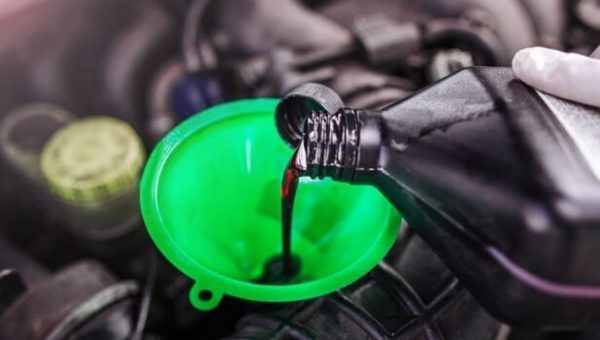

Transmission fluid performs very important functions. It lubricates the contacting elements of the transmission, removes dirt and wear products, and facilitates cooling. In automatic transmissions, this working fluid also transfers torque between the components of a torque converter. Therefore, most car manufacturers recommend monitoring the level and condition of the transmission fluid in the gearbox. We will explain how to check its level in different vehicles and also discuss situations where it might need changing.
WHAT ARE THE SYMPTOMS OF BAD TRANSMISSION FLUID?
The following signs indicate that there is not enough oil in the gearbox or that it is time to replace it:
- unwanted noises and vibrations during gear shifting;
- in winter, you might encounter problems with shifting when the assembly has not yet warmed up;
- dynamics could worsen in vehicles with automatic transmission;
- jerky gear shifting;
- delayed gear shifting;
- automatic transmission upshifts or downshifts when it shouldn’t.
HOW TO CHECK THE TRANSMISSION FLUID LEVEL?
To check the oil level in a manual transmission, proceed as follows:
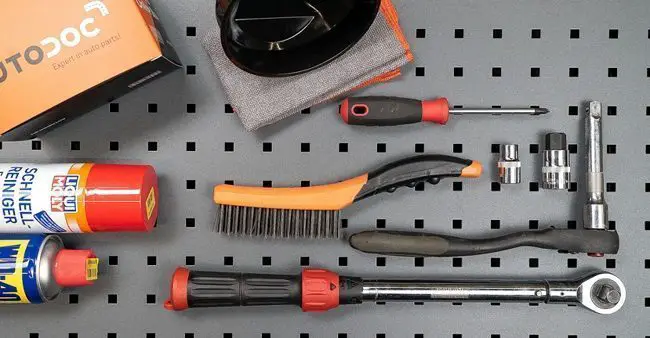
- Prepare all necessary tools and chemicals: a wrench, WD-40, a wire brush, clean rags or paper towels. You might also need oil – you must use the same type as what is in the gearbox now. Information about the fluid used in your car model should be specified in the vehicle manual. If not, seek professional assistance.
- Lift your car on a lift or over an inspection pit. If you don’t have such equipment and your car is front-wheel drive, remove the left front wheel to access the inspection window located on the transmission housing.
- Engage the parking brake.
- If you have just turned off the engine, wait a few minutes until the oil drains into the housing.
- Clean the filler plug and the surrounding area with a wire brush. Wipe with a clean cloth and solvent. This will help prevent dirt from entering the device.
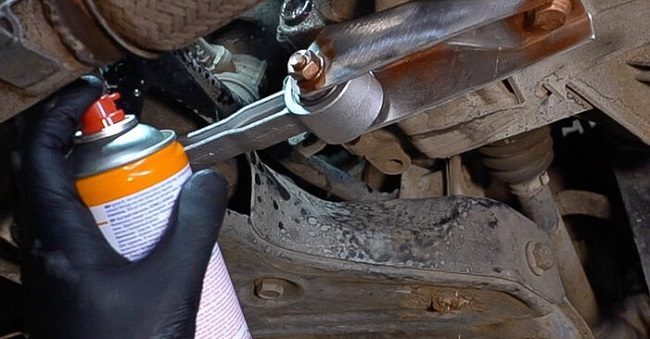
- Unscrew the cap that closes the opening. If it is stuck, use WD-40 to loosen it.

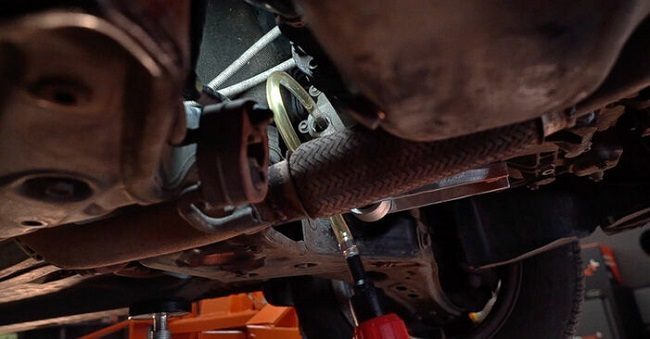
- Check the amount of oil in the gearbox. Its level should reach the lower edge of the hole.
- If necessary, add fluid using a syringe.
- Wipe oil traces from the transmission housing with a cloth or paper towel.
- Screw the plug back in.
- Reinstall all units to their place in reverse order.
The checking procedure is as follows:
- Park your vehicle on a level surface.
- Open the hood.
- Find the transmission dipstick. Usually, its handle is brightly colored, often orange. If necessary, consult the vehicle manual for the dipstick location.
- Start the engine. Let it run for a while to warm up.
- If you are not performing the test right after driving, cycle through all modes by holding the lever in each position for about three seconds. This will help distribute the transmission fluid through the channels.
- Place the lever in “Park” or “Neutral” position depending on the vehicle model. The exact selector position is often indicated on the dipstick.
- Engage the parking brake.
- Consult the vehicle manual to see if the engine should be running or turned off for the check. Specifically, in some Acura and Honda models, the powertrain must be shut off after warming up.
- Remove the dipstick from the transmission and wipe it with a clean, lint-free cloth.
- Insert the dipstick all the way down, then remove it again.
- Look at the dipstick. You will see two marks on it. One indicates the transmission fluid level on a cold engine and the second – on a hot engine. Usually, they have corresponding markings: either “Cold” and “Hot”, or numbers indicating the temperature. Since your engine is now hot, the oil trace on the dipstick should be at the “Hot” mark, or at a higher temperature, but not above. It is not recommended to measure the transmission fluid level on a cold engine as the results will be inaccurate.
- If necessary, top up the ATF in the transmission. To do this, stop the engine and use a funnel.
- Wait for the oil to drain into the oil pan.
- Start the engine and check the transmission fluid level again.
To check if they are full enough or not, proceed as follows:
- Warm up the transmission to operating temperatures by driving a distance of about 15 kilometers.
- Place the vehicle on a lift, inspection pit, or car ramp so you can reach the underbody.
- Start the engine.
- Place the gear selector in the corresponding mode – “Park” or “Neutral”.
- Unscrew the inspection plug at the bottom of the transmission. If fluid leaks from the hole, there is no need to fill it. Screw the plug back in.
- If nothing leaks out, it means there is not enough oil.
- Pour some ATF through the filler opening using a pump or a special hose and funnel, until it starts leaking from the inspection hole.
- Close the hole with the cap.
- Start the engine.
- Unscrew the plug again and repeat the filling procedure.
- As soon as the ATF starts leaking again, close the hole.
- Cycle the gear selector through all modes.
- Open the inspection hole and fill the fluid for the last time.
- Screw in the inspection and filler plugs.
- Wipe streaks from the transmission.
WHEN SHOULD YOU CHANGE THE TRANSMISSION FLUID?
It is recommended to replace the manual transmission oil every 80,000 – 100,000 km or after 5 years of operation, whichever comes first. In semi-automatic transmissions, the fluid is replaced every 60,000 km. Oil change intervals for automatic transmissions of different designs vary even more – from thirty to several hundred thousand kilometers. The exact replacement intervals for your vehicle model are specified in the owner’s manual.
Sometimes the transmission fluid loses its properties before its due date. This is caused by:
- Aggressive driving behavior.
- Towing a heavy trailer.
- Spinning the wheels on slippery surfaces for too long.
- Inappropriate ATF.
- Driving in traffic jams in hot weather for too long.
- Incorrect gear shifting.
HOW TO CHANGE GEARBOX OIL ON YOUR OWN?
To change the gear oil in a manual transmission, proceed as follows:
- Find out how much gear oil your transmission can hold. This information is in the vehicle manual. In addition to the required amount of fluid, depending on the vehicle design, you will need a transmission housing gasket or an O-ring for the drain plug, sealant, a container to collect the used oil, a funnel and a hose or a syringe, a cloth, and wrenches to undo the fasteners.
- Before starting, drive 5 to 10 km to let the oil warm up and make it less viscous: it will be easier to drain.
- Place your car on a lift, inspection pit, or car ramp. If necessary, secure the wheels with wheel chocks.
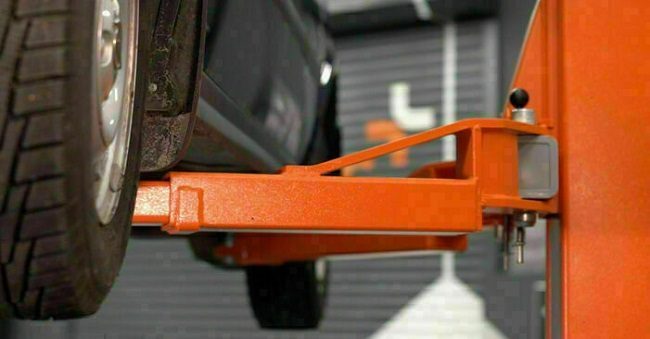
- Remove the protective plate.
- Place a container under the oil pan.

- Remove the drain plug (for example, on Renault Mégane, Audi 100, and Audi A6) and let the transmission fluid drain out. If there is no drain plug (as in Opel Astra or Chevrolet Lacetti, for example), loosen the oil pan fasteners, wait for the oil to leak out, then remove the component by tilting it very carefully to one side.
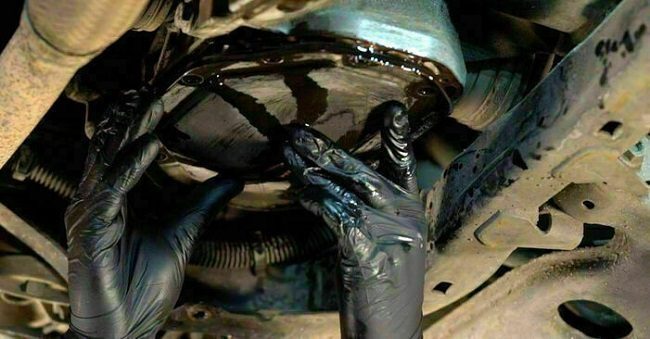
- Using brake cleaner, remove dirt from the mounting seat of the pan or the plug threads.
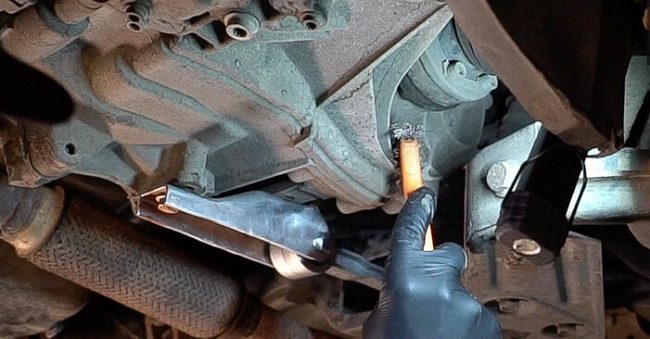
- If you removed the oil pan during the work, clean the contact surfaces of the old gasket residue, wipe them with solvent, install a new gasket using sealant. Put the oil pan back in place.
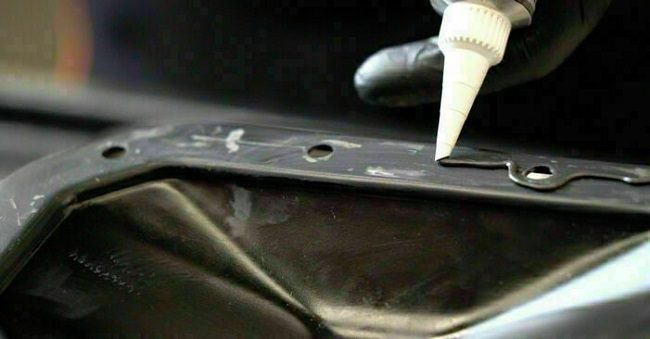
- If you removed the plug, replace its O-ring and close the drain hole with it.
- Use a hose and funnel to pour the required amount of fluid into the transmission through the bleeder. You can also pour it with a syringe through the inspection hole.
- Reassemble everything in reverse order.
Conclusion
Changing the transmission fluid and topping it up on time will help significantly extend the lifespan of both manual and automatic transmissions and ensure their long and stable operation. Follow our advice and you can check the oil level and quality yourself to decide on the next steps.