

Car hesitates when accelerating from a stop or when going uphill is really frustrating, and it can be dangerous in certain situations like highway entry and exit, where acceleration may be needed to merge into traffic. This usually happens because your engine is not generating enough power to facilitate the speed increase, but the exact culprit may require time and knowledge to identify.
This article includes a comprehensive list of 11 common reasons why the car hesitates during acceleration. Go through each one to rule out the true culprit one by one and immediately perform the required replacement or maintenance to enjoy smooth and safe driving.
Car hesitates when accelerating after a stop: 11 Common Reasons
Essentially, engine lag or hesitation during acceleration occurs when the engine doesn’t receive enough power, and it needs more power to accelerate from a dead stop than to maintain the speed of a moving vehicle.
The engine generates power by creating combustions in its chamber. The input for such combustions, or explosions, is a mixture of air and fuel in a fixed optimal ratio, which is ignited by the spark plug. The engine houses several cylinders, and combustions take place in these cylinders in a continuous order so that a continuous supply of energy is generated to run the engine.
Therefore, if there is a problem with any of the engine components that control such a mechanism for igniting the fuel and air supply, the engine will not get enough power when needed, causing the car to hesitate when accelerating from a stop.
The reasons for this problem can be quite lengthy. Inspect the following components in turn when you encounter the problem of the car being slow to accelerate after stopping:
1. Air Filter
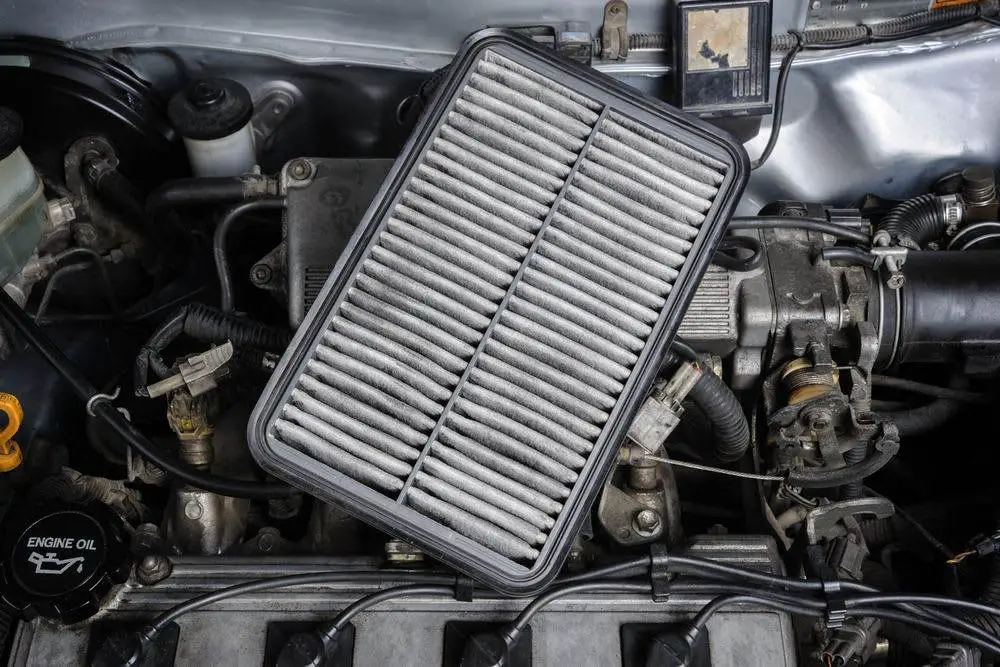
One of the most common reasons that make your car hesitate when accelerating from a stop, and the simplest to fix, is a dirty air filter. Your engine needs a constant supply of air to operate, and the air part of this equation can be significantly affected if the air filter is dirty and clogged with dust buildup.
A clogged air filter means the engine will not receive enough air to produce optimal combustion, thus generating less power than what is needed to accelerate the car. If it persists, this small problem will choke the engine, negatively affect fuel economy as well as your driving experience and safety. Fortunately, if it’s the culprit, you just need to remove the air filter from the airbox, inspect it, and replace it with a new one.
2. Mass Air Flow Sensor
This is the next component to inspect after ruling out the air filter.
The Mass Air Flow sensor keeps track of the volume of air entering the engine and relays the information to the ECU (Engine Control Unit). The computer uses this information to decide the corresponding amount of fuel that the fuel injectors need to deliver.
A faulty or clogged sensor transmits incorrect information, so the engine does not receive the correct amount of fuel it needs, leading to suboptimal power generation and thus causing the car to hesitate when accelerating from a stop or when going uphill. Note that if the Mass Air Flow sensor is the cause, it may or may not trigger a fault code.
3. Fuel Pump
While your engine needs air and fuel to be injected into the combustion chamber, the fuel is stored in the fuel tank.
Therefore, a fuel pump, also called a “fuel transfer pump,” is needed to transfer gasoline or diesel from the fuel tank to the engine, more precisely to the carburetors or fuel injectors, depending on the type of vehicle you own. The carburetors or fuel injectors then disperse the fuel into the engine’s combustion chambers.
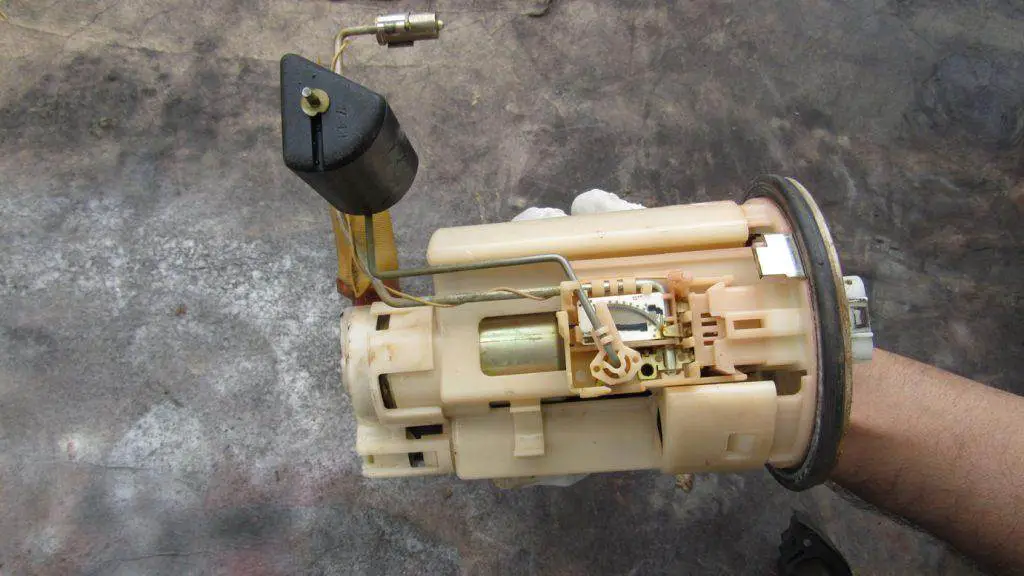
It goes without saying that when your vehicle’s fuel pump malfunctions, the engine will not get the right amount of fuel at the right time, so its performance will be impaired.
A dirty or damaged fuel pump can trigger a handful of problems. A clogged or faulty fuel pump means the engine does not receive enough fuel at a given time to generate sufficient power, causing the car to hesitate when accelerating from a stop.
4. Fuel Injectors
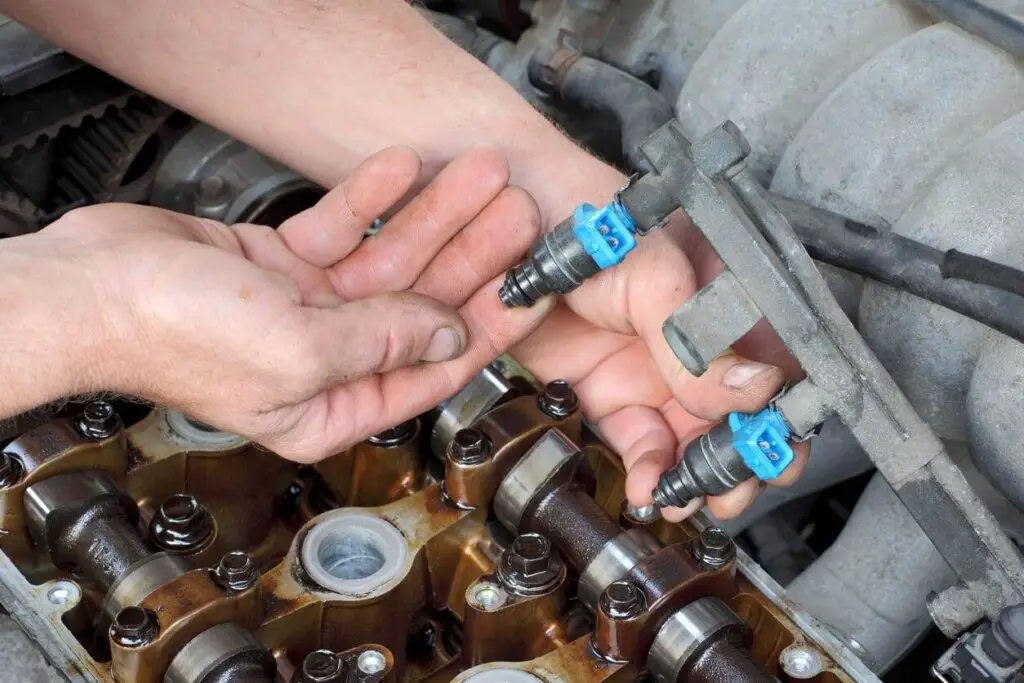
As mentioned above, once the fuel pump transfers the fuel from the fuel tank to the engine, the fuel injectors then spray the fuel into the cylinder. The fuel is then mixed with air in a certain proportion and then ignited by a spark plug to create combustion.
Like the air filter and fuel pump, the fuel injector is also prone to accumulating dirt and sludge over time, affecting its ability to deliver the correct amount of fuel for combustion. As a result, the engine fails to produce enough power to take off smoothly after a complete stop.
5. Fuel Filter
Similar to the air filter, the fuel filter tends to get dirty or clogged. This problem can lead to power loss or even failure to start, as the engine does not receive enough fuel at a given time for optimal performance, thus causing your car to hesitate when accelerating from a stop or when the vehicle is going up a slope. Of course, suboptimal engine performance will also result in poor fuel economy.

The fuel filter is located in the fuel tank on most recent vehicles and will require a visit to the workshop for inspection if you are not used to handling it. If your vehicle has an external fuel filter, it is simple and inexpensive to replace.
6. Accelerator Pump
If you drive an old vehicle equipped with a carburetor, it must be fitted with an accelerator pump. The delay may be due to pump wear or the need for repair. It is a piston rod with a rubber-sealed piston that injects a small amount of raw gas into the carburetor. The influx of fuel and air makes the engine more responsive to acceleration.
When the rubber seal is worn, it sends a large volume of air with little or no gas to the plunger cylinder. As a result, the car hesitates when accelerating from a stop. You need to replace the pump as well as clean or replace the fuel filter to fix the problem.
7. Throttle Position Sensor
The Throttle Position Sensor is a component of your car’s throttle body system. It is located between the engine intake manifold and the air filter.

The job of the Throttle Position Sensor is to ensure that the engine receives the right amount of air and fuel for optimal combustions.
Whenever you press the accelerator pedal, the throttle valve rotates to let a precise amount of air into the combustion chamber through the engine intake manifold. The more you press the pedal, the more the valve opens.
At the same time, the Throttle Position Sensor sends signals to the engine control unit to report the position of the throttle valve. Simultaneously, the ECU uses this information to adjust the amount of fuel to be instilled into the chamber at a given time, thus creating the ideal conditions for combustion to take place.
It is quite common for the Throttle Position Sensor to malfunction, as it consists of mechanical parts that can wear out and need replacement. A faulty Throttle Position Sensor will transmit incorrect data to your car’s computer.
A faulty sensor will not send the correct information, which will deprive the engine of enough fuel and air it needs to operate properly during acceleration.
There are other signs you can look for to better ensure that a faulty Throttle Position Sensor is actually the culprit. In most situations, when there is a problem with the Throttle Position Sensor, the Check Engine light comes on. Furthermore, most car manufacturers offer a “limp” mode with reduced power in case of engine failure. This is designed to allow a driver to exit a busy highway more safely.
If a faulty Throttle Position Sensor is indeed the culprit causing your car to hesitate when accelerating from a stop, you should have it inspected immediately. When your engine does not receive the correct air-fuel ratio for proper operation, it runs below its optimal efficiency. The result is inevitably lower fuel economy and will damage your engine, thus reducing its lifespan.
8. Exhaust Gas Recirculation (EGR) Valve
The role of the EGR valve is to recirculate the exhaust gases generated during engine combustion back into the combustion cycle to be reburned, thus reducing engine temperature and reducing the production of toxic nitrogen oxide.
EGR valves open and close to control the gas flow. Over time, the exhaust forms a hard, thick carbon wall, blocking the EGR valve open or closed. This will block the system’s passages and result in incorrect data being sent to the engine computer, leading to an incorrect amount of air and fuel being injected into the engine chamber, thus causing delayed acceleration.
A stuck or faulty EGR valve also increases emissions as well as engine temperature, and a heated engine will never operate optimally or last very long. This problem can, over time, reduce your car’s mileage and shorten the engine’s lifespan. This is why car manufacturers recommend cleaning the EGR valve and passages every 50,000 miles or less.
9. Coil Pack
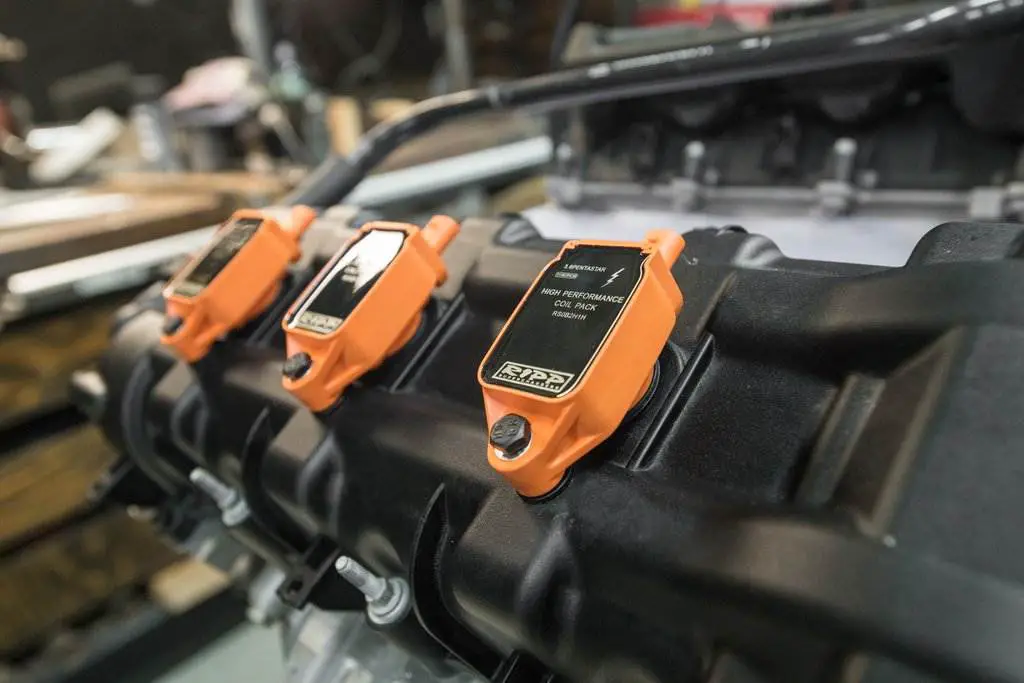
Starting from the year 2000, engines in newer vehicles are equipped with a more advanced ignition coil pack that sits directly on top of the spark plug of each engine cylinder to directly ignite the plug. These coil packs are electronically controlled by the car’s engine computer. Coil packs generally create a hotter and stronger spark, which in turn produces better combustion and better power in a car’s engine, compared to the older ignition mechanism that required an ignition coil, a mechanical distributor, and spark plug wires.
Needless to say, when a coil pack starts to fail, it will affect the ignition of the spark plugs, thus preventing ignition and combustion. Therefore, the engine will not generate enough power, causing your car to stall when accelerating from a stop, under hard operating conditions, or when the engine stumbles and surges. Fortunately, coil packs are easy to access and replace, usually requiring nothing more than a screwdriver or a small socket wrench.
10. Oxygen Sensor
The job of the oxygen sensors or O2 sensors is to monitor the oxygen content of the exhaust gases relative to other gases and send this data to the engine control unit for emission control and fuel metering decisions. This component is located in the exhaust stream, usually one closer to the exhaust manifold and one further down the exhaust pipe.
In other words, oxygen sensor data contributes to precise engine timing, combustion intervals, and the correct air/fuel ratio