
Have you ever noticed your car’s engine starting to run erratically while idling? Understanding this issue is essential for your vehicle’s well-being and performance. So why does my RPM go up and down when parked? In this section, we will outline the main culprits and solutions for a car that idles roughly when parked.
Engine RPM Fluctuations: A Normal Engine Function
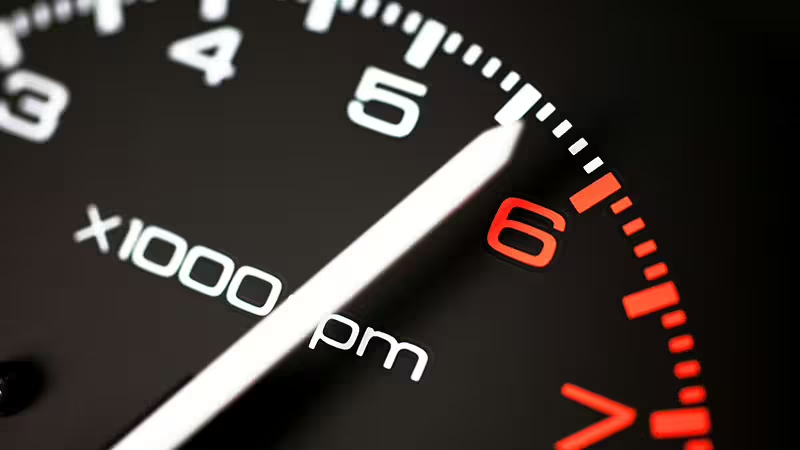
RPM, or Revolutions Per Minute, is a parameter that affects vehicle performance, closely related to power and torque. Simply put, RPM is the number of revolutions the car’s engine makes in 1 minute, measured in RPM and displayed on the engine tachometer in the digital instrument cluster (dashboard).
Engine RPM is inversely proportional to the vehicle’s gear ratio and power, reaching a maximum index of 5,000 to 7,000 RPM. For each vehicle gear ratio, the ideal engine RPM is different.
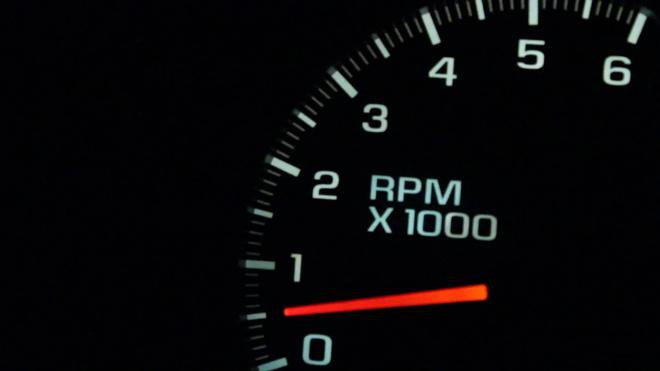
For gasoline engines, the engine speed when starting the vehicle reaches 50 RPM. When the car is not moving and you are not pressing the accelerator, the RPM is typically between 600 and 1000 RPM. At that point, the temperature drops to around 80 to 90 degrees, not too hot, sufficient to ensure stable and smooth engine operation. As for diesel engines, the average engine speed at startup is 90 RPM. This slight up-and-down movement helps maintain a steady idle and ensures efficient engine operation. Therefore, it is normal for the engine’s idle RPM to fluctuate slightly.
If your car hasn’t been started for a while, you will feel jerks upon restarting. This is when the car automatically increases the engine RPM to 1000. You don’t need to worry too much if you notice a sudden increase in engine RPM in this case, as it is a normal mechanism of the car’s engine.
Why Does My RPM Go Up and Down When Parked?
An unstable RPM while parked occurs when the RPM changes continuously and regularly, unable to maintain the necessary stability. The movement of RPM while parked is normal. If the RPM fluctuations are minor, but this number is excessive compared to the standard level, it’s time to investigate the reasons for this issue:
1. Dirty Throttle Body
The first thing to check is the throttle body. The main function of the throttle body is to control the air intake into the engine. The throttle body is equipped with a throttle plate that opens or closes in response to the pressure you apply to the accelerator pedal. The position of the throttle plate affects the amount of air entering the engine.
At idle, when you release the accelerator pedal, your throttle is almost closed. But if this part is clogged with sticky carbon deposits, the throttle may experience slight sticking during its opening or closing. This sticking can cause the throttle to remain more open than intended, disrupting the optimal air-fuel ratio and leading to undesirable idle RPM fluctuation.
2. The Idle Air Control Valve Itself
The IAC valve controls the amount of air that bypasses the throttle and is used to control the engine’s idle speed. What happens if this small device doesn’t work properly? If the IAC valve gets stuck in the open position, an excessive amount of air enters the engine, leading to a lean air-fuel mixture and variations in RPM while driving and parked.
If the IAC valve is dirty or damaged, it may operate irregularly, which can cause codes P0505, P0506, and P0507 to appear during inspection. These are secondary symptoms indicating a faulty IAC valve.
3. Vacuum Leak
Next, we have vacuum leaks. If air enters the engine without being measured by a MAF sensor, it’s called a “vacuum leak.” Your engine needs a precise balance between air and fuel to operate correctly. The ECU adjusts the amount of fuel based on the air entering the engine. If the ECU cannot determine the correct amount of fuel to inject, the unbalanced air-fuel ratio leads to inefficient combustion. In response, the engine may increase its RPM to try to compensate for the extra air, but it may overshoot the RPM and have to reduce it. And this can cause the RPM to surge.
4. Clogged Engine Parts
A clogged engine air filter can disrupt the airflow entering the engine. At idle, there is already less air entering the engine. If an air filter is clogged, it disrupts the delicate air-fuel balance, which can lead to engine RPM fluctuations. Similarly, a dirty throttle body (the valve that controls airflow) or clogged fuel injectors can also contribute to the problem by preventing a consistent fuel distribution.
5. Throttle Position Sensor
A throttle body sensor is used to measure the opening of the throttle and thus controls the amount of air that can flow into the engine’s intake manifold and sends signals to the engine PCM regarding the throttle position. If this signal is inconsistent, the engine will run unsteadily, and the engine RPM will fluctuate immediately. Often, the engine will idle but struggle to accelerate. This is because the computer is not telling the engine to inject as much fuel as needed while, at the same time, the airflow is increasing.
6. Damaged Ignition System
When the engine’s ignition system cannot distribute sparks evenly and sufficiently, it’s easy for the engine RPM to fluctuate abnormally.
This problem is often due to broken spark plugs or ignition wires, ignition coils, etc. Additionally, installing a damaged distributor also hinders the spark distribution process. Older cars are prone to this phenomenon.
Why Shouldn’t You Ignore the Fluctuation?
Not addressing a fluctuating engine RPM issue can lead to further problems down the line. It not only affects vehicle performance but can also damage the engine if not dealt with promptly.
- Loss of Engine Performance: Engine RPM fluctuations can reduce engine performance and increase fuel consumption, negatively impacting the powertrain’s lifespan.
- Affects Other Systems in Your Vehicle: Unpredictable increases and decreases in engine RPM can have negative effects on other car systems, including the suspension system, transmission system, tire system, braking system, and steering system.
- Increase Emissions: If the engine RPM is not functioning correctly, the exhaust system can cause black smoke, bad odors, and increase toxic emissions into the environment, affecting human health and the living environment.
In conclusion, slight engine RPM fluctuation while parked is normal. However, if the engine RPM becomes excessive, it is important to have your car checked by a mechanic to avoid further issues.