

You turn on your wipers during a sudden downpour only to find that the blades are spreading dirt and grime across your field of vision. No matter how many times you press the washer button, no fluid comes out!
Before sticking your head out the window to see the road, keep reading to discover the most common reasons why your washer fluid isn’t flowing and how to fix it so you don’t find yourself in the same situation next time.
We’ll also tell you the one reason why professional help might be needed.
Reasons Why Your Washer Fluid Isn’t Spraying
There are a number of potential reasons why your vehicle’s windshield washer system isn’t working as expected, some of which are slightly more difficult to identify than others. The first step in troubleshooting is learning to identify the potential causes of washer failure.
Here are the most common reasons why your vehicle’s washer fluid isn’t spraying.
#1 – Clogged Washer Nozzles
If your washer fluid nozzles are clogged, any washer fluid pumped through the system itself will not be able to be dispersed onto the windshield. This can occur in a single nozzle or in both simultaneously.
#2 – Pinched Washer Fluid Hose
Any pinch point in a vehicle’s washer fluid hoses can cause a restriction, thereby preventing washer fluid from being sprayed as it otherwise would. Problems of this type are especially common in any situation where a vehicle’s wiper arms have recently been lifted or handled.
#3 – Faulty Washer Fluid Pump
Like any electric motor or pump, a vehicle’s washer fluid pump is prone to failure due to normal wear and tear, with age. This pump can become noticeably weak or stop working altogether, without any warning.
Fortunately, the replacement costs associated with washer fluid pumps tend to be quite reasonable.
#4 – Cracked Washer Fluid Reservoir
Most washer fluid reservoirs are made of plastic, making them prone to cracking and/or chipping. The most common scenario is using the wrong washer fluid during the winter months, thereby allowing the fluid to freeze.
Likewise, impacts from road debris and even some fender benders can cause similar damage.
How to Fix
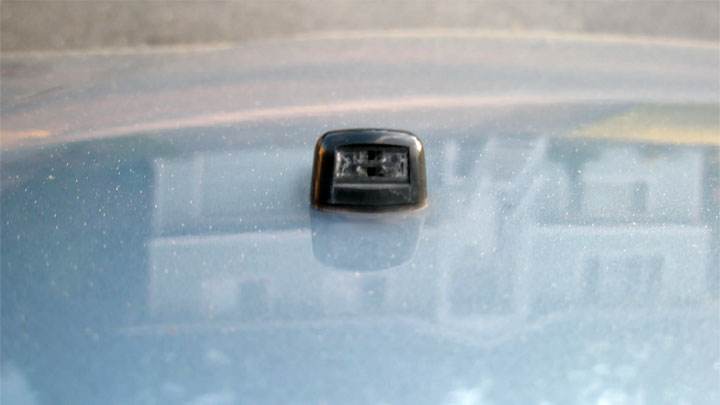
The following steps can be used to help you diagnose and repair failures related to the washer fluid system.
Step 1 – Inspect All System Components
Begin the diagnostic process by checking for any signs of damage or other irregularities related to the washer fluid system components.
Replace any visibly damaged components and correct any pinch points or restrictions found in the routing of the system’s washer fluid hoses. Additionally, ensure the washer fluid reservoir is filled with the appropriate fluid.
Step 2 – Check for Fluid at the Nozzle Inlet
Next, remove the supply tube from each washer nozzle and check for the presence of fluid when activating the washer fluid pump.
If fluid is present, the vehicle’s washer fluid nozzles are clogged and will require cleaning.
Step 3 – Clean the Nozzles (If Necessary)
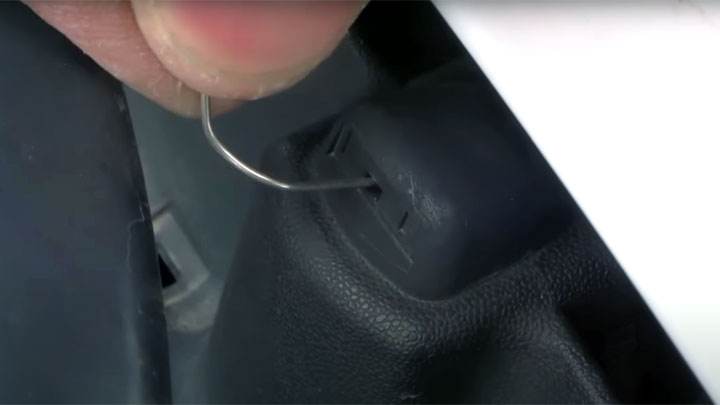
If the previous step determines that one or both nozzles are clogged, use one (or a combination) of the methods below to clear things up.
- Use a thin wire, a pin, a small sewing needle, a paperclip, or a nozzle cleaning tool to gently probe inside the nozzle holes and loosen any buildup. Be careful not to damage the nozzles.
- Alternatively, a thin strand of weed trimmer line can be used. The soft plastic is flexible enough to slip inside without scratching.
- Blow out the nozzles using a can of compressed air designed for cleaning electronics. Disconnect the washer fluid hoses and spray it into the nozzle openings to remove any obstruction. Do not spray from the side that connects to the hose, as debris could simply become more stuck.
- Flush the system with hot water. Mix equal parts hot water and white vinegar and pour it into the washer fluid reservoir. Operate the washers with the hood open and see if the solution flows freely.
- Completely remove the nozzles and soak them in white vinegar or descaling agent to dissolve hardened deposits before reinstalling them.
- Replace the nozzles if cleaning methods don’t work. Over time, nozzles wear out or become permanently clogged. New ones can restore full spray power.
Step 4 – Inspect for Leaks
If the above actions yielded no washer fluid, check all washer fluid hoses for signs of leakage when activating the vehicle’s washer fluid pump. Repair any obvious leaks.
Step 5 – Confirm Pump Operation
You must now verify that the washer fluid pump of the vehicle in question is operating as specified.
Remove the washer fluid hose from the pump at the reservoir and carefully inspect the pump itself, while having an assistant operate the vehicle’s multi-function switch. If no fluid is dispersed, further diagnosis will be necessary.
Step 6 – Check Pump Power/Ground
If no fluid was dispersed at the vehicle’s washer fluid pump, it will be necessary to check for the presence of positive 12-volt power and system ground at the pump in question, when the multi-function switch is actuated.
If power and ground are present, but no pump function is observed, the washer fluid pump in question must be replaced. If one or both electrical inputs are absent, further troubleshooting of the vehicle’s control circuit will be necessary, using a model-specific wiring diagram.
When to Get Professional Help
Although most washer systems are rather basic in nature, you must possess a basic understanding of automotive electrical theory to facilitate effective troubleshooting. Furthermore, it is helpful to have at least a handful of basic electrical troubleshooting tools (test light, multimeter, etc.) at your disposal.
If you do not feel comfortable in your understanding of basic automotive electrical troubleshooting or do not possess a general assortment of electrical test devices, seeking the help of a professional is likely the best course of action.
There is no shame in this. In fact, knowing when to consult a professional can very likely save you money and prevent significant frustration in the long run.
One of the most significant components, in terms of expense, that is often mistakenly replaced when attempting to diagnose and repair a washer fluid-related issue is the washer fluid pump itself. This component can easily cost between $25 and $50, not accounting for the time spent during replacement.
For this reason, consulting a professional can prove to be money well spent, when considering the overall cost of a potential misdiagnosis.
How a Washer System Works
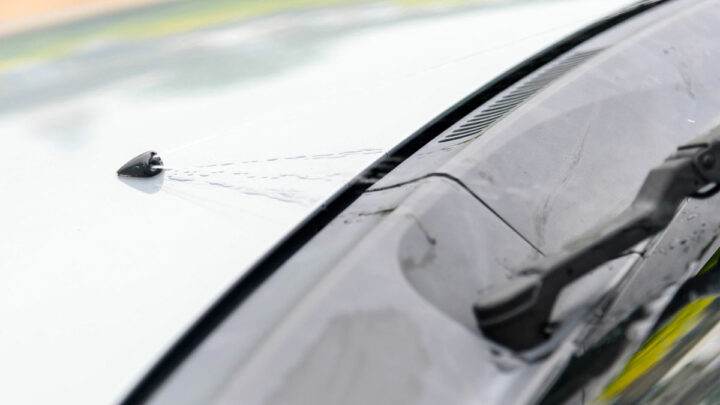
A vehicle’s washer system is rather basic in its concept, but complex for anyone unfamiliar with navigating basic 12-volt automotive electrical systems. Therefore, it is imperative to understand the washer system as a whole to conduct thorough diagnostics whenever an issue arises.
Most modern vehicles rely on signals provided by their dash-mounted multi-function switch to facilitate washer operation. Once the designated switch is triggered (usually by pushing or pulling a steering column stalk), power is sent to the washer fluid pump itself, often via a specific relay.
This pump is mounted in the washer fluid reservoir, allowing it to dispense washer fluid via a connected hose whenever it is powered.
The washer fluid is pushed through this corresponding tube under pressure, eventually flowing to each respective washer fluid nozzle. The fluid is sprayed onto the vehicle’s windshield in a targeted manner as it exits through a point of restriction or choke inside each nozzle.
Meanwhile, the same multi-function switch input that triggered the washer fluid pump itself also activated the wipers, thereby wiping a vehicle’s windshield.
Preventative Maintenance and Tips
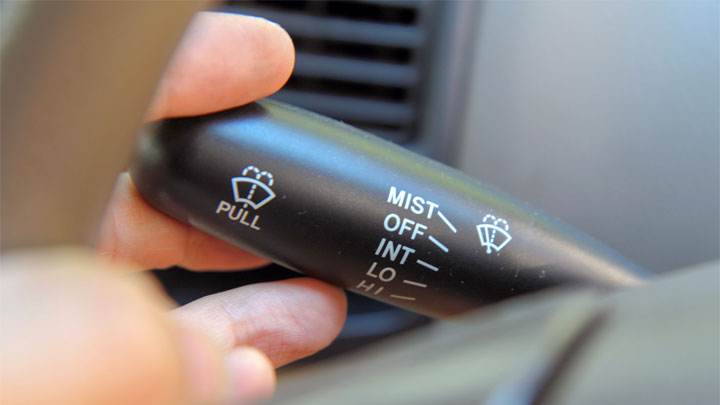
Here are some tips to help you maintain the optimal operation of your vehicle’s washer fluid system.
- Test Periodically – It’s important to test your washers/wipers at least once a week. This helps keep all hoses and nozzles free from restriction.
- Use the Correct Washer Fluid – Always check that the formula of the washer fluid you are using is suitable for the seasonal conditions. Some summer-formula washer fluids are not suitable for use in sub-zero temperatures.
- Avoid Contamination – When treating your vehicle’s windshield with a weatherproofing product (such as Rain-X) or other protective chemicals, avoid contaminating either of the washer nozzles. Lift both wiper arms when applying such a treatment to avoid this contamination.
FAQ
Can I Add Washer Fluid While the Car is Running?
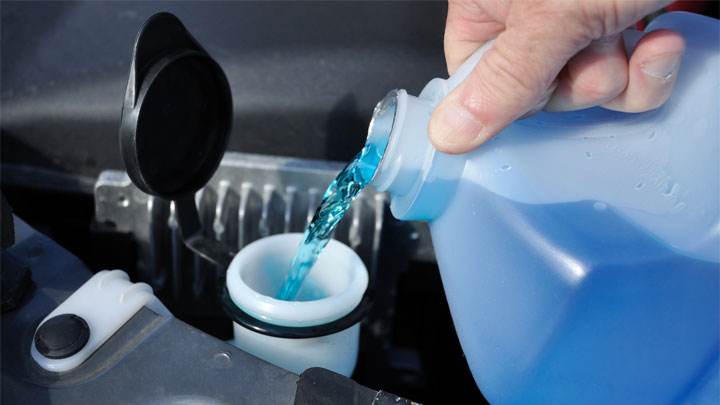
There is no harm in adding washer fluid to your vehicle’s washer fluid reservoir while the engine is running. This particular system is not pressurized.
Therefore, no risk is posed to your vehicle’s washer fluid system, or to your personal safety, by adding washer fluid on the go.
To add washer fluid to your vehicle’s reservoir, simply lift the corresponding washer fluid reservoir cap and begin filling the reservoir with system-specific washer fluid (a funnel is helpful). Most washer fluid reservoirs are at least moderately translucent, making it relatively easy to determine when the tank itself is full.
Why Does Washer Fluid Not Come Out After a Windshield Replacement?
A pinched washer fluid hose is the most common reason why washer fluid doesn’t spray after windshield replacement.
These hoses easily get pinched when a vehicle’s wiper cowl is reinstalled, thereby causing a blockage inside that hose. This can occur on one or both windshield sprayers, depending on the situation.
How Does a Washer Nozzle Get Clogged?
Washer nozzles can become clogged in several different ways, the most common being related to the accumulation of dirt and debris.
Airborne dust and dirt particles naturally cling to wet surfaces, such as the discharge ends of a vehicle’s washer nozzles. As it dries, this material creates blockages that restrict the flow of washer fluid.
At times, a vehicle’s washer fluid nozzles become clogged with varnish, wax, or other semi-liquid cleaning agents. This is especially true if an overspray has landed on the washer nozzle in question and been left to dry.