
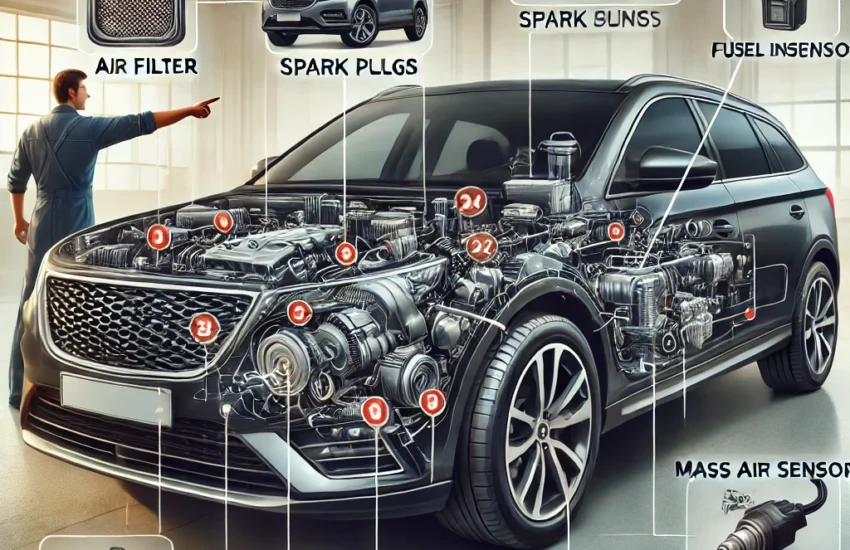
A sudden or gradual increase in fuel consumption can be frustrating and costly. This can be caused by various mechanical, electronic, or driving style-related factors. Here is a guide to understanding the possible causes and appropriate solutions.
Common Causes of Excessive Fuel Consumption
1. Vehicle Maintenance Issues
- Clogged Filters: A clogged air filter or fuel filter reduces engine efficiency by limiting the supply of air or fuel.
- Worn Spark Plugs: Faulty spark plugs lead to incomplete combustion.
- Inappropriate Engine Oil: Oil that is too viscous or of poor quality increases internal engine friction.
Solutions:
- Regularly replace the air filter and spark plugs according to the manufacturer’s recommendations.
- Use appropriate engine oil and change it at the prescribed intervals.
2. Tire Pressure and Condition
Underinflated tires increase rolling resistance, forcing the engine to work harder.
Solutions:
- Check tire pressure at least once a month and adjust it according to the vehicle’s specifications.
- Replace worn or deformed tires.
3. Driving Style
- Aggressive Driving: Sudden acceleration and frequent braking increase consumption.
- Speeding: Driving at high speeds consumes more fuel due to increased air resistance.
- Prolonged Idling: Unnecessarily letting the engine run increases consumption.
Solutions:
- Adopt smooth driving with moderate acceleration and braking.
- Observe speed limits to optimize energy efficiency.
4. Excessive Load and Accessories
- Carrying unnecessary loads adds weight to the vehicle.
- Excessive use of accessories like air conditioning or roof racks increases consumption.
Solutions:
- Remove unnecessary items from the trunk.
- Remove roof racks when not in use.
- Limit the use of air conditioning when not necessary.
5. Electronic Issues
- Faulty Oxygen Sensor: A defective oxygen sensor can disrupt the air/fuel mixture.
- Malfunctioning Mass Air Flow (MAF) Sensor: A dirty or faulty MAF sensor can cause a fuel-rich mixture.
- Clogged Injectors: They may not spray fuel properly.
Solutions:
- Diagnose electronic components with an OBD-II scanner.
- Clean or replace injectors and the MAF sensor if necessary.
6. Environmental Factors
- Weather Conditions: Extreme cold increases consumption as the engine takes longer to reach its optimal temperature.
- Short Trips: Frequent short trips prevent the engine from operating at maximum efficiency.
Solutions:
- For short trips, combine multiple errands to reduce cold starts.
- If possible, park the vehicle in a covered or temperate area.
7. More Serious Mechanical Problems
- Clogged Catalytic Converter: This can lead to power loss and excessive consumption.
- Compression Issues: Loss of compression due to worn seals or damaged valves can reduce engine efficiency.
Solutions:
- Have the exhaust system inspected by a professional.
- If compression issues are suspected, perform a compression test.
How to Monitor Your Consumption?
- Calculate Your Consumption Manually:
- Fill your tank completely.
- Note the current mileage.
- Repeat after several kilometers and divide the amount of fuel used by the number of kilometers traveled.
- Use Modern Tools: Some modern vehicles and applications allow real-time tracking of consumption.
Conclusion
An increase in fuel consumption can be related to simple factors, such as tire pressure, or more complex issues, like a faulty oxygen sensor. By following these steps, you can diagnose and resolve most causes of excessive consumption. If the problem persists, do not hesitate to consult a professional for a thorough inspection.