
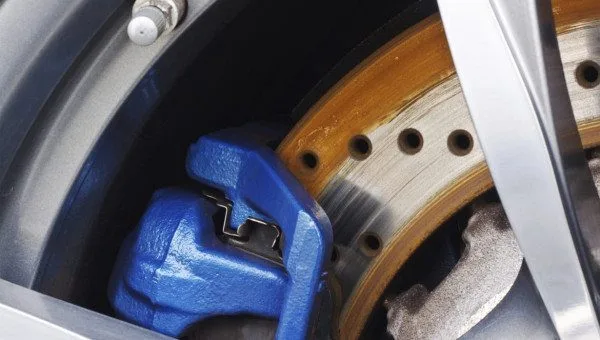
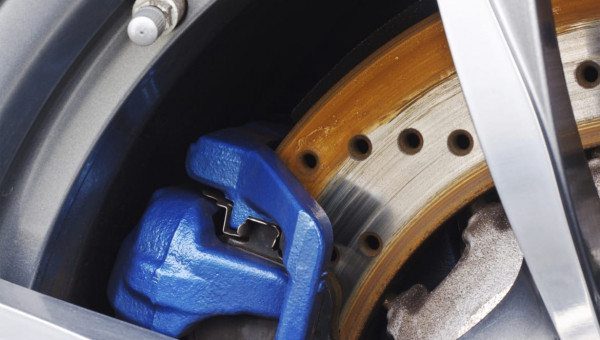
When it comes to brakes, there are no good vibrations. The most likely reason you feel vibrations through the brake pedal is that a brake rotor
– the rotating disc against which the brake pads are pressed by the calipers to slow the wheel – is unevenly worn, or what some call “warped.” (It’s unlikely that a rotor can truly be warped from normal use as opposed to a manufacturing defect, but thinner and thicker sections – uneven wear – have the same effect as warping and can cause the rotor to vibrate or shake.)
Brake vibration, or what can also be called a shudder or pulsation, is often the result of parts of the disc brake rotor being thinner than others instead of being uniform all around. As the brakes are applied, the brake pads will be pressed by the calipers against the high and low points that the driver feels through the pedal or steering wheel. Rust and dirt can also build up on a rotor and cause minor vibrations in the vehicle.
The thickness of a rotor only needs to vary by a few thousandths of an inch for the driver to feel vibrations through the brake pedal or steering wheel. In more severe cases of warped rotors, the entire vehicle may shake or pull the steering when the driver applies the brakes.
One of the causes of warped rotors is that the brake pads, the friction material that is pressed against the rotors, are not fully released by the calipers when you remove your foot from the pedal and cause friction when the wheel is turning. If the vehicle’s pads “drag” on the rotors for too long, the brake rotor and/or pads can be damaged.
In some cases, warped rotors can be resurfaced (machined) on a brake lathe to create a smooth, even finish on the rotor, to stop the shuddering provided there is enough thickness remaining in the rotor. Resurfacing rotors to make them smooth requires scraping off the top layer of metal. If too much of the rotor’s thickness has already been used, the rotor must be replaced with a new rotor to cure the brake vibrations.
Instead of disc brakes with front and rear rotors, the rear wheels of some vehicles still have drum brakes in which brake shoes (essentially curved brake pads) are pressed outward against the walls of the drum to slow the wheel. Drums can also wear unevenly and vibrate. These vibrations or shudders in the vehicle can be resolved by machining the braking surface.