
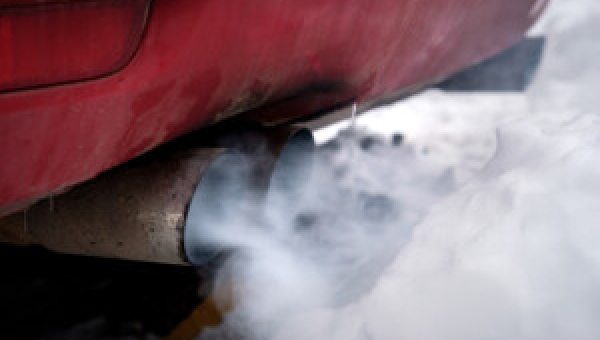

Car exhaust smoke can be of different types and can be due to a variety of reasons and situations.
Ranging from blue, gray, white, and blue, each type is directly or indirectly due to a distinct phenomenon.
Typically, it is suggested to take your car to a mechanic or technician if you experience smoke from the car’s exhaust, but the white smoke we are discussing here is not necessarily due to a malfunction.
First of all, it is necessary to assess whether the white smoke is of very low density, in which case it is thin or a bit like steam and it disappears quickly, or is it of thick density, flowing continuously with a burning type aroma.
It is strongly suggested to consult a mechanic, but to ensure that they do not trick you with technical terms, thus avoiding the main problem and leaving you spending loads on other unnecessary aspects of your car. It is always better to acquire knowledge to better understand what you are doing.
Causes of White Smoke from the Exhaust Pipe
White Smoke from the Exhaust
White smoke, as mentioned above, can be either very light, just like steam, or it can be dense, heavy smoke.
White smoke from the exhaust pipe at startup, idle, or acceleration tells us that there is coolant or water vaporizing. You can taste the exhaust water; if it smells sweet, it’s probably coolant, and in that case, you have a bigger problem.
If the emitted smoke is of high density or thick, you should perform a proper diagnosis for your vehicle, as condensed coolants are never good for your engine. Let’s start with the most common causes of white smoke.
1. Condensation
The most common reason for white smoke from the exhaust pipe is that it is condensed in the exhaust pipe. White smoke that looks like steam and disappears quickly could be caused by condensation. Steam is emitted by condensation in the exhaust pipe that is visible at the exhaust emission. But this is fine and there is nothing to worry about as long as your car is maintained.
If the white smoke is light and only comes at the moment of startup during cold starts, there is nothing to fear, as it is probably just condensation.
2. Faulty EGR Cooler
Egr Cooler White Smoke
If your exhaust smoke smells sweet, it’s probably condensed coolant that you are facing. The most common cause of this on modern vehicles is a crack inside the EGR cooler. This can be quite difficult to diagnose properly because there is no sign you can look for outside the engine.
However, if the EGR cooler is cracked, it must be replaced.
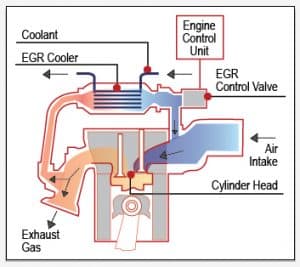
If you suspect that your EGR cooler is faulty, you may need to ask for a mechanic’s help to diagnose it properly. The best way is to use a coolant leak tester and remove the EGR pipes to see if you can see coolant entering the exhaust pipe.
3. Bad Head Gasket / Cracked Cylinder Head
When the cylinder head or the car’s gasket is damaged or cracked, even a small crack, the coolant starts to leak and mixes with the engine oil. This mixture leads to contamination of the engine oil and ultimately results in white exhaust smoke with a sweet smell.
If you want to go further in diagnosing a bad head gasket, check out our other article here: Symptoms of a Bad Head Gasket.
The engine will need to be disassembled and repaired, but if it is not repairable, in the worst case, it will need to be replaced, which will result in high costs.
4. Faulty Coolant Container / Reservoir
A leak from the coolant reservoir can also be one of the reasons for white smoke. Although it is very rare for the coolant reservoir to break, it can be damaged. Damage could have been caused during the repair of another nearby part, or the reservoir tank suddenly damaging. However, if this happens, the smoke will come from the engine and not from the exhaust pipe.
Whatever the reason, it must be replaced as there is no other possible option. Replacing it is not a problem and will not affect the car’s performance after replacement.
5. Oil Leak
Another possibility is when oil starts to leak from the piston or if the valve seals are faulty. This causes oil to leak into the combustion chamber and mix with the fuel to burn. The combustion of this oil and fuel mixture produces blue smoke from the exhaust, which suggests that your engine is subject to increased wear, as oil is leaking and no proper lubrication is available for the engine components to function correctly.
It is worth noting that when oil is burned, the smoke is blue rather than white.
To fix this issue, the gasket will usually need to be replaced, ultimately by detaching the main part of the engine and then installing its new gaskets, which will also result in high costs due to excessive labor activity.
6. Faulty Fuel Injectors
The purpose of fuel injectors is to provide the engine with a sufficient amount of fuel and to ensure that neither more nor less fuel is supplied to the engine. If these injectors fail, poor fuel supply leads to fuel overheating, resulting in gray, dense smoke from the exhaust.
A too-rich mixture will produce black or gray smoke, but it can easily be mixed with white smoke. Let a mechanic examine the smoke to tell you if it’s coolant, fuel, or oil burning.
If the fuel injectors are faulty, they must be replaced, the price of which depends on your model and brand.
How to Diagnose a Car with White Smoke from the Exhaust
There are several ways to diagnose a car with white smoke. However, some methods are easier and faster than others. I work as a mechanic, and this is how I would diagnose this problem.
Smell the Smoke
The first thing to do is to taste the smoke coming from the exhaust pipe. If it has a sweet smell, it’s coolant, and you can continue with this guide. If the smoke has no smell or taste other than water, it is most likely condensation and the smoke will disappear once the car is warmed up.
Use a Pressure Tester
The best and only (in my opinion) way to find internal coolant leaks is to use a coolant pressure tester. You place it on your radiator cap and put pressure inside the cooling system and let it sit for an hour. Remove the spark plugs or glow plugs and look for any sign of coolant leaking into the combustion chamber. If you notice coolant there, you might have a problem with your head gasket or a cracked cylinder head.
If you don’t find coolant there, remove the pipes from the EGR tubes and look for any sign of coolant inside. If you notice coolant, there is probably a crack in the EGR cooler and you need to replace it.
Conclusion
So, basically, smoke can be of different types, but the white smoke we discussed above in detail could be the result of both a fault and general combustion. But in case of a fault, it can be repaired depending on the nature of the fault which will decide the cost of its repair and, most importantly, whether it is worth repairing.