
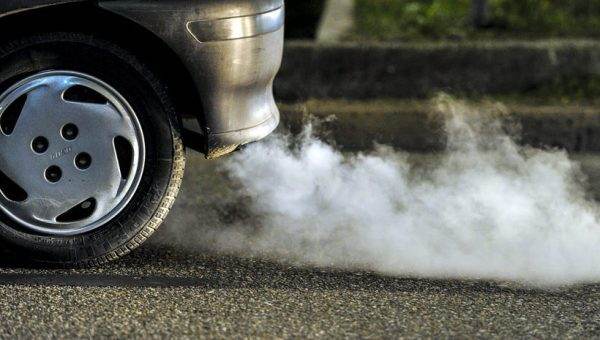

You never want to see smoke coming from your car’s exhaust pipe. In most cases, a thin white smoke from your exhaust in winter is perfectly normal and not a cause for concern. However, whenever you notice thick puffs of white exhaust smoke, it’s a sign that something is wrong with various components of your engine, whether it’s white exhaust smoke at startup or white exhaust smoke during acceleration.
The most common reasons for thick white exhaust smoke involve a malfunction that requires immediate repairs or replacement of faulty parts, many of which are very expensive, and if you continue driving in this condition, you risk further damage to your vehicle’s engine. To avoid this, you need to understand the different root causes of white exhaust smoke and master the maintenance steps to troubleshoot and resolve these issues. The cost of repair or replacement is also included in each case.
Exhaust Emissions: What is Normal?
Before continuing to explain why thick white exhaust smoke is a sign of problems, you must first understand where exhaust gases come from and what is normal. Inside your engine’s combustion chamber, a spark ignites the fuel and air mixture, creating a series of contained combustions or explosions inside the cylinder. The direct byproducts of these explosions are the exhaust gases that are routed to the exhaust system. Before exiting through your tailpipe, these gases pass through the muffler to reduce noise and a catalytic converter to reduce harmful emissions.
Under normal conditions, you should not see exhaust coming out of your tailpipe. Especially in winter, however, you might sometimes see a thin veil of white-colored smoke, which is just water vapor. This is perfectly normal and would disappear after a short while. It is important to understand that even though thin white smoke from the exhaust is normal, if it is thick and comes out in visible bursts, you will need to perform an inspection of various parts to diagnose the source of the problem.
What Does White Exhaust Smoke Mean?
A common phenomenon is white exhaust smoke emitted in thick bursts. Never ignore it and let it persist. The most common reasons for this event include cracks on vital engine parts, including damage in the cylinder head, head gasket, or engine blocks. Even if it’s just a small crack, the damage can easily worsen if you continue driving and delay replacing the cracked component. This could lead to further contamination of the engine oil or engine overheating, which can result in permanent engine damage. You would then need to replace the completely failed engine, which is expensive and a job best left to professionals.
What does white exhaust smoke mean? Below are the 9 most common reasons for white exhaust smoke, and further down, how to troubleshoot and handle each culprit.
Reasons for White Exhaust Smoke
Thin White Smoke: Condensation Buildup
Thin white smoke at startup that disappears then is usually the result of condensation buildup in the exhaust system. It tends to occur in winter or on cold mornings. The smoke should be thin, not too visible, and only come out in small quantities at startup, and will die out fairly quickly after your engine warms up, especially after about 30 seconds to a minute. This is not a sign of a problem, but if it occurs in conjunction with other instances of reduced engine performance or hard starting, it could indicate a more serious problem within your engine.
Coolant Leak: Damaged Coolant Reservoir
Sometimes, if the coolant reservoir tank is damaged or cracked, there can be a coolant leak into the engine’s combustion chamber. This leaking coolant is then burned in the cylinders, creating thick white smoke from the exhaust.
Coolant leaking from a cracked coolant reservoir is usually less common than the leak sources just below, but it can happen when you are fixing another issue nearby and accidentally damage the reservoir. In any case, you will need to replace the damaged reservoir.
Coolant Leak: Crack in the Cylinder Head, Engine Block, or Head Gasket
Although a cracked coolant reservoir is rare, when most mechanics hear about thick white smoke from the exhaust, they would assume the worst. This is usually due to a crack in the cylinder head, head gasket, or engine block, none of which are very quick or cheap to replace, and are not a maintenance job for a novice.
Cracks in these parts are caused by an engine constantly overheating due to low coolant levels, which is due to a coolant leak and constant engine temperature fluctuations. They allow coolant or oil to seep into the cylinders, which are then burned and produce thick white exhaust smoke.
Cracked Cylinder Head
Whenever your cylinder head is cracked or damaged in any way, coolant leaks from it and mixes with the engine oil. Once this happens, the oil will be contaminated. This doesn’t need to be a large crack; just a small crack is enough to create thick puffs of white smoke from your tailpipe. As the coolant continues to mix with the engine oil, the white smoke will start to have a distinct sweet smell that won’t go away.
Cracked Head Gasket
The head gasket is a thin sheet of metal located between the cylinder head and the block, sandwiching the top and bottom of most engines. Its main function is to form a seal between the two parts and helps prevent coolant leaks from the hood surrounding the engine.
Normal wear and tear is one of the reasons why cracks form on the head gasket. When this happens, coolant is no longer contained in the engine’s cooling channels but ends up in the cylinder, where it is burned. A cracked head gasket cannot be repaired; it will need to be replaced right away.
Cracked Engine Block
The worst-case scenario is that your entire engine block is cracked. If this is indeed the culprit, prepare for an expensive and lengthy replacement. You would probably need professional service in this case.
Most engine blocks are made of cast iron or aluminum alloy, so they last a long time under constant high-heat conditions and can also efficiently transfer heat from the engine. However, the engine is a complex system that requires every component to work with absolute precision. If any of the engine components are not functioning as they should, the block can overheat, which weakens and deteriorates it.
In addition to white smoke from the exhaust, there are few common symptoms indicating the block may be getting too hot, including discolored coolant, puddles of fluid under your car, frozen coolant in the radiator, and poor performance because the engine cannot maintain good compression if there is a leak in the combustion chamber.
Fuel Injection Problems
Bad Fuel Injector
A fuel injector is essentially a spray nozzle that supplies fuel to the combustion chamber as input for combustions. Contrary to what many people expect, the injector does not control when or how much fuel is sent, it “injects,” meaning it acts only to restrict or allow its passage at the right time. For optimal combustion in the engine chamber, it must inject fuel at precise times, meaning even the slightest variation can throw the system off balance.
If the fuel injector is leaking or stuck in the open position or malfunctioning in any way, the chamber no longer receives the correct amount of fuel at the right time. When there is too much fuel in the engine that needs to burn and be expelled, the result is thick white smoke from the exhaust, which is sometimes tinged with gray. It is also possible that your fuel injectors are clogged, rendering them effectively useless.
It is not advisable to inspect the injection or try to change it yourself, as it is a job best left to mechanics. The reason fuel injectors fail is mainly due to contaminants in the fuel. One way to avoid this is to replace the fuel filter regularly, at least every 2 years or so.
Diesel Engines Only: Injection Pump Timing is Off
If your engine runs on diesel, the cause of white smoke from the exhaust pipe is likely an issue related to the injection pump timing. The pump is responsible for injecting diesel into the cylinders. As with the fuel injector in a gasoline engine, if the pump timing is off and diesel is not delivered to the engine chamber at the precise times, it can lead to excess diesel, causing thick white smoke coming out of the exhaust pipe.
Other signs of injection pump failure include starting problems, poor idling, reduced performance, rough rides, a reduced RPM limit, and poor fuel economy.
Engine Control Unit Error
Alternatively, there is nothing wrong with the fuel injector, but you might have a faulty or simply glitchy engine control unit that disrupts the fuel injector timing. This simply means you need to reset or repair the engine control unit so it can correct the fuel pump injector timing.
Often, to reprogram the computer, it is enough to disconnect your car’s battery for a few minutes. In case this does not solve the thick white exhaust smoke problem, it is best to entrust your car to a certified mechanic who is familiar with the engine of your vehicle’s make and model.
Note: White Smoke Tinged with Blue Due to Oil Leak
Sometimes, the white smoke from the exhaust is tinged with blue, although many people cannot distinguish it. White smoke tinged with blue suggests that your engine is burning oil.
The only thing that should be inside a combustion chamber is the precise mixture of air and fuel. If oil somehow gets into the cylinder, it ignites with the air and fuel mixture, resulting in a thick cloud of bluish smoke coming out of the tailpipe, which may appear as white smoke to some people. Other signs include engine misfires and increased oil consumption.
How can oil seep into the combustion chamber? This is likely due to leaking piston rings or valve seals, allowing oil to flow inside. When oil leaks, the engine components are not properly lubricated by the oil, meaning they will start to wear out prematurely. This will lead to a whole other flock of expensive repairs and replacements that no car owner would want to deal with.
In most cases, you should not have to deal with leaking piston rings or valve seals before the 100,000-mile mark. One way to help extend their lifespan is to switch to high-mileage engine oil.
How to Troubleshoot and Repair White Exhaust Smoke
Check the Coolant Level
If you want additional proof that you are experiencing a problem with coolant entering your engine block when it should be contained, you should first check the coolant level. If you notice the level is low and you don’t see coolant leaking from the coolant reservoir, it confirms the theory that the leak is due to a crack in the head gasket, cylinder head, or engine block. Additionally, it is advisable to invest in an engine block leak detection kit that uses chemistry to detect if your coolant is contaminated.
The first step is to open the hood. However, remember that the engine must be sufficiently cool before removing the radiator cap or reservoir cap. If the engine is hot, let it cool for at least an hour or more before attempting to check the coolant.
Next, with your vehicle parked on a level surface, open the coolant reservoir and look into the coolant chamber to check the coolant level. Look for the marks on the side of the plastic overflow bottle that indicate “Low” and “Full,” or similar terms, then grab a funnel and fill the reservoir until the level reaches “Full.” One way is to put a stick into its tank and check how much coolant it contains.
If the amount of coolant is adequate, inspect the other engine components for any crack or damage that could cause coolant to mix with engine oil or fuel. It is advisable to also perform a cooling system pressure check to try to determine which part is actually causing the leak (pressure is applied to the system up to the range specified on the radiator cap. If the system cannot maintain pressure for at least two minutes, then there is a leak. If no external leak is detected, the greatest possibility is a crack in the head gasket, cylinder head, or engine block).
Step 1: Look for Any Crack in the Intake Manifold Gasket
One might think the first thing to check is the head gasket, but before that, you should first inspect the intake manifold gasket. The intake gasket seals the intake manifold; it not only carries coolant to the engine but also oxygen. If the intake gasket cracks, the engine overheats due to a leak of coolant, air, and gases. Keep in mind that the gasket is primarily made of rubber or plastic. Therefore, it is prone to damage from extreme heat. Fortunately, although it can be cracked or damaged, it can easily be repaired if detected early.
The cost of replacing an intake manifold gasket ranges between $190 and $540. The gasket itself is relatively cheap and will cost between $20 and $120. What is expensive is the labor cost, which will be between $170 and $420, as replacing any engine component is not a simple task.
Step 2: Look for Any Crack in the Head Gasket
After checking the intake manifold gasket, you should move on to the head gasket. The head gasket is designed to seal the cylinder head to the block to prevent coolant from reaching the cylinder. If there is a crack in the head gasket, it must be replaced immediately.
The cost of head gasket repairs can run into the thousands, meaning it is often easier and cheaper to simply scrap the damaged part and replace it. It costs between $1,600 and $2,000 to replace a head gasket. The cost of the parts themselves ranges between $720 and $850, while labor costs range from $900 to $1,200.
Step 3: Look for Any Crack in the Cylinder Head
The cylinder head is essential as it connects to the engine block and the head gasket. Due to the fact that it is made of aluminum, it is susceptible to warping or breaking if the engine overheats, releasing white smoke from the exhaust. If during inspection, you spot a crack, replace the cylinder head immediately.
Repairing a cracked cylinder head will cost between $500 and $1,000 depending on whether it is aluminum or cast iron. Cracks in cast iron heads can often be repaired by furnace welding or flame spray welding.
If the crack cannot be repaired, the entire cylinder head must be replaced. Although it’s not that difficult, it is an extremely time-consuming job because the engine’s cylinder head must be removed and then replaced, so the bulk of the replacement cost is the labor cost. Furthermore, labor costs vary significantly depending on your vehicle’s make and model. Luxury vehicles like BMWs and Audis often have various components that need to be removed to access the cylinder heads.
The average cost of cylinder head replacement is between $2,800 and $3,200. Labor costs are estimated between $1,200 and $2,700, while parts cost only between $200 and $500.
Step 4: Look for Any Crack in the Engine Block
There are three possible methods to repair a cracked engine block, namely using a cold metal patch on the crack, cold metal stitching, or welding the crack again. These require the work of a professional. Whichever route you choose, it is certainly not cheap. The labor for repairing an engine block can take from 12 to 35 hours, depending on your vehicle’s make and model, because for some models, it is much more difficult to access the engine block and disassemble it. This can cost you between $2,500 and $4,000 for a temporary fix.
In the case where it makes more sense to recover your current engine and get an engine block replacement, you can expect to pay between $600 and $1,000 for small block engines or between $1,550 and $2,500 for a long block engine, depending on the model exchanged. This is only for parts and machining costs. As for the labor cost, the hourly rate can vary significantly, ranging from $90 per hour to over $150 per hour. Thus, the labor cost alone for a typical engine block replacement can range from $1,000 to $2,000.
Step 5: Clear or Replace the Fuel Injector
It is also possible that your fuel injectors are clogged and cannot do their job properly. They are typically prone to being clogged by carbon deposits and sludge formation. The good news is that there are commercial fuel injector cleaners that can help clean a dirty fuel injector.
Otherwise, if the fuel injector fails not due to clogs, it means it has reached the end of its lifespan, so the only thing you can do is replace it. However