

If your engine’s timing belt breaks, repairs can be very costly. But how do you know when it’s time to replace it? This guide provides all the necessary information to understand the role of the timing belt and know when to proceed with its replacement.
Key Points:
- It is one of the most crucial parts of the engine.
- It ensures the synchronization between the valves and pistons to guarantee proper ignition operation.
- A break or damage to the belt can cause serious mechanical problems.
- Replacement intervals generally range between 80,000 and 160,000 kilometers.
The timing belt, often hidden in the engine, is essential for the proper functioning of the vehicle. Although it may seem insignificant due to its discretion, it is actually one of the key components of the engine. A timing belt in poor condition, or likely to break at any moment, can lead to severe damage, up to a complete engine failure. Indeed, the timing belt synchronizes the movements of the valves and pistons, opening and closing at the right time for the engine to function correctly.
What does it do?

The timing belt is a toothed rubber belt that connects the crankshaft to the camshaft, allowing control of the ignition timing and cams in the engine. It ensures the opening and closing of the valves at the right time during the ignition cycle, thus ensuring optimal combustion. Without a functional belt, the engine simply will not start.
Potential problems with the timing belt
Like any rubber component, the timing belt is subject to wear over time. It can stretch, thin out, crack, or even break completely. The teeth of the belt can also wear out or detach, creating smooth areas that cause the drive sprocket to slip.
If this happens in an interference engine, the loss of synchronization between the valves and pistons can cause a collision, often leading to extremely costly repairs, sometimes even higher than the value of the vehicle in older models.
What makes the situation even more delicate is the few warning signs that the timing belt might fail, making it essential to adhere to the inspection and replacement intervals.
Signs of a damaged timing belt
- Unusual noises: If your engine makes noises like squealing, whistling, rattling, or rumbling, especially at startup or when cold, this may indicate a problem. A continuous squealing noise can signal that the belt is loose, worn, and that a replacement is necessary.

Smoke from the engine
In winter, it is normal to see some steam or condensation escaping from the exhaust pipe due to the cold. However, if thick, persistent smoke is emitted, it may indicate a problem related to the timing belt. The synchronization of the valve opening – which allows the evacuation of gases and the intake of air – depends on the timing belt. A worn belt can lead to openings at the wrong time, generating a significant amount of smoke at the exhaust.
Starting problems
The timing belt plays an essential role in combustion, and a broken belt will prevent the engine from starting. Without the belt, the camshaft does not rotate at the same time as the crankshaft. By observing the camshaft while the crankshaft is rotating, you will see that if the belt is broken, the camshaft will remain stationary.
Visual signs of wear
Although it is sometimes difficult to access the timing belt, a visual inspection can reveal signs of wear. If the inner surface of the belt appears smooth, shiny, or glazed, this indicates hardening of the rubber and a lack of flexibility, signaling that it is worn. More obvious signs like cracks, frayed sections, or missing teeth require immediate replacement.
Can timing belt breakage be avoided?
The timing belt will always wear out eventually. The best prevention is to adhere to the recommended replacement intervals and have the belt checked regularly by a mechanic, especially during services. Rigorous maintenance is the only way to avoid an unexpected belt breakage.
How often should it be changed?
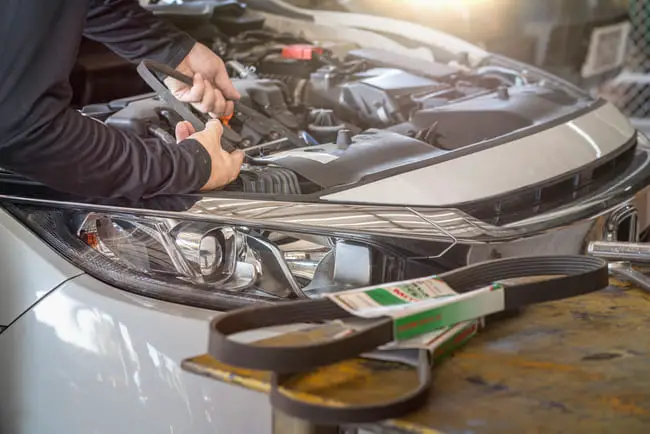
The frequency of timing belt replacement varies depending on the vehicle brand and mileage. Each manufacturer recommends an interval based either on mileage or duration of use, whichever comes first. These recommendations vary considerably: some advise replacement starting from 50,000 km, while others set the limit at 100,000 km. As for duration, it can range from 4-5 years to 10 years.
If in doubt, it is essential to consult the vehicle’s manual, where you will find the specific recommendations for your model. Although the manufacturer’s recommended interval is a maximum, it is prudent to replace the belt earlier to avoid costly repairs in case of breakage. For added safety, you can have the belt inspected at a garage to determine its wear condition and estimate its remaining lifespan.