
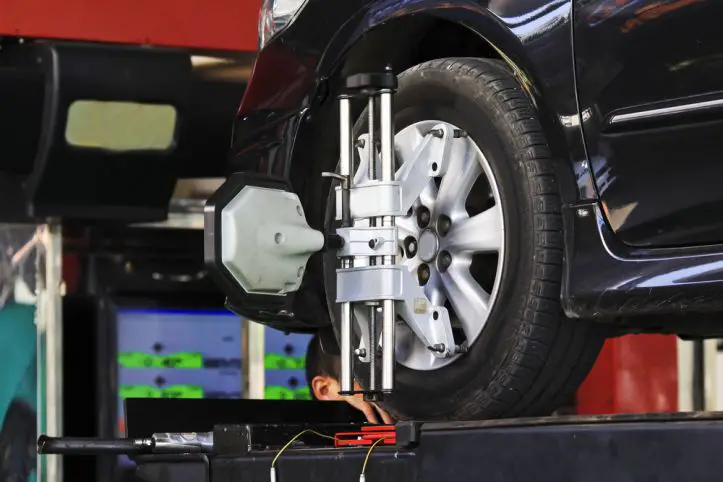
Many drivers come to the repair shop asking for a wheel alignment when they actually mean wheel balancing, and vice versa. Drivers are often unsure about the difference between wheel alignment and wheel balancing and think they are the same, but they are two distinct conditions requiring different solutions. If you have the same concern, let us help you understand the difference and how each process works.
Wheel Alignment and Wheel Balancing: What Are the Differences?
You’ve probably noticed at times while driving on the road that vibrations run through your car. This is referred to as “wheel balancing,” but it’s sometimes confused with “wheel alignment,” which is a different process. So, what does wheel balancing mean?
What is Wheel Balancing?

The wheel assembly consists of a tire and a rim. A wheel is considered balanced when the weight of the tire and rim is evenly distributed around the axle. However, the tire manufacturing process doesn’t necessarily guarantee this balance is perfect. In particular, frequently driving on poor road surfaces will cause wheel and tire-induced vibrations, leading to an unstable and dangerous driving sensation.
Therefore, the wheel balancing process was developed to solve this problem. Balancing is done by adding small weights to the wheels to distribute the wheel weight evenly in all directions. This method will minimize steering wheel vibrations that affect the driver’s vehicle direction. Wheel balancing is a very important part of your tire’s lifespan because wheels and tires, once balanced, will have greater durability (wear evenly in all positions; don’t wobble; don’t affect other components like bearings, wheel axles, the steering wheel).
What is Wheel Alignment?
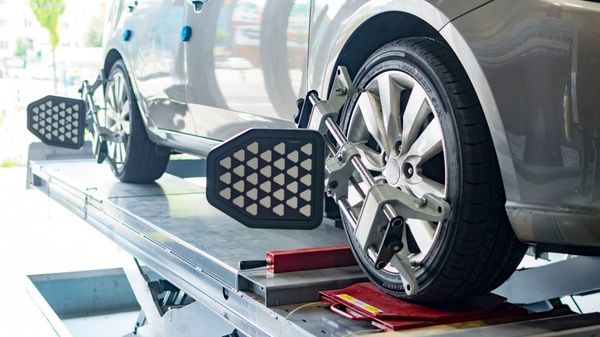
Now let’s look at the alignment process. Wheel alignment involves adjusting the wheels on the axles according to the exact specifications of their particular manufacturer, as wheels can become misaligned at any time due to various factors like accidents, poor road conditions, and bad driving habits. Technicians use specialized equipment to measure and adjust three main angles: camber, toe, and caster:
- Camber is a measure of the tire’s centerline relative to the road surface. It’s measured in degrees and has a major influence on driving dynamics.
- Caster is the angular displacement of the steering axis relative to the vertical axis of the wheel, viewed from the side.
- Toe is the direction the tires are pointed, relative to the vehicle’s axis, viewed from above.
Wheel alignment is essential for maintaining your vehicle’s performance and safe operation. Factors such as fuel efficiency, tire wear, handling, and steerability are all affected by wheel alignment.
From these definitions, we can see that wheel alignment and wheel balancing are completely separate processes. Wheel alignment concerns the angle of your wheels, ensuring they roll straight and make proper contact with the road, while balancing focuses on the weight distribution within the wheel assembly, thus preventing wobbles and vibrations. Most of the time, wheel balancing and alignment will be performed simultaneously during maintenance, but they should not be mistaken for the same thing!
How Do I Know If I Need an Alignment or a Balance?
Wheel balancing and alignment are two of the many extremely important maintenance activities that help you have a better driving experience and increase your car’s lifespan. However, deciding whether you need a wheel alignment or balancing can be tricky because some signs overlap. Don’t worry, the breakdown below will help you solve your problem.
When Do You Need a Wheel Alignment?
When your vehicle is misaligned, three fundamental problems can occur:
- Uneven tire wear
- Handling problems
- A crooked steering wheel
The most obvious sign of misalignment is the car pulling to one side when you let go of the steering wheel. Ignoring pulling signs will also lead to uneven tire wear. Even if the steering wheel is straight and centered and shows no signs of pulling, poor alignment can cause rapid or uneven tire wear. Get into the habit of visually inspecting your car’s tires at least once a week or before starting a long trip. Detecting signs of tire wear early will save you money in the long run.
Vibrations in the wheels or steering wheel are another sign that your alignment needs attention, whether mild or severe. Finally, check the wheel alignment if the steering wheel feels too loose or the response is somewhat imprecise.
It is recommended to align your wheels every 5,000 to 10,000 miles if you own a passenger car or truck. Regular wheel alignment will contribute to your car’s proper functioning and maximize driving comfort, help save fuel, and extend the life of your tires.
When Do You Need Wheel Balancing?
When you’re heading onto the highway and your steering wheel vibrates all the time (disregarding when your car is braking). This will usually be a balancing issue. Here are the obvious symptoms:
- Excessive Vibrations: When your wheels are unbalanced, vibrations are most often felt. Even though we know vibrations are normal when driving on roads with uneven surfaces, when driving at high speed with unbalanced tires, the vibrations also worsen, and the vehicle’s direction can become difficult to control because of these vibrations.
- Higher Road Noise: Some vehicles are notorious for their road noise, while others remain quiet. However, all types of vehicles will experience excessive noise if the wheels are not balanced.
- Increased Fuel Consumption: Your engine has to work a bit harder to keep everything running, which reduces fuel efficiency.
- Faster Tire Wear: The typical tire lifespan is 3 to 6 years, so there will be excessive wear if the wheels are not balanced.
If you experience any of these symptoms, it is recommended to balance your wheels as soon as possible. Balancing is a relatively inexpensive service that can improve your driving quality, extend tire life, and reduce wear on your suspension components.
Now you should be able to distinguish between these processes. Don’t use these terms interchangeably to ensure the long-term health of your vehicle.