

Have you ever bought cars online, then filtered your search by “manual transmission” because all the cool cars have them? If not, try it now. I’ll wait.
Isn’t it great what you find? Now try sorting by price and starting from the bottom of the barrel and tell me you didn’t just try to justify buying another project car.
While this seems like a tangent, my point is that cars have different transmissions – the link between the engine and your spinning wheels that makes your car move forward. How about digging a little deeper to understand what’s going on underneath?
Here are three different types of transmissions found in today’s vehicles as well as five ways to help identify the specific transmission model.
Types of Car Transmissions
Manual Transmission
How It Works
A manual transmission is, as the name suggests, a more hands-on approach to shifting gears. Remember when you had a bike and if you kept the same gear all the time, you would have a harder time going up hills?
Remember when you finally climbed that hill, and then when you started going down, you couldn’t spin your legs fast enough to gain more speed? That’s because you didn’t shift.
Shifting gears helps you control the power you put into your transmission, and when your engine is your legs, you need to make sure your bike is in the right gear so you don’t overwork your legs.
The same concept applies to your car. To extend the life of your engine, you need to shift gears to get the most efficient power transfer. If you didn’t, it would be like accelerating from zero miles per hour in 6th gear all the time.
How to Identify
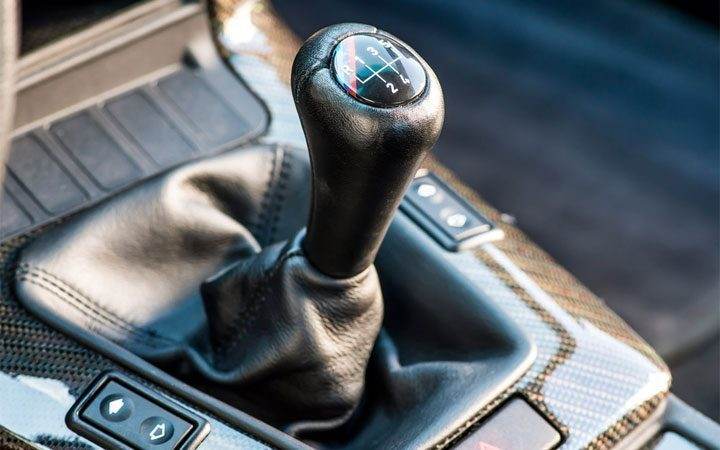
A good way to identify a manual transmission is to look at it first. Does it have a picture on top of the knob that looks like a bird’s-eye view of a black and white tree trunk with numbers at the end of each line? If so, it’s probably a manual transmission.
Still can’t tell? Try grabbing the transmission and wiggling it a bit. The owner may have left it in neutral (not in gear), so you’ll have a lot of play from left to right, forward and backward. If it doesn’t move at all, it’s not a manual transmission or it’s still in gear.
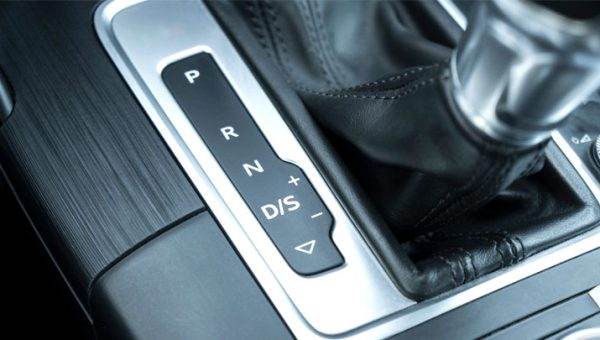
Since we still might not be able to tell at this point, look to the left or right of the transmission and check if there are letters and numbers like “P, R, N, D, 1 and 2”. If there are, that’s what we call an “automatic” transmission.
Automatic Transmission
How It Works
Just as “manual” means doing something with your hands, “automatic” when applied to transmissions means the car will essentially move by itself. This is how 99% of cars evolve these days. You get in the car, turn it on, put the transmission in “D” (for “Drive”), release the brake, and you’re on your way.
When you press the accelerator, the engine speed increases, making the transmission spin a bit faster. This will increase oil pressure or trigger a sensor that will shift the transmission to a higher gear. This will lower the engine speed, allowing you to move more efficiently on the road because you won’t be using as much gas.
How to Identify
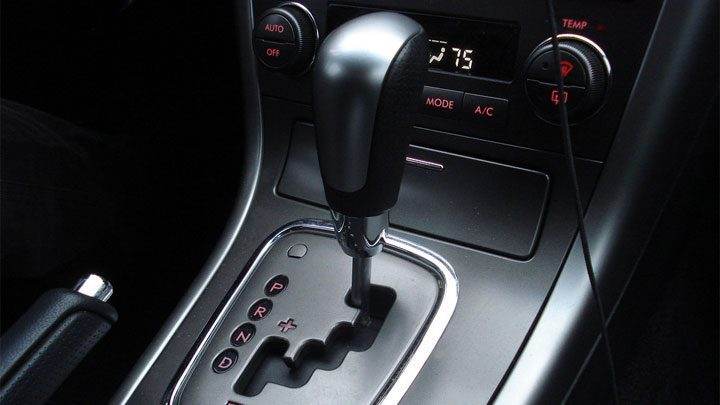
Although this transmission still has a stick that you grab to move it into “drive” gear, it won’t have as much play and it won’t give you a series of numbers (1-5 or 6 normally) to choose from. The gear lever will be either on the steering column or right next to you towards the middle of the car.
Reach and move the lever to “R” to get the car out of park and go into “Reverse”. This will allow the car to back up if you need to get out of a parking spot or make some space between you and an obstacle.
If you want to coast down a hill silently because you don’t want to wake your parents, put the transmission in “N” (neutral). That way, you can turn off the engine while you coast down that last hill to your driveway.
**Please note that we do NOT recommend turning off your car’s engine as it makes driving more difficult because you no longer have power steering!** (I only mention this in a theoretical sense)
“Drive” is pretty self-explanatory. In this position, your car will move in the most efficient way possible. There will normally be a preset shift point below 3000 rpm, and if you floor it, the car will downshift and accelerate as fast as possible.
Often, below the “D” position, there is a “2” which means second gear. You’ll shift to this gear when driving in the mountains and want to save your brakes going downhill.
This will force the engine not to exceed the speed required for second gear, and since the car’s momentum propels you down the hill, the engine will slow the car down. If you were to just press the brakes all the way down, you would cause premature wear on those pads, which could even lead to failure.
If you’re going down or up something extremely steep, you might want to just put the transmission in “L” for low, or “1” for first gear. This will allow you to use all the engine at the lowest gear option to get the best wheel spin per throttle input. If you want to do a burnout in an automatic transmission, you’ll need this feature if you’re going to have any kind of wheel spin.
Finally, many newer cars will have an automatic transmission with manual mode. This will allow you to manually select the gear you want to be in. It’s useful for the same downhill scenario where you would shift to a lower gear and allow the engine to prevent the car from gaining speed going down the slope (instead of forcing you to brake).
A manual mode also offers at least a bit more driver engagement/fun for purists who prefer shifting through the gears of a manual transmission.
CVT Transmission
How It Works
Many cars you can buy these days will be equipped with a “Continuously Variable Transmission,” or CVT. It’s a form of automatic transmission, in that you don’t have to actively shift gears with your hands, but the mechanism and feel are a bit different.
Just like an automatic transmission, just put it in “Drive” and go forward! The CVT will be smoother than a standard automatic, because you won’t feel it shift from one gear to another. You might also find that the car won’t accelerate as quickly in general, as it’s more geared towards efficiency than performance.
Under the skin, a CVT transmission uses a “rubber band” to maintain the proper gear ratio while you drive. This elastic always has the same length, but it has to go around the transmission’s input and output shafts. The way the transmission keeps engine speeds low and efficient is by moving the input and output shafts back and forth.
Each shaft has a wide part and a narrow part that adjusts the rotational speed of each shaft, but keeps them in good relation to each other because there’s an elastic that doesn’t change its length.
How to Identify
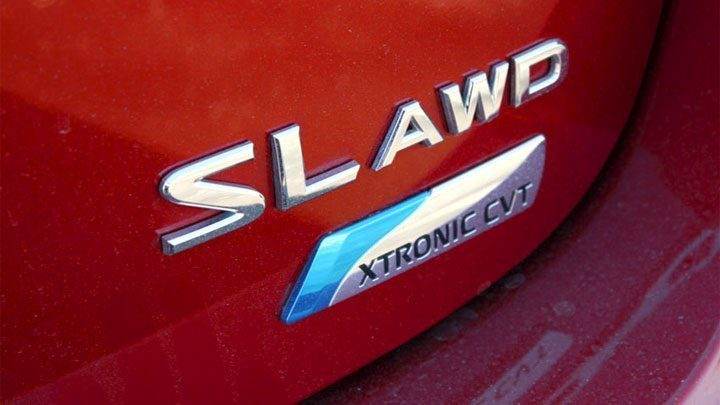
CVTs are typically used in small cars where there doesn’t necessarily need to be a clear distinction between gears as you would need in a semi-truck, for example. With smaller cars, all forces are less severe than those you face in a big truck, so you can get away with a CVT.
Another big advantage of a CVT is that it is VERY efficient in that it never forces the engine to use more power than it needs. Many manufacturers swear by their CVTs, claiming you don’t really need to service them for the first 100,000 miles!
How to Identify the Transmission Model
#1 – Check the Driver’s Door Card
Open the driver’s side door and look down on the inner door frame closest to the rear of the car. This is where the vehicle-specific information card will be located and you can see the transmission model your car is equipped with, as well as engine specifications, the car’s model number, and other information.
#2 – Check the Owner’s Manual
This one is pretty self-explanatory, but you should dive into the glove box and pull out that owner’s manual and look in the index for “Transmission.” This will give you a page number that you can use to get information about your transmission.
Not only will this page tell you which transmission model you have, but it will also give you helpful maintenance intervals, recommended fluid types, and other useful information about functions that might help you when things get tough.
#3 – Check in the Engine Bay
Most cars will have a description of what’s going on with the transmission under the hood. It will tell you if you have a CVT, automatic, or manual transmission.
But it can also tell you the type of engine oil to use, coolant temperature recommendations, warnings, transmission fluid recommendations, and how long it’s been since you changed your timing belt or timing chain.
#4 – Oil Pan
If the simpler solutions above don’t work or if that information is missing for some reason, you might want to inquire with the company you’re buying it from or the previous owner. There could be some shady business, so if you’re buying it, walk away.
If you already own the car and can’t get the above solutions to work, crawl under the car and check the transmission oil pan. It will also have a small tag on the side that will give you the exact make and model of your good old “Gear Shifter” (I’m tired of writing “transmission,” okay?)
#5 – VIN
Finally, and the above solutions should have worked, but if for some reason they didn’t, go to the front, driver’s side of your car and look at the base of the windshield. You should find a 17-character alphanumeric string that we call a Vehicle Identification Number, or VIN.
Use this code to look up information about your vehicle, including the type of transmission you own, the make and model of your car, as well as whether your car has recalls or issues associated with it. You can contact your car manufacturer for details about your VIN or use CarVertical or a similar service to get comprehensive vehicle details and its history.
Closing Thoughts, Maintenance
Your transmission is very important to the operation of your vehicle. Maybe not as important as your tires or your engine, but certainly near the top! Shifting smoothly and reliably is the difference between reaching your destination and having your car stall and not make it over the top of that hill.
Making sure your transmission fluid is clear is what determines the lifespan of your transmission. If the transmission fluid color is very cloudy, you’ll need to replace it with new fluid because the dark particles are just metal flakes from your clutch or gears rubbing against each other. Just check it often, and you’ll be fine.
So there you have it, everything I think you should know about transmissions at a basic level, and even a bit more if you made it all the way through.