
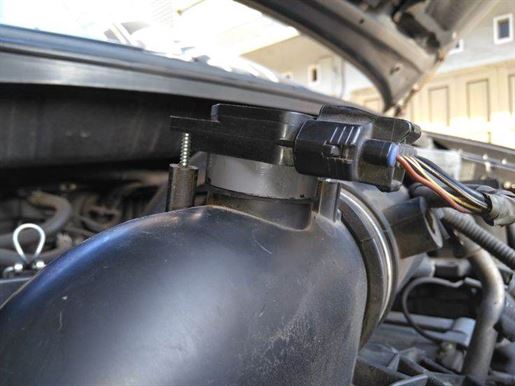
If your car is running poorly and sometimes black smoke is coming from the exhaust pipe, you might have a faulty air flow sensor on your engine and it’s time for you to replace it. Normally, all drivers think that replacement is just enough to make your car run properly, but most of us don’t know that there are some important remarks after this replacement process. What to do after replacing the mass air flow sensor? In this article, we will give you all the steps before and after to consider when replacing a MAF sensor.
What is a Mass Air Flow Sensor for?
A MAF (Mass Air Flow) sensor is located on the engine’s intake manifold. This part includes the ECU controller, the resistor, and the heating wire. The main task of the MAF sensor is to measure the amount of air entering the engine’s intake. It is crucial to control the air mass to calculate the amount of fuel you need to add to achieve the desired air-fuel ratio (AFR). The sensor’s ECU control unit will analyze and then control the intake air flow to be just sufficient, thus helping the engine to operate with the greatest efficiency. Understand the importance of this sensor, so even small damages to the mass air flow sensor will also affect engine performance, consume a lot of fuel, and greatly affect the car ride.
What are the causes of a faulty mass air flow sensor?
The failure of the mass air flow sensor can be due to many different causes. In particular, the sensor is covered with too much dirt or grease, which is the main reason why the ECU misinterprets the input signals. Furthermore, this part is affected by the engine’s high temperature for a long period without being replaced, which also easily causes poor analysis of the intake air flow.
Additionally, the air filter is not maintained and replaced periodically, leading to many impurities penetrating, which will directly affect the quality of the air intake into the engine. The best solution if you do not wish to replace a MAF sensor is to regularly check and maintain the air filter and especially the MAF sensor at reputable garages to quickly detect the faulty one and have quick solutions.
Brief steps to replace a mass air flow sensor
If the mass air flow sensor is severely damaged, the driver should perform the replacement steps in the order below:
Step 1: Open the hood and turn off the ignition of your car.
Step 2: The negative (red) cable must be disconnected to avoid any danger during implementation. Locate the MAF sensor on the intake. It is usually found in the air ducts between the intake manifold and the air filter housing of your engine.
Step 3: Grab the cable harness connecting the MAF sensor and the powertrain in the engine compartment and remove it from the sensor. Then, you will gently remove the electrical connector and the clamps that hold the mass air flow sensor in place on your vehicle’s air intake.
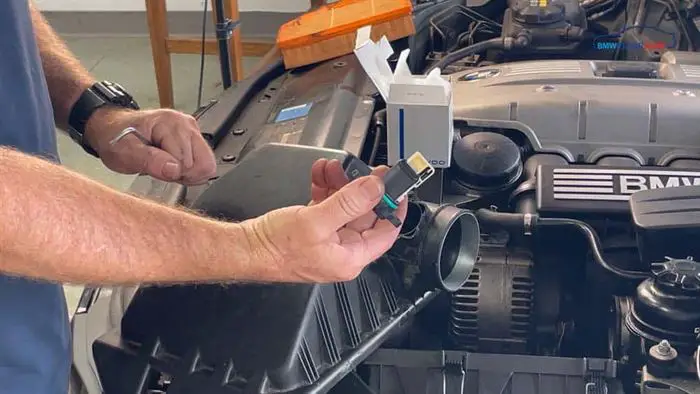
Step 4: Replacement with a new mass air flow sensor: Compare a new sensor with the old one to ensure you have the correct sensor for your car. All connections and holes must match on both parts. After carefully checking, install the new mass air flow sensor into your vehicle, then reverse the removal process to connect the wiring and clamps.
Step 5: Reinstall the sensor and the battery connections and turn on the ignition switch. And clear the ECU memory with an OBD code reader and try to restart the car.
Do you think step 5 is the final step in this process? Not yet! When you replace a part in your vehicle, you sometimes expect unwanted side effects and the MAF sensor is no exception. You might encounter problems related to a MAF sensor even after replacing it with a new one.
Possible problems after replacing the mass air flow sensor

Sometimes we have received a lot of feedback from our drivers indicating that their vehicles are still not running properly, even with a new MAF valve. And there are common problems you might encounter after replacing a MAF sensor:
The “Check Engine” light is still on
We know it would be frustrating to notice that your engine check light comes on after replacing a MAF sensor. You already knew that a MAF sensor can be responsible for performance and circuit malfunction codes. However, fuel trim and misfire codes can also be connected to it. This means that as soon as a MAF sensor fails, other sensors mounted around the engine will immediately detect it and send a warning to the central control unit.
Flat spot during acceleration
Once the MAF sensor replacement is completed, if you still have difficulty accelerating in road traffic or during overtaking, it means your ECM might be limiting injection due to a new MAF sensor problem.
Rough idle
It is not uncommon for you to notice that your engine is not idling correctly or is running a bit roughly after its replacement. The reason is that your new MAF sensor might have problems. Without the right amount of fuel, it’s hard to get a smooth idle. At that moment, the amount of air supplied to the engine compartment is unstable, causing excessive and insufficient combustion of the mixture inside the cylinders, directly affecting engine performance. Your engine might not start properly if the MAF sensors are not working correctly, especially at idle.
Why do problems still occur after replacing an old MAF sensor?
These problems worry drivers because they don’t even know what the reasons are. This problem occurs due to several possible causes:
Faulty installation
Faulty installation is one of the most common reasons that prevent your vehicle from running properly after replacing a new MAF sensor. As we know, the MAF sensor replacement process is quite complicated. So, when we perform this process at home, we often encounter errors in the replacement process, such as missing steps or a wrong process. And the result is that the new MAF sensor will lose its function.
Forgetting to reset the ECU
Not resetting your car’s computer is the second thing you easily forget when changing a MAF sensor. As we know, a MAF sensor will collect associated information to select the exact amount of fuel, then transfer this data to your Engine Control Unit (ECU). The ECU works and provides the engine with the correct amount of fuel. If you do not reset the ECU, the sensor codes will not be synchronized with the computer at the moment. The codes will help mechanics diagnose problems related to the mass air flow sensor. Therefore, when some codes are not synchronized with the ECU, you will see problems like the check engine light being on or your car not running properly…
Having a bad new MAF sensor
Buying the wrong sensor is the most common reason encountered by many drivers when replacing the sensor on the vehicle. The MAF sensor sends a signal to the ECU regarding the amount of air entering your engine. In fact, there are different types of sensors that have the same functions like MAP sensors or air flow sensors that use moving flaps (older model). That’s the reason why you cannot simply change your old type of sensor with a sensor from another brand or from one manufacturer to a sensor from another even if these sensors are of the same type.
What to do after replacing the mass air flow sensor?
Our final mission when replacing the faulty MAF sensor is for this sensor to be recognized by your engine. However, in some way, problems can still occur after the replacement process, all of which can be avoided if you follow a few simple but important steps after replacing the MAF sensor:
Disconnect your car battery
When you have finished installing the mass air flow sensor, the process is not yet over. Instead, it takes a few more steps to completely replace it. And disconnecting your battery for about 10 to 15 minutes is highly recommended. The purpose of this step will help the car’s ECU have enough time to reset and delete the old information and update the new setting to record the new parameter with the new replacement. Not all vehicles can automatically reset the error code if you disconnect the battery for several minutes. So you should try this step to ensure that your MAF valve is working correctly. When connecting your battery, the ECU will start loading all the information related to the new MAF sensor. When the battery is removed, it should not cause any problems.
Ensure the replacement is correct
If you are performing the MAF sensor replacement at your home, let’s make sure you follow the instructions correctly. A poorly installed MAF leads to erroneous readings that cause the ECU to send incorrect amounts of fuel to your engine. Furthermore, the consequence can be an incorrect air-fuel mixture causing rough idle. There are a few remarks to consider when replacing your new MAF sensor:
- When receiving a new MAF sensor, you should notice the type of connections and ensure you have the appropriate tools to disconnect and reconnect the sensor to the intake manifold and air box.
- Check all the steps you have performed to ensure you haven’t forgotten anything and that it is done effectively.
- When replacing the MAF sensor, you must be careful not to touch the sensing element inside the MAF sensor. This element is very fragile and is often exposed when removing the sensor.
- Make sure you have the correct MAF sensor. Read the number on the old sensor carefully and compare it with the OE number in the description of your new sensor. Usually, the description will indicate the initial number, the OE number, or the reference number.
- It is often necessary to do a road test to recalibrate the other sensors in the engine. In some situations, it must reset the inactive installation or other settings using the appropriate diagnostic tool.
ECU Reset
Resetting the ECU means deleting all the memory of your car’s computer to get rid of all errors and mistakes in the settings. In most modern models, the ECU and ECM will automatically reprogram themselves after replacing the MAF sensor. But on some older models, this is not possible and you therefore need to reset the ECU. It is the most effective way to handle problems when replacing the new MAF sensor. Recalibrating the computer sometimes requires a few technical details that will depend on your vehicle type. You can reset the ECU in 2 ways: by removing your car’s battery (modern vehicles) or by using an automatic scanner (OBDII scanner).
Final thoughts
When a mass air flow sensor is faulty, it cannot accurately move the air flow into your engine, causing the ECU to miscalculate the amount of fuel injection. This causes a few problems: stalling, rough idle, and poor acceleration. Understanding the importance of this sensor, whenever you replace it. Make sure to follow the procedures and steps to help your car achieve the best performance.