
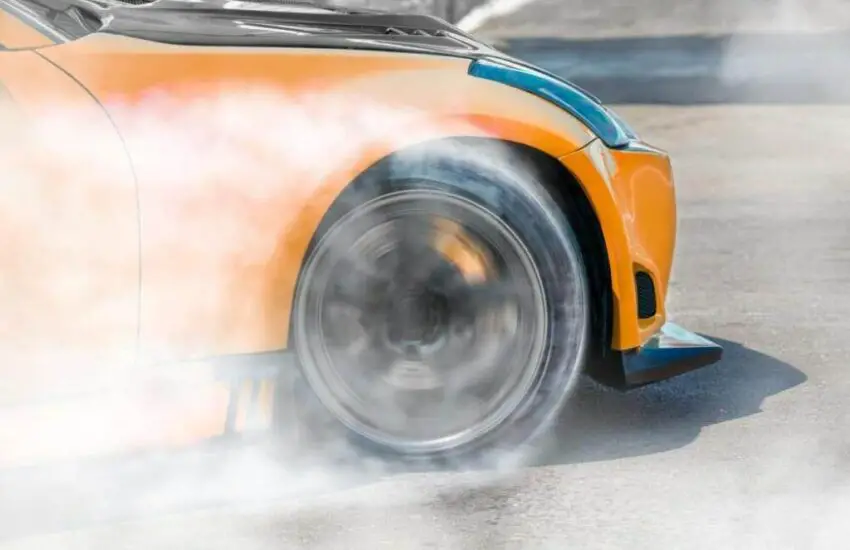
Are you wondering what brake boosting is? Brake boosting is a captivating concept highly valued within the automotive enthusiast community, especially among street racers.
If you share our curiosity and wish to delve deeper into this topic, read on to discover a comprehensive guide on brake boosting, covering everything from A to Z.
What is brake boosting?
Brake boosting, a term that resonates particularly with car enthusiasts and racers, summarizes its essence in its name.
It is essentially a driving technique where the brakes are intelligently used to significantly increase a vehicle’s speed. But how exactly does this maneuver work?
The mechanics of brake boosting
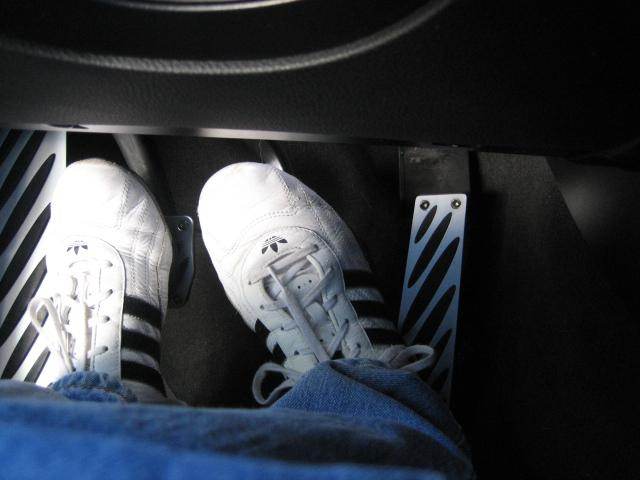
To activate brake boosting, the driver simultaneously applies pressure to the brake pedal and the accelerator pedal. This combination of actions may seem counterintuitive at first glance, but its purpose becomes clear once you look into its mechanisms.
When the accelerator pedal is pressed while the brake pedal is lightly engaged, the vehicle remains in a state of controlled motion.
This balance is akin to holding a sprinter at the starting line. The driver shows restraint while being ready to unleash a burst of power at the right moment.
Essentially, brake boosting represents a delicate balance between restraint and rapid acceleration.
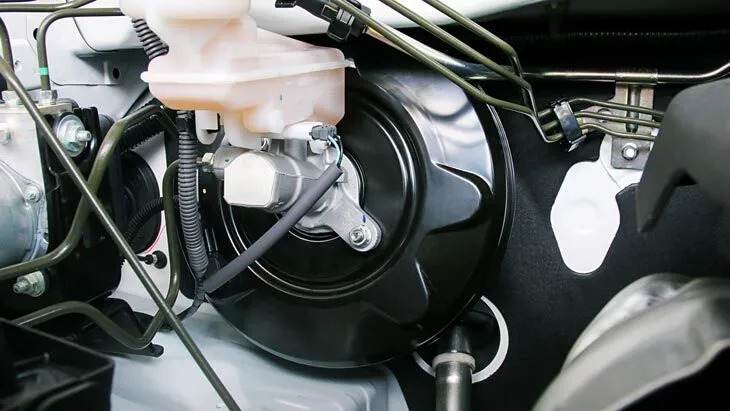
The purpose of brake boosting
Now that we understand the technical subtleties of brake boosting, it is equally important to explore the motivations behind using such a technique. Below, we outline the multifaceted goals underlying the practice of brake boosting:
Speed enhancement
The primary goal of brake boosting is to increase a vehicle’s speed. As explained earlier, the driver skillfully manipulates both pedals to maintain a steady speed before triggering a sudden acceleration.
This dramatic increase in speed is a central aspect of brake boosting.
Racing dynamics
Brake boosting finds its most significant application in the realm of racing, particularly in the context of street racing and roll racing. It is a strategic weapon in a racer’s arsenal, allowing them to gain a competitive edge.
In a scenario involving multiple racers, the judicious use of brake boosting can give the driver a significant head start, leaving competitors in the dust.
Tactical advantage
Brake boosting embodies the very essence of tactical driving. By engaging in this braking technique, a driver can outmaneuver opponents and take control of the race.
It is a calculated move that often surprises adversaries, as they may not even realize it is being executed until it is too late.

Strategic maneuver
Beyond racing, brake boosting can be used as a strategic maneuver in various driving scenarios where rapid acceleration is required.
Whether merging onto a highway or overtaking slow traffic, the judicious deployment of brake boosting can offer a definite advantage.
In summary, brake boosting is a nuanced driving technique that combines the principles of restraint and acceleration.
Can brake boosting damage your vehicle?
Once we have discussed what brake boosting is, its purposes, and its potential dangers, the remaining topic to address is the possible damage it can inflict on your car. We outline below the potential adverse effects of this activity on your vehicle’s well-being.
- Increased wear on the braking system:
It is evident that brake boosting can damage the braking system. Specifically, it can accelerate the wear of these components.
- Risk of smoke and fire
Brake boosting involves intensive use of the brakes, which can lead to smoke formation in the braking system. In extreme cases, if not approached with caution, it can even lead to a fire risk.
Overall, brake boosting is not without risks, and it is crucial to be aware of the potential damage it can cause to your vehicle, particularly its braking system.

Distinguishing between brake boosting and left-foot braking
In previous sections, we discussed brake boosting and its occasional confusion with another racing technique called left-foot braking.
Although these techniques share some similarities, they are fundamentally distinct. This section will provide a comparison between brake boosting and left-foot braking, highlighting their key similarities and differences.
Brake boosting
- Involves the simultaneous use of the accelerator and brake pedals.
- Maintains a constant speed.
- Aims to prepare for a subsequent increase in speed and power.
Left-foot braking
- Also involves the simultaneous use of the accelerator and brake pedals.
- Primarily intended to decelerate or slow down the vehicle.
- Ultimately results in a stop.
Both techniques incorporate the simultaneous use of the accelerator and brake pedals. However, the outcomes and intentions behind these actions are very different.
Specifically, brake boosting involves using both pedals simultaneously to prepare for a significant increase in speed and power.
While the initial steps involve maintaining a gentle, constant speed, the ultimate goal is to achieve notable acceleration.
Conversely, left-foot braking is a technique used to slow down or decelerate the vehicle, ultimately leading to a complete stop. When a driver brakes with the left foot, the intention is to reduce speed or halt the vehicle’s movement.
In summary, brake boosting and left-foot braking share similar processes and theories. However, the crucial distinction lies in their outcomes.
Brake boosting enhances engine power and speed, while left-foot braking aims to slow down or stop the vehicle.
How to perform brake boosting in automatic cars
Brake boosting in automatic vehicles is relatively straightforward compared to manual cars, as there is no issue of clutch wear. Here are two methods to achieve brake boosting, with some slight variations in the steps but the same final result:
Method 1: Brake first
- Reach a constant speed of about 20 mph. Even though a speed of 20 mph may seem modest for racing maneuvers, it is generally sufficient. Gradually apply pressure to the brakes during this process.
- Once the brakes are fully engaged, press the accelerator pedal while paying attention to the sound of the turbochargers spooling up.
- When the turbochargers start to accelerate, release your foot from the brakes to feel an exhilarating surge of power! Be prepared for intense exhaust noises, but it’s all part of the experience.
Method 2: Brake and accelerate simultaneously
- Increase your vehicle’s speed to at least 20 mph. For this method, 30 mph is even better.
- Place your left foot on the parking brake and your right foot on the accelerator pedal, applying pressure to both pedals simultaneously.
- Using your left foot, gently engage the parking brake while simultaneously pressing the accelerator pedal with your right foot.
- Hold this position for about 2 to 3 seconds. Then, release your foot and let the vehicle accelerate on its own. You will be amazed by its performance!
How to brake boost a manual car
Brake boosting in a manual car follows steps similar to those in automatic cars, with the main difference being that you need to be in lower gears to achieve the desired result.
It is important to note that excessive wear on your clutches and transmission can impact the car’s long-term durability.
Method 1: Using the handbrake
Handbrakes are handy tools for manual cars and are particularly useful for those who prioritize safety.
- Press the clutch pedal and rev the engine to about 3,000 RPM.
- Engage the handbrake and hold it engaged while gradually releasing the clutch pedal.
- When the vehicle starts to move, slowly release the handbrake until the engine produces a roar.
- Now, apply maximum acceleration and enjoy your high-performance ride!
Method 2: Using the foot brake
For drivers who are not comfortable with handbrakes, the foot brake is another option, even though it may pose more safety risks than the handbrake method.
- Press the clutch pedal and rev the engine to about 3,000 RPM.
- Press the brake pedal while gradually releasing the clutch pedal.
- Gradually release your foot from the brake pedal until the engine roars as the vehicle begins to move.
- Maximize the accelerator and enjoy the exhilarating experience!
Please exercise caution and ensure safety when attempting to brake boost, as it can affect your vehicle’s performance and safety.
Is brake boosting viable for supercharged vehicles?
No, it is not possible, despite some theories suggesting otherwise. Most supercharged vehicles have a complex design that prevents drivers from obtaining a significant boost.
Turbochargers are known to increase speed by activating to overcome lag, thus releasing power when you release the brake pedal.
Superchargers, on the other hand, cannot achieve the same results without additional components (often at high costs). Even with additional support, the outcome remains uncertain and inconsistent.
Can you launch your car with brake boosting?
Yes, you can use brake boosting to launch your car into action from a complete stop, similar to BMW’s Launch Control function.
However, such practices put considerable strain on the car’s engine, which is why some drivers prefer a conventional rolling start.
Alternatively, some opt for BMW models equipped with the aforementioned Launch Control mode, offering similar results without stressing the powertrain.
Final words
You now know what brake boosting is and some of its associated issues! Overall, brake boosting is a driving technique that combines braking and acceleration.
But it is generally not common due to safety risks, increased vehicle wear, fuel inefficiency, potential strain on the transmission, and legal issues.