
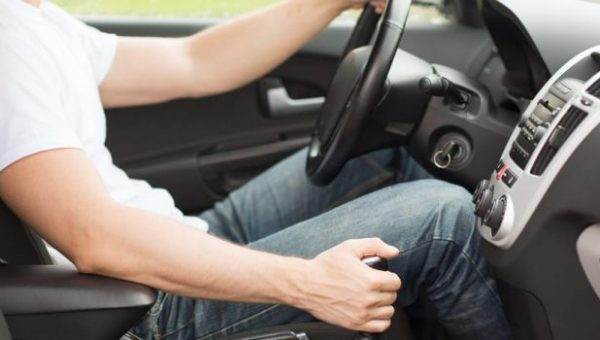

Generally, braking a car involves pressing the brake pedal. But there is another way to reduce the vehicle’s speed, which is engine braking. But how exactly does it work and what distinguishes it from regular braking? Let’s discover how you can use your vehicle’s engine as a brake.
ENGINE BRAKING
The standard way to slow down the car is to press the brake pedal. This is connected to the braking system, which then slows down the car’s wheels. There are a few different designs, but generally, this is done by applying friction to the wheels.
Engine braking works differently and involves a gasoline engine and the driver removing their foot from the accelerator pedal. When the pedal is released, fuel injection stops and the throttle is almost completely closed, leading to a significant reduction in airflow. This results in a strong vacuum in the manifold, meaning the air pressure in the engine’s intake manifold, which is lower than the surrounding atmosphere, is unable to draw in air. The cylinders struggle to compensate for this, thereby undermining the energy they provide and slowing the vehicle in the process. This does not work if the car is not in gear, as the deceleration force created is not properly transferred to the transmission, or on diesel engines, as they do not use a throttle body and do not have a comparable vacuum. Diesel engines instead require specialized brakes often called Jacobs brakes or Jake brakes and are particularly common in trucks. The overall effect of this type of braking can be enhanced by shifting the car to lower gears while releasing the accelerator pedal. Engine braking in automatic cars requires shifting to a lower mode.
IS ENGINE BRAKING BAD FOR MY CAR?
Engine braking increases the engine’s RPM. Whether this is a bad thing depends on two factors: how high the RPM increases and how long it stays at that level. Even audible RPM increases in response to engine braking do not need to be harmful as long as the RPM remains below the limit indicated by the red mark on the dashboard. Staying in this zone or at such high levels for extended periods can lead to engine overheating and strain the car’s cooling system.
The car’s transmission system also undergoes stress when shifting too quickly from a high gear to a lower one. The gears and clutch plate can experience increased wear, which can become a costly problem to fix.
These risks can be overcome with practice and experience and result in a few benefits. Most importantly, engine braking reduces wear on the brake pads and decreases the risk of the braking system overheating.
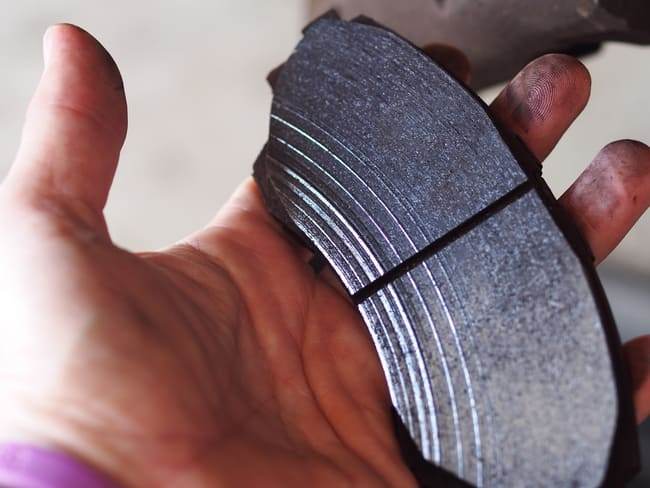
Now, if you need to stop quickly and safely, this method won’t suffice. There is no alternative but to press the brakes when an obstacle suddenly appears on the road or the driver in front of you stops abruptly. Needless to say, hitting an obstacle or another vehicle is certainly not good for your car.
WHEN IS ENGINE BRAKING A GOOD IDEA?
There are situations where engine braking is a better idea than using the brake pedal. When driving downhill over longer distances, pressing the brakes can put intense pressure on the braking system. The increased wear caused by reducing the car’s momentum as it descends a slope can damage the brake pads or similar stopping mechanisms, overheat them, and reduce the friction they provide. This leads to brake fade and can be fatal when descending a steep slope. Shifting to lower gears and engine braking can significantly slow the car, thereby reducing the need to engage the brakes and sparing them from the intense wear they would otherwise undergo.
Another time when engine braking can be useful is when driving in winter conditions. Ice and snow create dangerous road conditions that make braking by locking the wheels a hazardous undertaking. Since the roads become slippery, locking the wheels or suddenly slowing them can result in the car’s momentum taking it for a ride, sliding on the surface. Under these conditions, especially if you maintain sufficient distance from the car ahead and drive slowly, shifting to lower gears can help you avoid the dangers caused by harsh braking on an icy road.

PLACES WHERE ENGINE BRAKING IS PROHIBITED
Some places, especially in the United States or Canada, will have signs prohibiting engine braking, brake retarders, compression braking, or Jake brakes. This has less to do with safety issues and more with noise pollution. Engine braking and especially its equivalent for truck diesel engines can be very loud, and as such, many municipalities prohibit their use within their limits. The signs do not warn the driver of a danger to their car but of an exceptional danger to their wallet if they do not comply.
Conclusion
To summarize, engine braking is an alternative way to slow down your vehicle, although it cannot universally replace pressing the brake pedal and activating the standard braking system. It works by creating a vacuum that reduces the energy the car can expend for locomotion. This means of braking is slower than the regular type and does not lend itself well to emergencies. However, in certain situations, it is safer to use this form of braking when conventional brakes risk weakening, such as during a descent, or when sudden and complete stops of the wheels do not halt the car’s momentum, as on slippery roads. Overall, engine braking poses no risk to your vehicle’s well-being if performed correctly.