
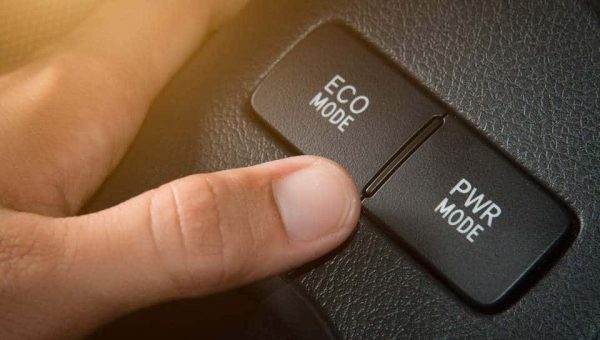
When you get into a new vehicle, you are bombarded with features you’ve probably never seen before. This is mainly because car manufacturers are developing new features left and right, to take the lead in the highly competitive automotive market.
One of the new features found in almost all new vehicles is Eco Mode.
But what is Eco Mode and how does it work? More importantly, when should you use it?
Keep reading and we’ll break down all the nuts and bolts of Eco Mode. You’ll know everything you need and more!
What is Eco Mode?
The term actually represents the vehicle’s economy mode. Simply put, Eco Mode is a function that improves your vehicle’s fuel consumption through various measures.
Once you press the Eco Mode button, it changes the car’s basic functions and allows you to travel many miles on just one gallon of gasoline.
While this helps the driver save fuel, the option comes with a trade-off in terms of performance, especially if you tend to be a more aggressive driver.
A Brief History of Eco Mode
The history of Eco Mode is more complicated than you think. This is because each manufacturer has a specific “Eco Mode,” and despite the same name, none of them work the same way.
Each manufacturer has exclusive information protecting its individual systems, but that doesn’t mean we can’t break down the basics and when automakers introduced them.
The 2006 Toyota Prius came with an Eco Mode – but it only worked when the vehicle was traveling under 34 miles per hour and didn’t do much for better fuel economy. However, over the years, the option has improved significantly.
In 2008, the Nissan Leaf hybrid introduced an Eco Mode option that improves fuel consumption by up to 10 percent. Honda introduced its first Eco Mode option in 2009, and Ford and Chevy added it to their lineup in 2012.
Today, you’ll be hard-pressed to find a manufacturer that doesn’t offer an Eco Mode option for at least some of its vehicle ranges. The effectiveness of the modes varies by manufacturer, and there’s no doubt that some brands simply offer the feature as a marketing tactic despite minimal improvements in fuel economy.
On the other hand, other vehicles, like the Honda Accord, Nissan Leaf, and new Toyota Prius, have Eco Modes that significantly improve fuel economy.
How Does Eco Mode Work?
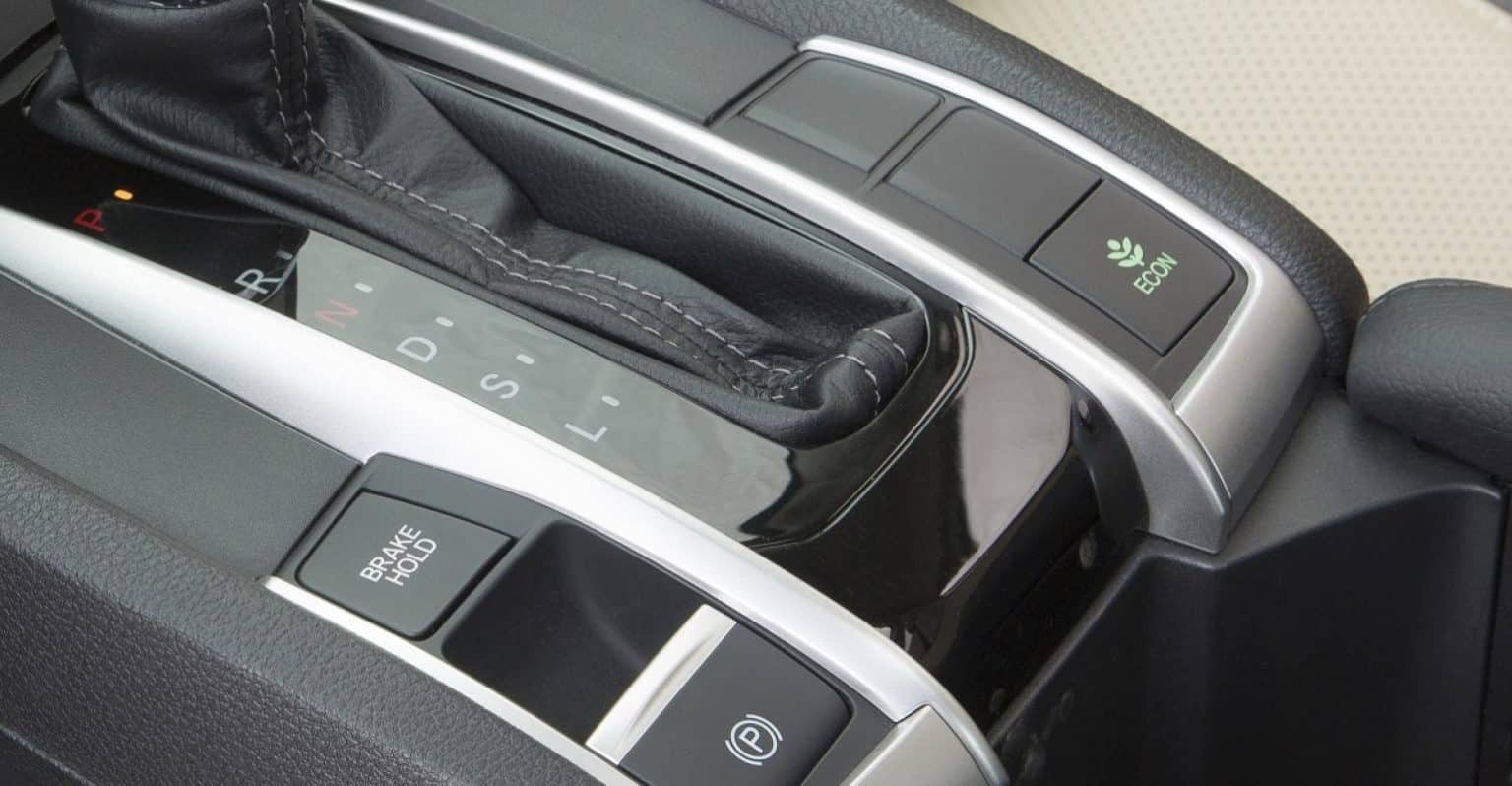
As we mentioned earlier, each manufacturer implements Eco Mode slightly differently, and the exact science behind each brand is often proprietary. But the fundamental principles of how each system works are common knowledge and remain relatively standard across different brands.
The most common operation of Eco Mode is to limit engine performance. If you put the pedal to the metal and pin it to the floor, you’ll get a wide-open throttle, which will result in maximum fuel flow to match the additional airflow.
Eco Mode limits the fuel flow and the result is less power. But it doesn’t just do this with a wide-open throttle; it does it at all times. This means you’ll get a less responsive engine and will often notice a noticeable drop in power during acceleration.
Another option that some manufacturers pair with Eco Mode is a start-stop function. This function actually stops your engine when you’re not driving, which increases energy efficiency since you’re not burning fuel while idling.
Is Eco Mode Worth It?
If you’re looking to reduce fuel costs, the answer is almost always yes. Even if some vehicles don’t have a great Eco Mode installed, it’s usually for older models that introduced the option when the technology was just starting out.
Current vehicles can save between 5 and 10% when in Eco Mode, as the option uses less fuel and reduces maintenance costs.
In other words, if you drive your car 1,000 miles per month and your vehicle gets 30 miles per gallon without Eco Mode, you’ll use 400 gallons of fuel per year. If the average cost per gallon is $2.50, that’s $1,000 per year in fuel.
If you turn on Eco Mode, some vehicles can reduce that number to just over $900 per year – that’s $100 in savings just by clicking a button!
How Popular/Common is Eco Mode?
Although Eco Mode is relatively new, it’s quickly gaining popularity. Before 2008, only a handful of vehicles offered an Eco Mode, namely the Toyota Prius, and most of them did practically nothing. Since then, almost every car manufacturer has added a vehicle with an Eco Mode setup to their lineup.
In fact, even markets with vehicles that aren’t traditionally “green” have added vehicles with Eco Mode options to their lineups. That’s why new vehicles like the Chevy Silverado have Eco Mode configurations that you can use to improve your fuel economy with a click!
Can You Drive with Eco Mode on All the Time?
Most drivers can simply turn on Eco Mode without worrying about it. However, in some circumstances, you’ll want to make sure Eco Mode is turned off. For example, if you’re driving that Chevy Silverado with Eco Mode on while trying to haul something, you’ll find the option is a significant deterrent.
While it won’t damage your engine or transfer case as many claim, you’ll find that you don’t have the torque needed to really get moving on the road. In addition to turning off Eco Mode when carrying heavy loads, you should turn it off whenever you think you’ll need to accelerate quickly.
While this can be hard to predict, common examples include trying to merge onto busy highways and navigating rush hour city traffic. You don’t want to find yourself in a situation where you need to accelerate quickly to avoid an accident and not be able to do so!
Is Eco Mode Bad for Your Car?
Absolutely not! Eco Mode limits engine performance, but it does not harm your engine or cause any damage to your vehicle. In fact, since your engine isn’t working as hard, you might actually prevent your vehicle’s components from wearing out as quickly.
However, any additional longevity will likely be negligible. But while many people claim that running your vehicle in Eco Mode is hard on the transfer case and the rest of the drivetrain, that’s not the case.
Advantages of Eco Mode
Eco Mode has one major advantage: it improves your fuel economy! Even better, if you don’t want it, you can quickly turn it off with the click of a button – and as soon as you want to increase your fuel savings, you just need to click the button to turn it back on!
- Improved energy efficiency
- Quickly turned on and off
Disadvantages of Eco Mode
While you get better fuel economy with Eco Mode, you definitely lose power. And if you’re used to accelerating quickly, you’ll notice a difference. Furthermore, if you’re trying to get torque, whether towing something or struggling up a steep incline, Eco Mode won’t be worth it.
Of course, all you have to do is click a button to turn it off! You don’t have to like Eco Mode; if you don’t want to use it, don’t turn it on!
- Reduced power output
- Reduced torque to the wheels
When Should You Turn Eco Mode On?

Whenever you want to save fuel, of course! If you use your vehicle as a daily driver for commuting to and from work, chances are you can keep Eco Mode on all the time. If your vehicle has an Eco Mode option, there are only a few circumstances where you should turn it off, and even if you forget, it won’t damage your vehicle at all!
When Should You Turn Eco Mode Off?
You should turn off Eco Mode when towing or carrying heavy loads. If you’re weighing down your vehicle, you’ll want as much torque as possible at the wheels. Eco Mode limits that power and torque by design – making it a terrible choice if that’s what you’re using your vehicle for.
Summary
While Eco Mode may be new to you today, there’s no doubt that manufacturers will equip more and more vehicles in the future with something similar. Indeed, there’s almost no downside to offering a vehicle with an Eco Mode option.
By clicking a button, you can save money, and if you ever need extra power, all you have to do is turn off Eco Mode! Eco Mode vehicles are the way of the future, and you can expect them to be integrated into more and more vehicles.