
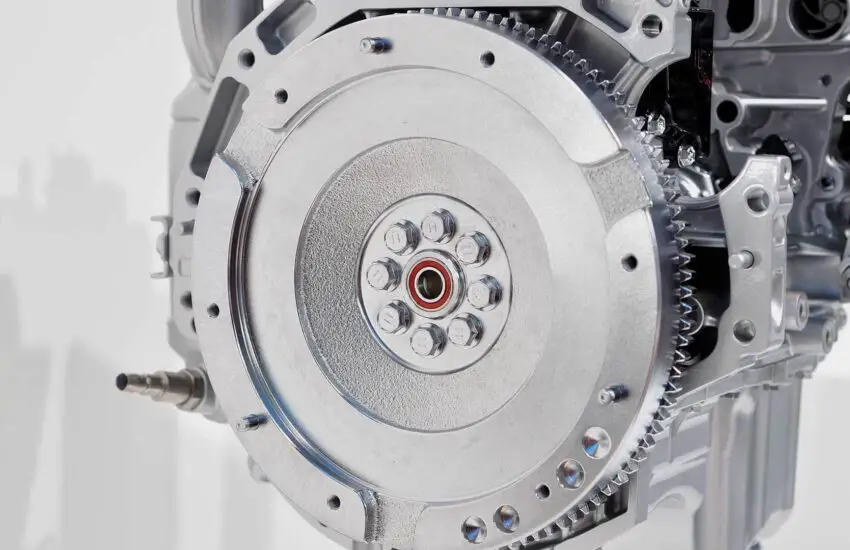
A flywheel is a large clutch component shaped like a large disc. It is attached to the engine’s crankshaft, and its main purpose is to ensure that the engine’s power is transferred smoothly. It neutralizes crankshaft vibrations and balances engine speed fluctuations, storing excess energy for later use. This energy is used to keep the engine running when the driver lifts their foot off the accelerator pedal, for example.
These components connect the engine to the transmission in manual vehicles, using the clutch to transfer power to the wheels. Moreover, if the flywheel is damaged, it will be much harder to shift gears successfully and could cause irreversible damage to the clutch. Therefore, it is essential that the problem is diagnosed and resolved as quickly as possible.
TYPES OF COMPONENTS
These discs are typically made of steel, cast iron, or aluminum. The higher the rotational inertia of the disc, the more effectively it prevents strong speed fluctuations. There are two main types of flywheels: single-mass flywheels and dual-mass flywheels. Single-Mass Flywheels:
These consist of a single metal disc that includes no moving parts, reducing the unit’s complexity and making it easier to maintain. These components are highly resistant to heat and deformation and can be resurfaced if necessary. In addition to being durable, they are much cheaper than dual units. On the other hand, single-mass components offer less protection against vibrations and are known to be noisy. They are better suited for high-speed vehicles, such as those intended for racing and off-road driving. Dual-Mass Flywheels:
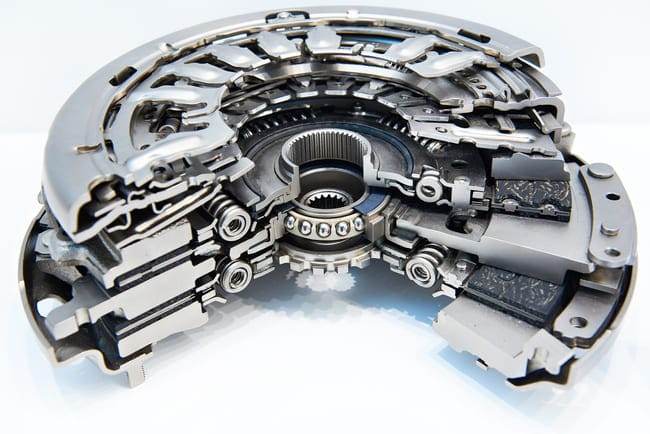
As you can probably guess, these flywheels consist of two discs. One is connected to the clutch and the other is attached to the crankshaft. Additionally, they include springs that dampen torsional vibrations. They are designed this way to more effectively protect the engine and transmission components. They can also improve energy efficiency by allowing more effective use of the engine. These are typically installed on large, heavy vehicles equipped with diesel engines. The downside is that they cannot be resurfaced and are more sensitive to thermal damage.
WHAT CAUSES FLYWHEEL DAMAGE?
Several factors contribute to premature wear and failure. Here are some of the most common causes:
- Poor maintenance. If components such as a new starter or clutch are not installed correctly, other parts could be damaged or misaligned. Moreover, if the clutch is damaged, it is highly recommended to replace it as soon as possible. If left unattended, it will affect the flywheel, and clutches are much easier and cheaper to replace.
- Engine condition and driving habits. For example, this can be caused by irregular engine starts, heavy loads, driving in the wrong gear, and slow starting speeds.
- Overheating. This can be fatal for the discs as they can crack or warp, and it is often caused by a slipping clutch.
SYMPTOMS OF A FAULTY FLYWHEEL
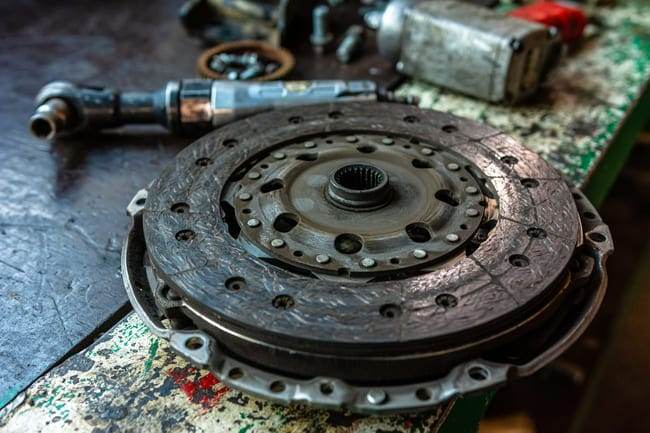
- A burning smell. Drivers will often notice a burning smell coming from under the vehicle. This is an indicator that the clutch is not working or is not being used correctly, and the flywheel could be the cause. For example, if the flywheel is warped, the clutch disc will slip and wear out, causing a burning smell. If the problem is not resolved, the clutch may eventually stop working.
- Difficulty shifting gears. A damaged flywheel will make shifting gears much harder because the clutch disc may not disengage properly. Cracked flywheel discs are more likely to warp, causing clutch and transmission problems.
- A vibrating clutch pedal. If the clutch pedal vibrates, it could be a sign that the flywheel’s spring mounts are faulty. This could be due to a crack or a worn disc. The spring is there to neutralize vibrations when the clutch is engaged.
- Clutch chatter. There are many causes for this, but the clutch chatters when it “jumps” on the flywheel while engaged. This noise can be due to a glazed or warped clutch disc but can also be caused by missing or damaged flywheel pins.
CAN YOU DRIVE WITH A FAULTY FLYWHEEL?
It is possible to drive with a faulty flywheel if the damage is minor. However, this does not mean it is advisable to do so. The fault could lead to more severe damage affecting the clutch components, the crankshaft, and the engine itself. You will feel more vibrations from the engine, and it will affect its overall performance. Moreover, if you suspect clutch damage, you should have the vehicle inspected by a professional as soon as possible.
IS IT POSSIBLE TO HAVE IT REPAIRED?

Single-mass flywheels are easier to repair because the surface of the components can be restored, while dual-mass flywheels usually require replacement because grinding processes can affect the internal components. This is where things can start to get expensive, as it is often necessary to replace the clutch at the same time as the flywheel. Fortunately, there are many affordable clutch kits on the market.