
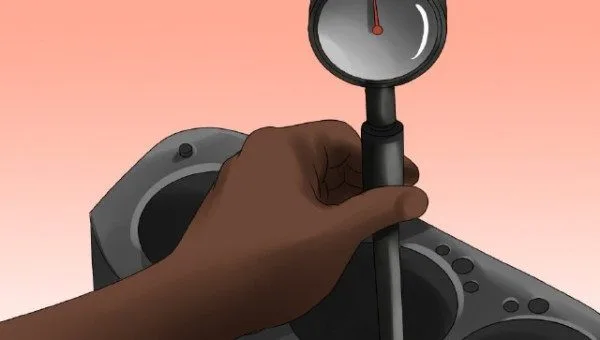

A compression test will reveal the condition of your engine parts and can save you money when purchasing a replacement engine.
While today’s combustion engines are more robust than ever, the components inside can eventually wear out and will wear out. As most car owners know, an engine produces power by compressing vaporized fuel inside the combustion chamber. This creates a certain amount of compression (in pounds per cubic inch). When vital parts, including piston rings or cylinder head components, wear out over time, the compression required to efficiently burn fuel and air is reduced. In this case, it is important to understand how to perform a compression test, as it is the first step in properly diagnosing and repairing the engine.
In the information below, we will outline what a compression test is, some of the common reasons why you might want this service performed, and how it is done by a professional mechanic.
What is a Compression Test?
A compression test is designed to reveal the condition of your engine’s valve train and piston rings. Specifically, parts such as intake and exhaust valves, valve seats, head gaskets, and piston rings are common parts that can wear out and lead to reduced compression. While every engine and manufacturer is unique and has different recommended psi compression levels, generally speaking, compression above 100 psi, with less than 10% variation between the lowest and highest reading, is considered acceptable.
A compression test involves using a compression gauge, which is installed inside the spark plug hole of each individual cylinder. When the engine is started, the gauge displays the amount of compression generated inside each cylinder.
When Would You Need a Compression Test?
Under normal circumstances, a compression test is recommended when your car exhibits the following symptoms:
- You notice smoke coming from your exhaust system when you accelerate or decelerate.
- Your car does not accelerate normally or seems sluggish.
- You notice a vibration coming from your engine when driving on the road.
- Fuel economy is worse than normal.
- You add oil more frequently than normal.
- Your car’s engine runs hot.
How is a Compression Test Completed?
If you are considering completing a compression test, there are 5 general important steps to follow to ensure it is as accurate as possible. Always refer to the recommended instructions for each compression tester you use to ensure accuracy.
1. Warm up your engine to operating temperature. Piston rings, valve seats, and other critical components are designed to expand when they heat up, which creates the desired compression rate inside the engine. If you perform a compression test on a cold engine, the reading will be inaccurate.
2. Completely stop the engine. To perform a compression test, the engine must be stopped. You should also remove the fuel pump relay switch and the electrical connection to the coil pack. This disables the ignition system and the fuel supply system, ensuring that the engine does not start during the test.
3. Disconnect the spark plug wires. Make sure to disconnect them from all spark plugs, then remove all spark plugs.
4. Install your engine compression gauge into the first spark plug hole. You will want to test compression on an individual cylinder basis. It is best to start with the cylinder closest to you and move backward, then follow on the other side (if applicable) until you have completed each compression test.
5. Crank the engine for short periods. Have someone assist you by starting the engine several times with the key for a period of 3 to 5 seconds. This should allow the maximum compression reading to appear on the gauge. Record this maximum number on a piece of paper per cylinder and perform this step on each cylinder in progress.
Once you have completed all the cylinders in your engine, you will want to review the numbers. You can consult a maintenance manual for your vehicle’s year, make, and model to determine what the numbers should be. As we indicated above, the generally accepted number is above 100 psi. The important element to consider is the difference between each cylinder. If one is more than 10% lower than the others, a compression problem likely exists.
A compression test is always a good way to determine if the symptoms you are experiencing are related to internal engine damage. However, if compression proves to be low inside the engine, major repairs or in some cases, a complete engine replacement will be necessary. The key is to have a compression test performed by a professional mechanic so they can review the results and recommend a repair or replacement that makes financial sense.