
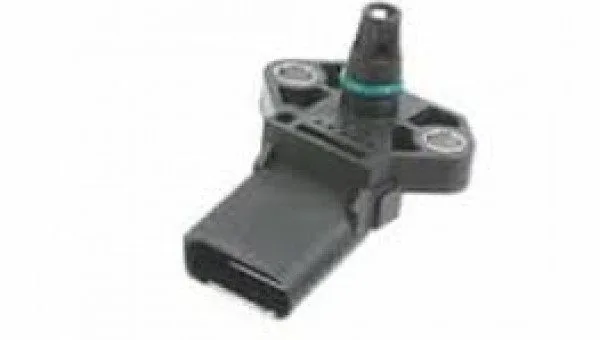
If you have ever driven or owned a turbocharged engine car, you probably know what the “boost pressure sensor” is.
It is the sensor that measures the boost pressure and sends the information to the engine control unit.
However, for those who do not have a clear idea, we will discuss the boost pressure sensor, its functions, and how to prevent it from being damaged in detail.
What is a Boost Pressure Sensor?
A boost pressure sensor is part of a turbocharged engine that measures and regulates the air pressure in the intake manifold and controls the boost level of the supercharged engine. A BPS monitors the speed and pressure of the airflow in the intake manifold and ensures that the engine remains at its optimal level and receives the ideal air and fuel supply.
A turbocharged engine without a boost pressure sensor will generate enough power to be damaged due to high temperature.
The boost pressure sensor is located inside the intake pipe near the throttle body.
How is a Turbocharged Engine Different from a Naturally Aspirated Engine?
Before diving into the details of the boost pressure sensor, let’s look at the difference between a conventional engine and a turbocharged engine.
Every internal combustion engine uses two key ingredients: air (oxygen) and fuel. As the gas is burned by the engine, energy is generated which, in turn, powers the engine. The fuel depends on the air supply for efficient combustion, and in an ordinary engine, the air supply is limited. Generally, 15 times more air than fuel is required for the process.
A turbocharged engine consists of two main components: a turbine and a compressor. These two components spin at a ridiculously high speed and, in turn, allow more air to be drawn in and generate higher power.
What is Code P0236?
OBD codes do not report the direct component that may be facing a problem, but rather indicate an area where the technician needs to look for the issue. A vehicle that generates code P0236 indicates that there is a problem with the turbocharger boost sensor. This code is triggered when the engine control module (ECM) detects that the boost pressure sensor does not match the specifications as the intake manifold pressure sensor (MAP) or barometric pressure sensor (BARO) when the engine is idling.
Why Does Code P0236 Appear?
There are several reasons why code P0236 is triggered. The most common causes are:
- The turbo boost pressure reading does not match the MAP or BARO when the engine is stopped.
- The boost pressure sensor is clogged or contaminated with dirt and debris.
- The turbo boost pressure sensor is damaged and reacts relatively slower to pressure changes.
Possible Symptoms
When code P0236 is triggered, the PCM responds by entering an engine management failure mode, as it ignores the actual manifold pressure reading and assumes another reading, limiting the engine’s capacity. Here are some of the symptoms you might experience:
Check Engine Light turns on
Turbo boost will be disabled and the engine will not generate enough power
Due to faulty pressure, there would be a loss of acceleration. Check for boost leak symptoms.
Fixing Code P0236
There are several ways to fix code P0236, and the best one is to entrust the car to an authorized dealer for inspection. The auto specialist will use an advanced scanner to identify the problem, and it will be easier to resolve it. In addition to that, here are the two common troubleshooting techniques you can try.
Remove and replace the boost sensor if it provides the ECM with an incorrect pressure reading.
Check the hoses and connections to the turbo boost sensor and see if they are clogged or obstructed. In this case, cleaning these connections will solve the problem.
If you want to do it yourself at home, you can read the values with an OBD2 code scanner and get a wiring diagram to measure the sensor. The sensor normally has three wires; a 5-12 volt power supply, a ground, and a signal. You can check that you have all of these before replacing the sensor. You can also measure the sensor itself by checking if you have ohms or an open circuit between the pins. For an exact ohm measurement, get a wiring diagram with the part number on the sensor.
Boost Pressure Sensor Buying Guide
Depending on the make and model of your car, you can get the OEM replacement part from the authorized dealer. You can also check online auto shops or search for automotive components on eBay.
Highly Sensitive Boost Pressure Sensor That Ideally Adjusts Fuel Injection:
A faulty boost pressure cannot synchronize with the ECU, which is responsible for releasing the correct amount of fuel into the engine’s combustion chamber. Therefore, it is recommended to look for a
high-quality boost pressure sensor that has high sensitivity and also uses vacuum pressure as a reference point if the engine control unit is equipped with it.
Select the Same Boost Pressure Sensors as Those Installed in Your Car Currently:
Boost pressure sensors differ in every car make and model, and you should only choose the specific component recommended in your car’s owner’s manual. Choosing a universal component is not recommended. You can often find the part number on the sensor itself. Simply search for the part number on Google and see what results you get.