
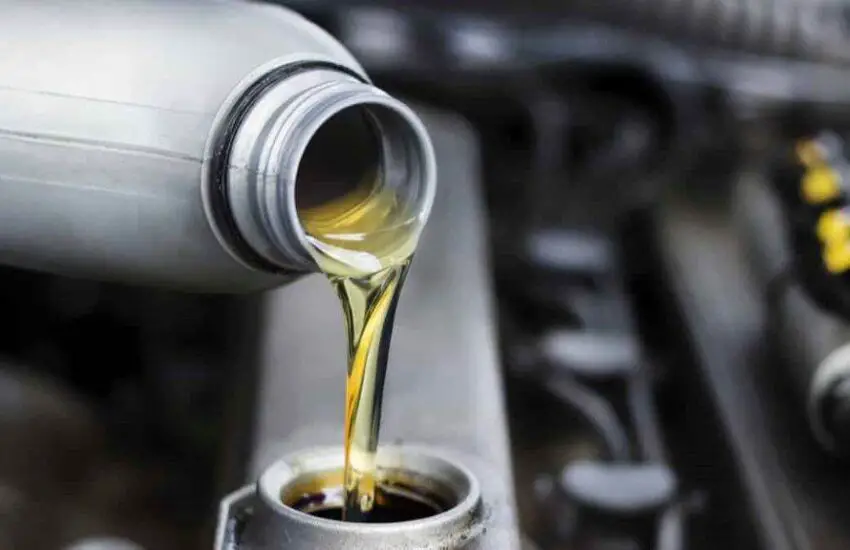
Engine oil is the lifeblood of your vehicle, as it keeps the car running at its maximum capacity. It cools, cleans, lubricates the moving parts of the car’s engine, and prevents metal parts from rubbing against each other.
Engine oil plays a crucial role in collecting dust and debris from the engine and keeping them in the oil filter. In short, your vehicle runs well with fresh engine oil making the parts function.
However, care must be taken in choosing the right engine oils so that their vehicle remains functional in the long term. Learn here the difference between the three types of engine oils, namely 0w-30, 5w-30, 10w-30!
Which engine oils are best for my car: 0W-30, 5W-30, or 10W-30?
Whether you’re looking to know about 0W30 versus 5W30 or any other engine oil, choosing the right viscosity for the engine makes all the difference in your car’s performance and maintenance.
It should not be forgotten that a car’s engine needs oil that can operate in all weather conditions. A 10W or 5W refers to the ease with which the oil will flow in winter.
However, it must be kept in mind that 10W thickens faster than 5W. The other number refers to the oil’s resistance to thinning under high-temperature conditions.
1. Overview of Car Engine Oil
The all-new engine oils, including 0W-30, 5W-30, and 10W-30, function like single-weight oils at your car’s full operating and warm-up temperature.
The majority of engines designed before Ford had 5W-20 oil specifications in 2001, and a 30 W weight was the ideal oil weight.
The next question that arose was whether to use 10W-30 or 5W-30 oil. It must be understood that before Group 2 hydrocracked oils gained popularity, 10W-30 oil was considered better due to the additives and viscosity index improvers.
It was commonly believed that viscosity index improving agents could not work effectively; 10-weight oil was a better choice than 5-weight oil.
Additives, not the oil, provide the required thickness for proper operating temperature viscosity.

2. The Difference
Before diving into the differences between 0W-30, 5W-30, and 10W-30, let’s decipher the code itself. The numbers preceding the “W” represent the oil’s viscosity at low temperature, with lower numbers indicating smoother flow.
The numbers after the “W” represent the oil’s viscosity at normal operating temperatures. Now let’s explore the unique attributes of each oil type.
Many car owners wonder which engine oil is the best. In short, many are confused about 5W30 versus 0W30. 10W-30 can be quickly obtained in conventional engine oil, as it is an economical oil option and not recommended by car user manuals.
However, if car owners end up purchasing it from a refinery, it will be hydrocracked. In short, the oil molecules would be of uniform size and require fewer viscosity improving agents.
5W-30 can be purchased as conventional, fully synthetic, or blended. It should be known that the fully synthetic would have fewer viscosity additives. The standard would have the maximum because synthetic molecules maintain their viscosity.

Here are some additional details on the difference between the 3 mentioned oil types.
- 0W-30: Cold Start Champion
The “0W” in 0W-30 means ultra-low viscosity, resulting in exceptional fluidity even in freezing conditions. This oil excels in protection against cold starts, ensuring your engine remains lubricated during icy mornings.
Ideal for frigid climates, 0W-30 offers rapid oil circulation, effectively reducing wear on vital engine components during startup. If you reside in a region where winters can be unforgiving, 0W-30 is your go-to choice.
- 5W-30: All-Season Performance
5W-30 strikes a delicate balance between cold resistance and high-temperature stability. Its low cold-weather viscosity ensures quick circulation during cold starts, thus preventing engine wear.
At high temperatures, 5W-30 maintains its viscosity, providing a consistent oil film for effective engine protection. This versatility makes it a preferred option for various driving conditions, from city commutes to highway cruising.
- 10W-30: Heat-Defying Guardian
With a slightly higher cold-weather viscosity than 5W-30, 10W-30 strengthens its game in the face of warmer climates. It forms a thicker protective film on engine components at higher temperatures, thus effectively protecting against engine stress and heat-induced wear.
This oil shines in regions with temperate climates, where temperature fluctuations are less extreme. Furthermore, older engines that benefit from a slightly thicker oil film find 10W-30 to be a reliable companion.
Making the Right Engine Oil Choice
Climate and Temperature Considerations
The choice between these oil types largely depends on your local climate. If you live in a region with harsh winters, 0W-30 oil ensures your engine’s vitality during cold starts. For more moderate climates, 5W-30 and 10W-30 offer commendable protection.
Addressing Your Vehicle’s Age and Condition
Consider your vehicle’s age and condition. Older engines, which may have undergone more wear, can benefit from the extra strength of 10W-30. In contrast, newer engines, especially those recommended by the manufacturer, tend to thrive with 5W-30.
Reflecting on Driving Habits
Your driving habits also influence the choice. If you frequently take short trips or navigate through traffic jams, opt for 0W-30 or 5W-30 to protect your engine from wear during frequent cold starts.

FAQ on 0W-30, 5W-30, 10W-30 Engine Oils
- Is it safe to switch between oils of different viscosity?
Switching to an oil with a similar viscosity rating is generally safe. However, consult your vehicle’s manual or a mechanic for specific recommendations.
- Can I use 10W-30 oil in winter?
Yes, you can use 10W-30 in winter, but it may not offer as effective cold start protection as 0W-30.
- Does using a higher viscosity oil increase fuel consumption?
Using a slightly higher viscosity oil, such as 10W-30, is unlikely to significantly impact fuel consumption.
- Can I use 5W-30 instead of 0W-30?
Yes, it is possible, especially if you live in a region with milder winters. 5W-30 still offers good cold start protection.
- How often should I change my engine oil?
Refer to your vehicle’s manual for oil change intervals. Modern synthetic oils typically last longer than conventional oils.
For more in-depth information and expert advice on choosing engine oil, feel free to consult automotive industry professionals.
Watch this video by Engineering Explained to learn more about the difference between synthetic and conventional engine oil!
Summary
Car owners can use an additive pack to blend oil and conventional oil to achieve the desired properties. This is one of the most important maintenance tips for your car’s engine.
So, if you are looking to know the difference between 0W-30, 5W-30, and 10W-30 engine oils, then we recommend referring to the information mentioned above.