

Are there benefits to disabling traction control? What prevents a car from losing control and hitting something when the driver takes a turn at high speed? Traction control.
By reducing unwanted skidding and wheel spin, this safety feature makes driving safer and easier on slippery surfaces and in tight turns.
What is Traction Control?
Traction control is a vehicle safety device that helps a car use all the available traction on the surface under certain conditions. This feature intervenes when your car struggles to accelerate on slippery or low-friction surfaces.
The system has wheel speed sensors to monitor the rotational speed of all the drive wheels and a hydraulic modulator that pumps the brakes.
When the sensors detect wheel spin during acceleration, they send information to the Electronic Control Unit (ECU). The ECU also constantly monitors the wheel rotation speed to check if they are losing traction.
If so, it commands the hydraulic modulator to pump the brake, which involves applying and releasing the brake in rapid succession, to the affected wheel.
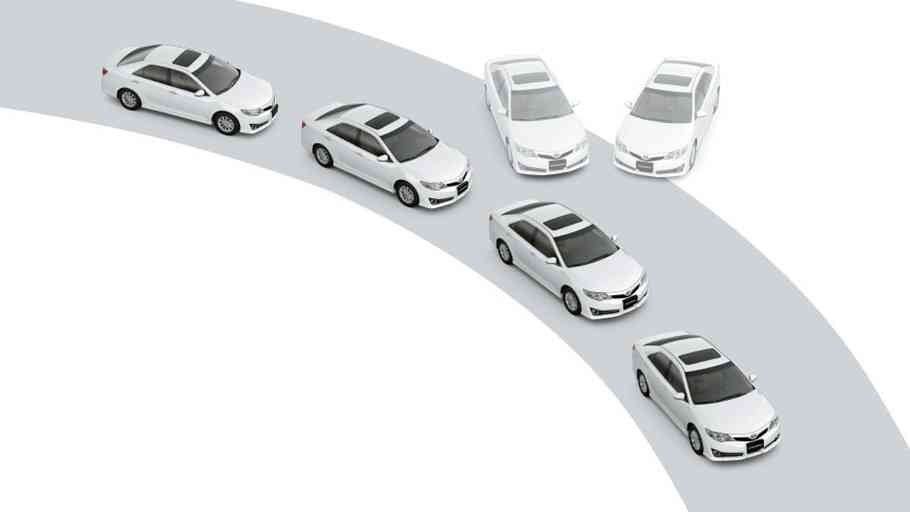
Traction control applies the brakes to slow the car until it gains sufficient traction. In some vehicles, the system reduces engine power to the wheels experiencing traction loss.
How Does Traction Control Work?
Before knowing the benefits of disabling traction control, you need a clear idea of its functions and how it helps in certain conditions.
This system relies entirely on the traction control sensor or sensors. There are four of these sensors, one on each wheel. Wheel speed sensors are another name for these sensors.
They are intended to measure wheel speed. A tone ring on each wheel rotates as the wheel turns around the axle. This tone ring also has grooves.
The sensor detects the movement of the tone ring when the wheel rotates and records the input. This data is then sent to the Powertrain Control Module.
The throttle actuator receives an input from the Powertrain Control Module. The engine then works its magic.
It either reduces the fuel delivered to the engine, forcing it to slow down, or it slightly delays the ignition timing, which slows the engine but doesn’t cause the wheels to spin. This system employs several methods, although these are the most common.
This process starts instantly when the wheel sensors detect the slightest loss of traction.
They will not allow your automobile to skid, even slightly. This method will help you stay on the road and prevent you from ending up in a risky scenario and potentially getting injured.
Benefits of Disabling Traction Control
Why disable traction control? You only need this feature under certain conditions, especially when the road is slippery.
The conditions where turning traction control off will prove useful are:
When your car gets stuck, disabling traction control can help you.
Although traction control can help keep your automobile on a straight path in rain or snow, it can also prevent your car from moving forward if it gets stuck in snow or sand. If your car gets stuck in snow, chances are one of the wheels is spinning.
Although logic suggests that leaving traction control on might help, as it cuts power to the wheel that keeps spinning, it might actually cut power completely, which will worsen the situation.
In such a case, disable the traction control system so you can use the “rocking” approach to eventually get the car out (reverse the car a few inches, then move forward a few inches).

Driving or accelerating on an uphill road whose surface seems loose due to gravel and stones or slippery.
Another instance where traction control can cause problems is when driving on a long, steep snowy slope.
Again, one might think traction control can help in this circumstance, but it might not, as it could cause the wheels to spin and completely stop the power being sent to them.
When climbing a steep, slippery slope, the system limiting power to the wheels might force you to go nowhere fast. This can sometimes be dangerous.
In this scenario, disable traction control and gently climb the slope, which will be easier if your vehicle is equipped with snow tires, chains, or cables.
Accelerating on an icy road when you are at a green light with cars lined up behind you.
In this situation, disabling traction control may have potential benefits, but it also carries significant risks, such as an increased risk of losing control or difficulty stopping.
Traction control is designed to limit wheel spin and improve stability during acceleration, especially on slippery surfaces like ice. However, there are scenarios where temporarily disabling traction control can prove advantageous:
- Controlled Wheel Spin: By disabling traction control, you have the ability to manually modulate wheel spin. A slight wheel spin can help you maintain momentum on an icy surface where tires might otherwise struggle to find traction.
- More Predictable Acceleration: Traction control can sometimes be overly sensitive on extremely slippery surfaces, leading to abrupt power cuts and unpredictable vehicle behavior. Disabling it allows you to have more predictable and smoother acceleration.
Given the risks involved, it is generally safer to keep traction control on when driving on icy roads, especially in situations where other vehicles are around you.
When the wheels lose grip due to hitting a muddy patch on a road.
In this scenario, disabling traction control may present some benefits:
- Regain Momentum: In some cases, when your wheels lose grip due to a muddy patch, disabling traction control can allow the tires to spin more freely. This increased wheel spin could help clear mud from the tire treads and potentially gain forward momentum.
- Easier Maneuvers: On some off-road or unpaved surfaces, like muddy trails, disabling traction control can make maneuvering easier by allowing the wheels to slide and adapt to the rough terrain.
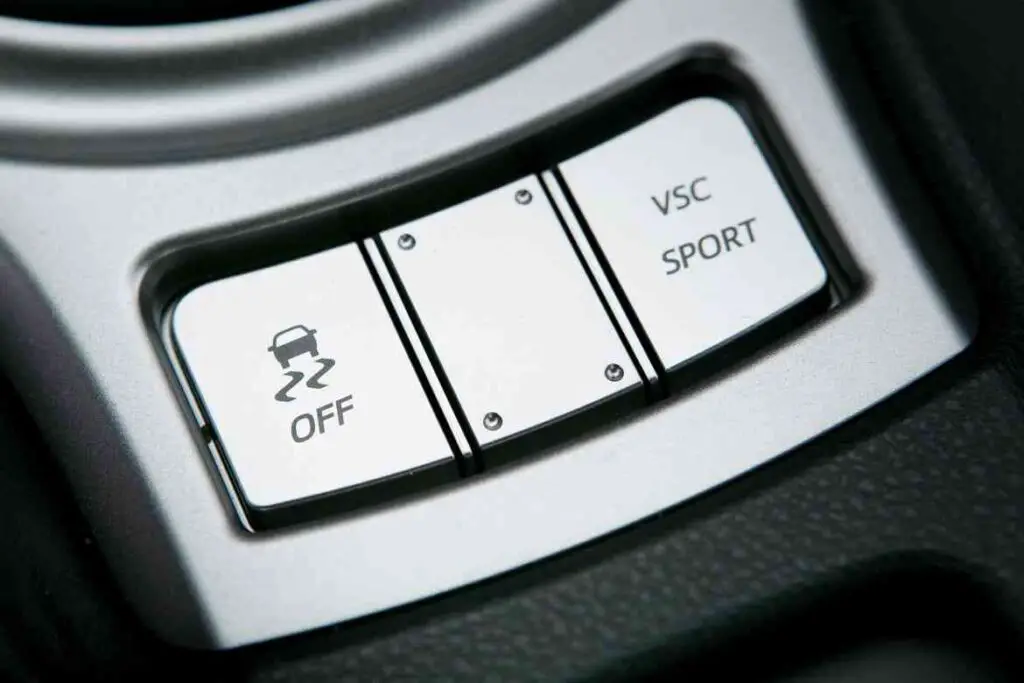
Disadvantages of Disabling Traction Control
Besides the benefits of disabling traction control, turning off traction control on cars has several disadvantages or risks.
Suppose it’s raining outside and the roads are extremely slippery. You are driving your rear-wheel-drive automobile on the road when you suddenly lose control, without warning or awareness that such a thing could happen.
In this position, you could collide with anything on the side and end up in a tree or a wall. Or even be involved in a rollover. These scenarios could potentially cost you your life.
That’s why you must enable traction control on a rear-wheel-drive vehicle. You simply cannot drive a rear-wheel-drive vehicle without a traction control system.
Not to mention that your tire lifespan will be greatly reduced, and you will have difficulty driving the car.
FAQ on Disabling Traction Control
- What causes the ABS and traction control lights to come on?
Most of the time, this problem is caused by a lack of brake fluid or an issue with the master cylinder. Wheel speed sensor problems or a faulty ABS module. These are the most commonly encountered issues.
- How do I know if the traction control is working properly?
Traction control is something you won’t realize is working until you need it. Even when it’s on, you won’t notice it during your daily commutes.
When you lose traction and the traction control kicks in, the indicator light flashes momentarily to signal that it is working to restore traction.
- How do Traction Control and Stability Control differ?
A lesser-known safety feature is stability control. But it is always there and helps keep you safe when you are driving.
Although traction control and stability control are not the same thing, they work in tandem to provide a safe driving experience. They use the same sensors in all four wheels, as well as the ABS already present in your vehicle.
In the same way that traction control brakes a wheel that is spinning too fast, the stability control system brakes a wheel that is not performing the correct movement.
- Is traction control more fuel-efficient?
Traction control has little influence on fuel economy. It is rarely used, and even when it is, it has no effect on your gas mileage.
Watch this video by Helpful DIY for more information on traction control!
Final Words
To conclude our thoughts on the benefits of disabling traction control, remember that not having traction control does not affect a vehicle’s safety level, unless you are driving on slippery roads or taking turns at high speed.
The truth is that no sensible person would try to drive that fast around turns.
Another thing every driver must keep in mind is that safe driving practices are the best way to enjoy the benefits of traction control. Avoid aggressive driving, including unnecessary speeding, accelerating on highway turns, and tailgating.