
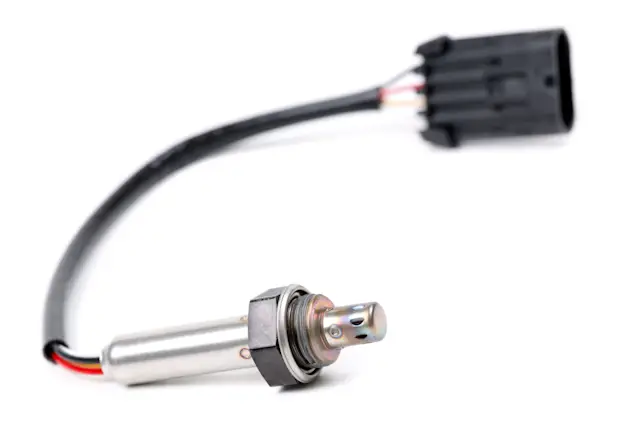
What is an Upstream Oxygen Temperature Sensor?
The upstream oxygen temperature sensor, often called a lambda probe, is an essential electronic component in the exhaust system of an internal combustion engine vehicle. It is located upstream of the catalytic converter, meaning before the exhaust gases pass through this pollution-reducing device.
Main Function:
- Measurement of Oxygen Content in Exhaust Gases: The sensor analyzes in real time the amount of oxygen present in the gases exiting the engine.
- Regulation of the Air/Fuel Mixture: Based on the information provided by the sensor, the engine control unit adjusts the air/fuel ratio to optimize combustion and reduce pollutant emissions.
How Does It Work?
The upstream oxygen temperature sensor consists of a special ceramic that becomes permeable to oxygen ions when heated. Differences in oxygen concentration between the inside and outside of the ceramic generate an electrical voltage, which is interpreted by the engine control unit.
Simplified Operating Principle:
- Hot exhaust gases come into contact with the sensor.
- The ceramic heats up and becomes conductive to oxygen ions.
- An electrical voltage is generated, proportional to the oxygen concentration.
- The control unit analyzes this voltage and adjusts the air/fuel mixture accordingly.
Importance of the Upstream Oxygen Temperature Sensor
- Reduction of Pollutant Emissions: By optimizing combustion, the sensor helps reduce emissions of carbon monoxide (CO), hydrocarbons (HC), and nitrogen oxides (NOx).
- Fuel Economy: An optimal air/fuel mixture helps reduce fuel consumption.
- Catalytic Converter Protection: The sensor helps maintain the catalytic converter at an optimal operating temperature, thereby extending its lifespan.
Consequences of a Faulty Sensor
A faulty upstream oxygen temperature sensor can lead to the following problems:
- Increased fuel consumption.
- Decreased engine performance.
- Illumination of the engine warning light.
- Excessive pollutant emissions.
- Damage to the catalytic converter.
When to Replace the Upstream Oxygen Temperature Sensor?
It is recommended to replace the upstream oxygen temperature sensor according to the manufacturer’s recommendations or when it shows signs of failure, such as:
- Engine warning light on.
- Excessive fuel consumption.
- Loss of power.
- Rotten egg smell from the exhaust (sign of a damaged catalytic converter).
Faulty upstream oxygen sensor
In Conclusion
The upstream oxygen temperature sensor is an essential component of a modern vehicle’s exhaust system. It plays a crucial role in regulating pollutant emissions and optimizing fuel consumption. Proper maintenance of this component is therefore essential to ensure the proper functioning of your vehicle.
Note: This article aims to provide general information about the upstream oxygen temperature sensor. For any work on your vehicle, it is recommended to consult an automotive professional.
Keywords: oxygen sensor, lambda probe, exhaust system, internal combustion engine, pollution, fuel consumption, catalytic converter.