
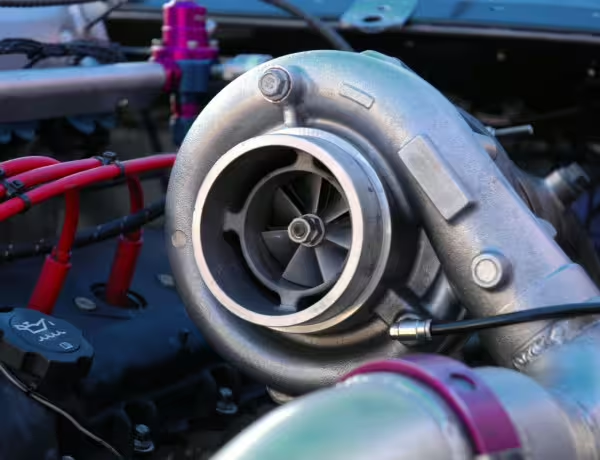
You have identified a problem of excessively low boost pressure in your vehicle’s supercharging circuit.
What does this mean?
The supercharging circuit, mainly composed of the turbocharger, is responsible for increasing the pressure of the air entering the engine. This pressure increase helps improve combustion and, consequently, engine performance.
Excessively low boost pressure indicates that the engine is not receiving the necessary compressed air to operate optimally. This can lead to several symptoms:
- Loss of power: The engine seems less responsive during acceleration.
- Excessive consumption: The engine works harder to deliver the same power.
- Black smoke from the exhaust: A sign of incomplete combustion due to a lack of air.
- Engine warning light on: The vehicle’s computer has detected an anomaly.
What are the possible causes?
Several components can be the source of this pressure drop:
- Faulty turbocharger:
- Wear of moving parts: The turbo blades may be damaged, reducing their efficiency.
- Oil leak: An oil leak can lead to turbo fouling or damage the bearing.
- Stuck variable geometry: If the variable geometry system is stuck, the turbo cannot adjust its airflow according to the engine’s needs.
- Issues with the air intake circuit:
- Punctured or pinched hoses: Damaged intake hoses can cause a loss of pressure.
- Clogged air filter: A dirty air filter restricts the airflow entering the engine.
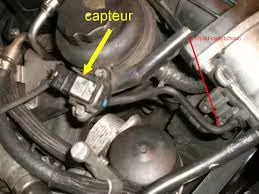
- Failure of the boost pressure sensor: A faulty sensor can provide incorrect information to the computer, affecting engine management.
- Faulty wastegate: If the wastegate does not close properly, some pressure may be lost.
- Electrical issues: A faulty computer or damaged wiring can also be the cause of the problem.
What to do?
It is highly recommended to entrust the diagnosis and repair of your vehicle to a professional. A mechanic equipped with a diagnostic tool can accurately identify the cause of the pressure drop and perform the necessary repairs.
However, here are some tips while waiting to consult a professional:
- Do not ignore the problem: A drop in boost pressure can lead to more significant damage if not addressed promptly.
- Avoid sudden acceleration: Abrupt acceleration can worsen damage to the turbocharger.
- Check the oil level: A lack of oil can damage the turbocharger.
In summary, excessively low boost pressure is a problem that should not be overlooked. An accurate diagnosis is essential to determine the exact cause and perform the appropriate repairs.
Would you like more information on a specific point? For example, you can ask me what the variable geometry of a turbo is for, or how a boost pressure sensor works.