
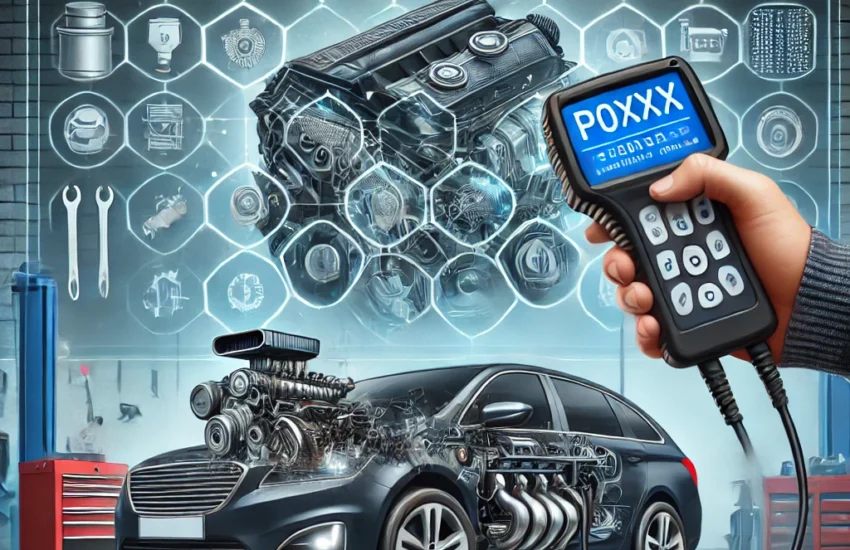
P0XXX codes are among the most common encountered during diagnosis with an OBD2 scanner. These Diagnostic Trouble Codes (DTCs) are standardized, meaning they are used by almost all car manufacturers to describe similar problems. In this article, we will break down P0XXX codes, understand their meaning, and explore the most frequent engine errors.
What is a P0XXX Code?
A DTC consists of five characters:
- P: Indicates the problem concerns the Powertrain, i.e., the engine and transmission.
- 0: Denotes a standard (generic) code defined by the SAE standard.
- XX: The next two digits specify the system involved (e.g., fuel system, ignition, etc.).
- X: The last digit specifies the subsystem or the nature of the problem.
Main Categories of P0XXX Codes
P0XXX codes are divided into several categories based on the component concerned:
- P01XX: Problems related to the air and fuel circuit.
- P02XX: Fuel injector failures.
- P03XX: Ignition malfunctions or misfires.
- P04XX: Emission control systems.
- P05XX: Idle and speed control problems.
The Most Common P0XXX Error Codes and Their Causes
1. Code P0171: System Too Lean (Bank 1)
- Description: The engine is running with an air/fuel mixture that is too lean.
- Possible Causes:
- Air leak in the intake system.
- Dirty or faulty Mass Air Flow (MAF) sensor.
- Problem with the injectors.
2. Code P0300: Random/Multiple Cylinder Misfire Detected
- Description: The engine is experiencing misfires on multiple cylinders.
- Possible Causes:
- Worn or damaged spark plugs.
- Faulty ignition coils.
- Low fuel pressure.
3. Code P0420: Catalyst System Efficiency Below Threshold (Bank 1)
- Description: The catalytic converter is not functioning efficiently.
- Possible Causes:
- Damaged or worn catalytic converter.
- Faulty oxygen (O2) sensor.
- Leak in the exhaust system.
4. Code P0442: Evaporative Emission Control System Leak Detected (Small Leak)
- Description: A small leak is detected in the evaporative emission control system.
- Possible Causes:
- Loose or defective fuel cap.
- Leak in the EVAP lines.
5. Code P0113: Intake Air Temperature Sensor Circuit High Input
- Description: The Intake Air Temperature (IAT) sensor is sending abnormally high values.
- Possible Causes:
- Faulty IAT sensor.
- Connector or wiring problem.
How to Resolve P0XXX Errors?
- Read the error code with an OBD2 scanner: Connect the scanner and note the precise code displayed.
- Interpret the code: Consult the manufacturer’s reference manual or a database to understand its meaning.
- Inspect related components: Perform a visual inspection and test suspected components (sensors, valves, etc.).
- Correct the problem: Repair or replace defective parts.
- Clear the code: After repair, use the scanner to clear the code and test if the problem persists.
Prevention and Maintenance
- Perform regular oil changes and use quality fuels.
- Regularly inspect sensors and the intake system.
- Change spark plugs according to the manufacturer’s recommendations.
By understanding P0XXX codes and their meaning, you can quickly identify problems with your vehicle and take appropriate measures. This not only avoids costly repairs but also improves the lifespan of your engine.