
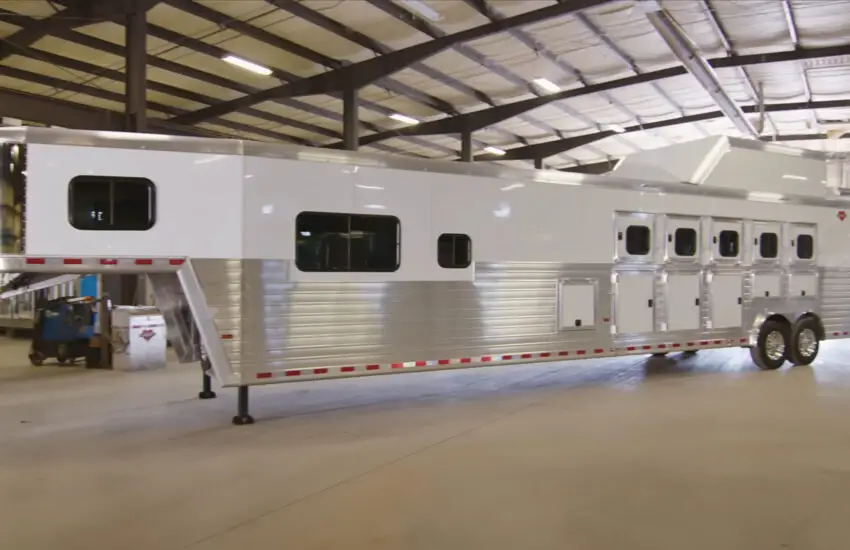
When it comes to transporting heavy loads, conventional wisdom states that the more trailer axles, the better. But what if more wasn’t always better? Randy Stamper at Hart Trailer claims that a well-built tandem outperforms a triple axle, and after hearing his explanations, you’ll probably agree.
“We don’t want to make fun of what people want,” notes Stamper, “but on the other hand, we feel obligated to do what’s best for them.”
Hart so firmly believes that heavy tandems are superior that the company refuses to build a trailer with a triple axle. Really. They receive so many requests that Stamper decided to officially speak out with a video explaining step by step how they reached this conclusion.
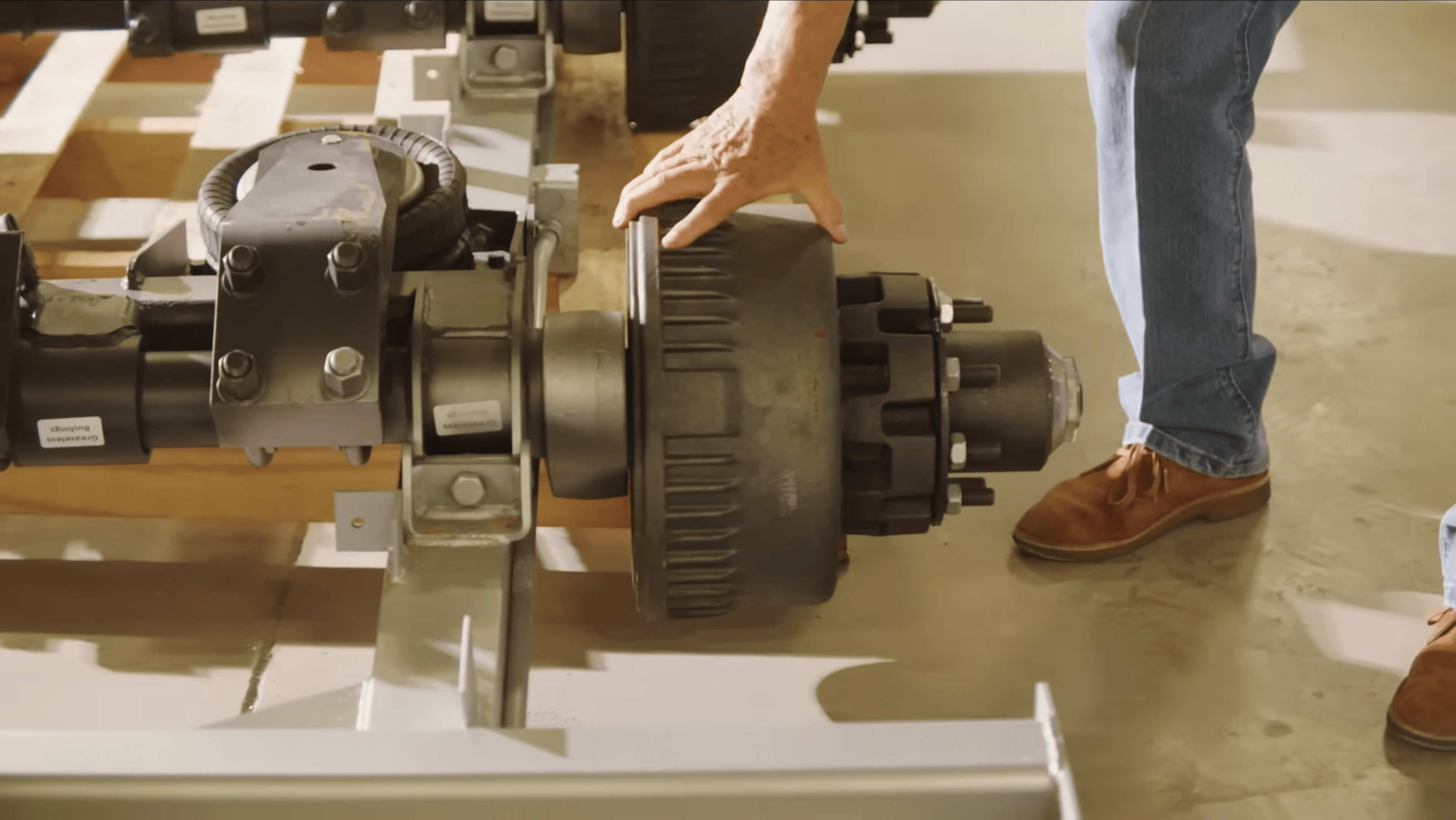
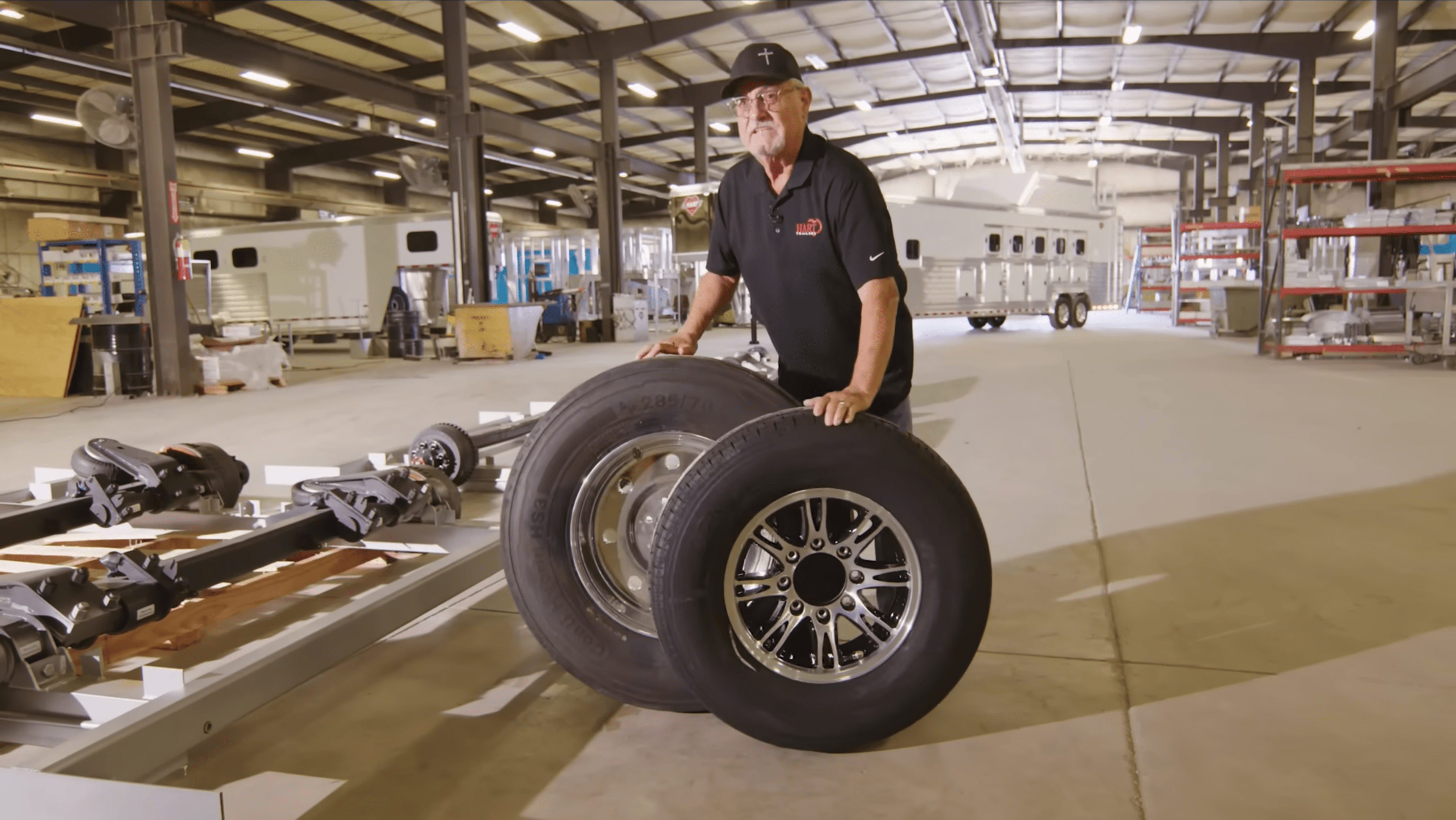
He presents 7,000 and 8,000-pound axles with 16-inch wheels and tires for reference. Then, he shows a set of 10,000-pound axles with 17.5-inch wheels and 12,000-pound axles with 19.5-inch wheels. Seeing them side by side reveals the extent of the differences. Not only are the 19.5-inch wheels much more robust than the 16-inch ones, with the ability to mount a much stronger tire, but the larger axles also feature significantly reinforced hubs and brakes. You could mount a larger tire on a 7,000-pound axle if you wanted, but the braking capacity is only half that of the 12,000-pound units.

The Fundamental Problem with Triple Axles
Beyond that, Stamper raises a more fundamental issue with triple axles. Because these trailers pivot on the center axle, they drag the other two and wear out the tires and spindles with every turn. This problem doesn’t exist with tandems. For this reason, Stamper states: “We believe that two axles are better than three axles, regardless of the configuration.”
The Technical Superiority of the Tandem
All this explains why a pair of 12,000-pound axles is superior to three 8,000-pound axles. Even if the GVWR might be the same, other factors simply aren’t. It’s often said that there’s more than one way to do things, but in this case, one method is certainly better than the others.